Berkhamsted Castle
History
Berkhamsted Castle stands beside the railway on the edge of the town in Hertfordshire, on the old road between London and the Midlands. It was one of the first castles built by the Normans, and it was kept in royal hands for most of its life. What survives is mostly earthworks, a tall motte, and the rubble cores of flint walls, but it is a rare chance to see a Norman motte-and-bailey castle with its defenses still in the landscape, including its double moat, which is the castle's unique feature. It was held by Thomas Becket, by two earls of Cornwall, and by the Black Prince, and the castle still remembers them.
The manor of Berkhamsted was already old when the Normans arrived. In 970, Queen Ælfgifu mentioned it in her will, and the Berkhamsted Castle Trust says that is the earliest written reference to the place. After Hastings in October 1066, William the Conqueror did not enter London at once, and at Berkhamsted the leading men of England came to submit to him. They included Edgar Ætheling, the last of the old English royal family, the earls Edwin and Morcar, Archbishop Ealdred of York, and the chief men of London. William was crowned at Westminster on Christmas Day.
The Conqueror granted the manor and honour of Berkhamsted to his half-brother, Robert, Count of Mortain. The place was strategically important, because a Saxon fort already guarded the main route north through the valley, and Robert built a timber motte-and-bailey castle to guard it within a few years of the Conquest. The motte was about 40 feet high, and the bailey was surrounded by a double bank and ditch, with water in both ditches. The Domesday survey of 1086 shows that Robert held the castle, and it records a ditch-digger living there. Robert's son, William of Mortain, took the side of Robert Curthose and was captured at the Battle of Tinchebray in 1106, so Henry I took the castle for himself, and in 1123 he gave it to his chancellor, Ranulf.
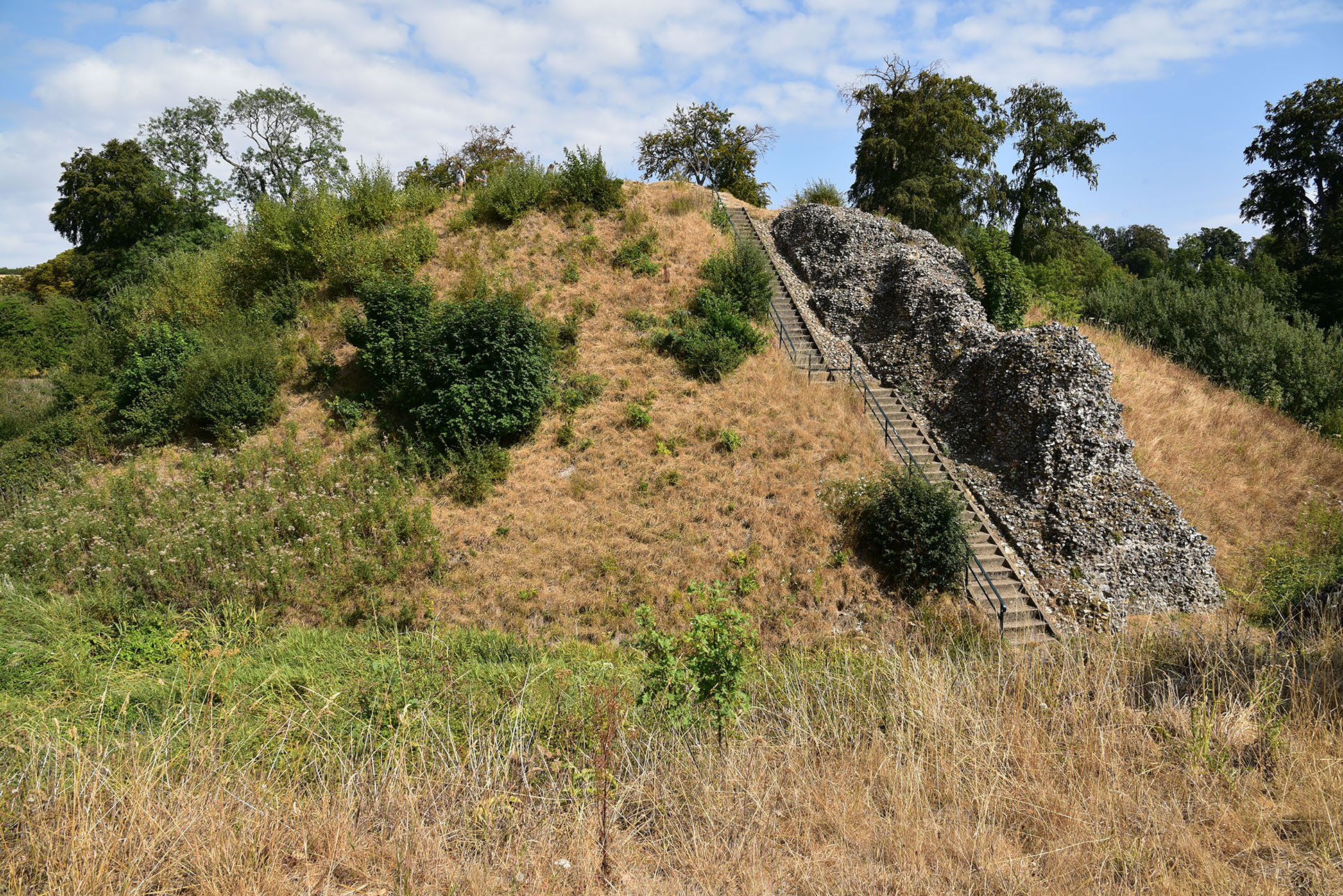
The motte, with the steps up to the foundations of the keep.
The castle's most famous owner was Thomas Becket. In 1155, when Henry II made him chancellor, the king gave him Berkhamsted, and Becket's accounts for 1157 and 1158 show him spending £10 on the king's houses on the motte and 40 shillings on a chamber in the bailey. As chancellor, Becket transformed the castle into one of the king's more comfortable households, and the records show that Henry and Queen Eleanor of Aquitaine kept court there in 1163, and that Henry visited on other occasions. It was probably in Becket's time that the castle was rebuilt in stone, with a shell keep on the motte and a curtain wall of flint around the bailey. In 1156, Henry II granted a charter to the merchants of Berkhamsted, and a market town grew up beside the castle. In 1164, Becket quarreled with the king, and the castle was taken back. He was murdered in Canterbury Cathedral six years later.
In 1204, King John granted the honour to his queen, Isabella of Angoulême, who remained in residence until 1216. Geoffrey FitzPeter, Earl of Essex, was one of the castle's occupants, and he was instrumental in building St. Peter's Church in the town. When Geoffrey died in 1213, the castle passed to his son, John FitzGeoffrey. During the civil war at the end of John's reign, the king put a German mercenary, Waleran Teutonicus, in charge of the castle, and in 1215 and 1216, as the threat from the barons and from the Dauphin, Prince Louis of France, grew, he had its defenses strengthened.
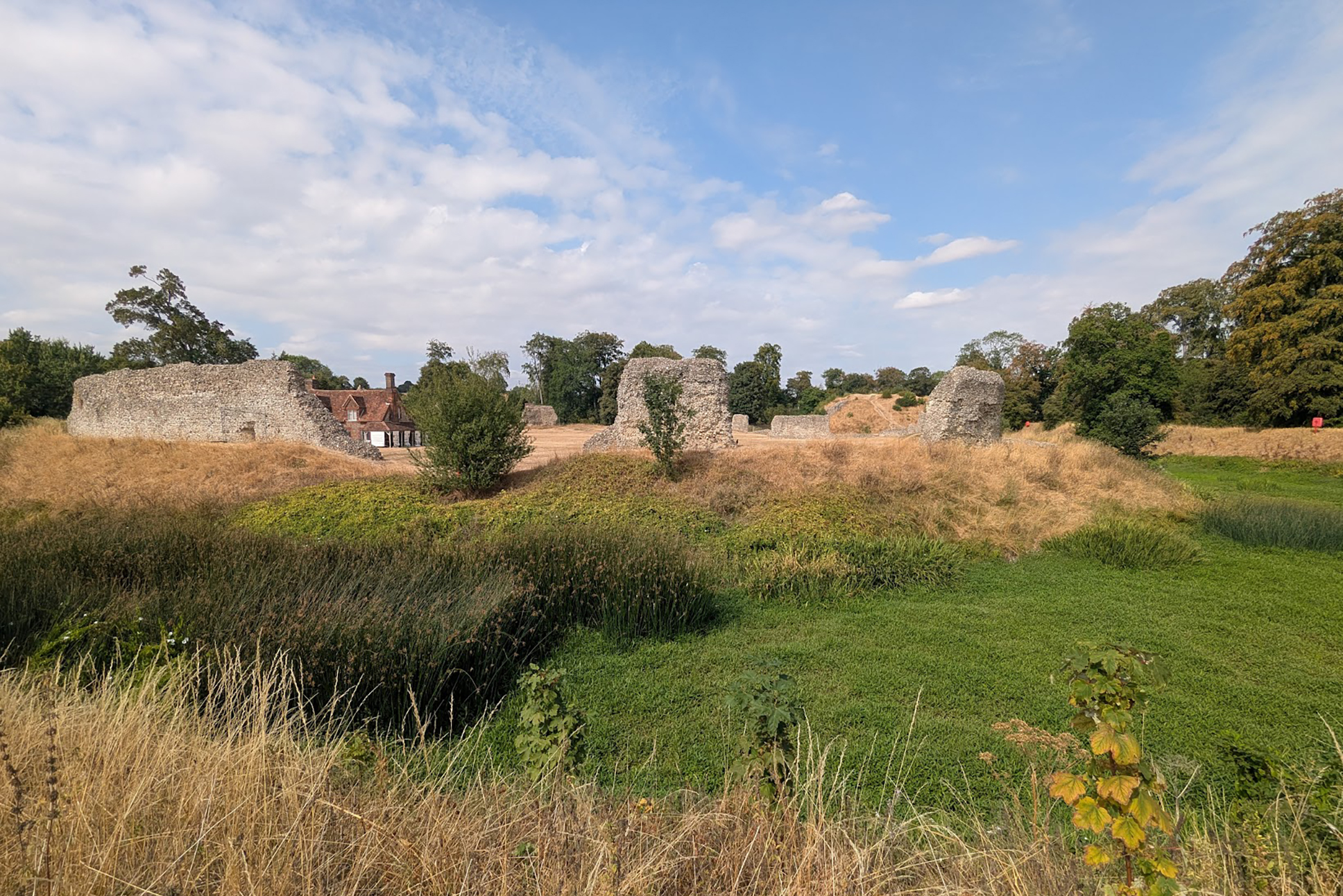
The castle seen across the inner moat from the earth bank between the moats.
John spent some time at the castle in 1216, shortly before his death, improving its defenses against the barons. A second ditch was dug, earth bastions were raised, and trees were cut down to make palisade fencing around them. In December 1216, Prince Louis of France, who had been invited to England by the rebel barons, brought his army to Berkhamsted after taking Hertford. His engines threw stones at the walls for about two weeks, and on December 20th, Waleran surrendered on the orders of the boy king, Henry III, and his regent, William Marshal, and the garrison marched out with their weapons and armor. John's widow, Queen Isabella, was in the castle when it surrendered. The full story is told in the Siege of Berkhamsted Castle.
Henry III's brother, Richard, was knighted by the king on February 2nd, 1225, when he was sixteen, and on February 13th, Henry granted him the county of Cornwall, which made him Earl of Cornwall. Royal records style him as earl by August 1227, and a charter of August 10th, 1231, confirmed the earldom as hereditary. His grant of Berkhamsted is dated differently by different sources, because medieval grants often began as temporary and were made hereditary later. English Heritage says 1225, the Berkhamsted Castle Trust and the Victoria County History say 1227, and some references say 1229. His possession was secure by the early 1230s, when the king also granted him Wallingford Castle, town and honour in 1231, and Wallingford became his main residence. He held both castles until his death at Berkhamsted on April 2nd, 1272. He made the castle the administrative center of the entire earldom, with stewards coming to the castle to hand in their accounts, and he carried out extensive repairs to the damage caused by the siege of 1216. Richard turned the western side of the castle into a palace, with a hall and a chapel, and in 1254, he added a three-storey tower. He made further repairs after the disturbances of 1263 and 1264. His son, Edmund, was born at the castle in 1249. In 1270, Richard and Edmund brought back from Germany a phial said to contain the blood of Jesus. When Edmund succeeded to the earldom, he gave part of the blood to Hailes Abbey, and he kept the rest until he founded the College of Bonhommes at Ashridge in 1283. In 1280, he enclosed a deer park north of the castle.
In 1291, Edward I held a parliament at Ashridge, and he granted Berkhamsted to his second queen, Margaret of France. In 1296, after Edward I's victory at Dunbar, Scottish knights were held prisoner here. The next earl of Cornwall was Edward II's favorite, Piers Gaveston, whom the king created earl on August 6th, 1307, and to whom he gave the lands of the earldom, including Berkhamsted. Some sources date the grant of the castle itself to 1309. On November 1st, 1307, Gaveston married the king's niece, Margaret de Clare, at the castle, with Edward attending, and the king is said to have scattered silver pennies over the couple's heads as they entered the church. There was a tournament in Gaveston's honor afterward at Wallingford. Baronial hatred of Gaveston led to his exile in 1308 and to his capture and execution by a group of barons, led by the Earl of Warwick, on June 19th, 1312, at Blacklow Hill. When Margaret of France died, Isabella, the queen of Edward II, succeeded to the manor.
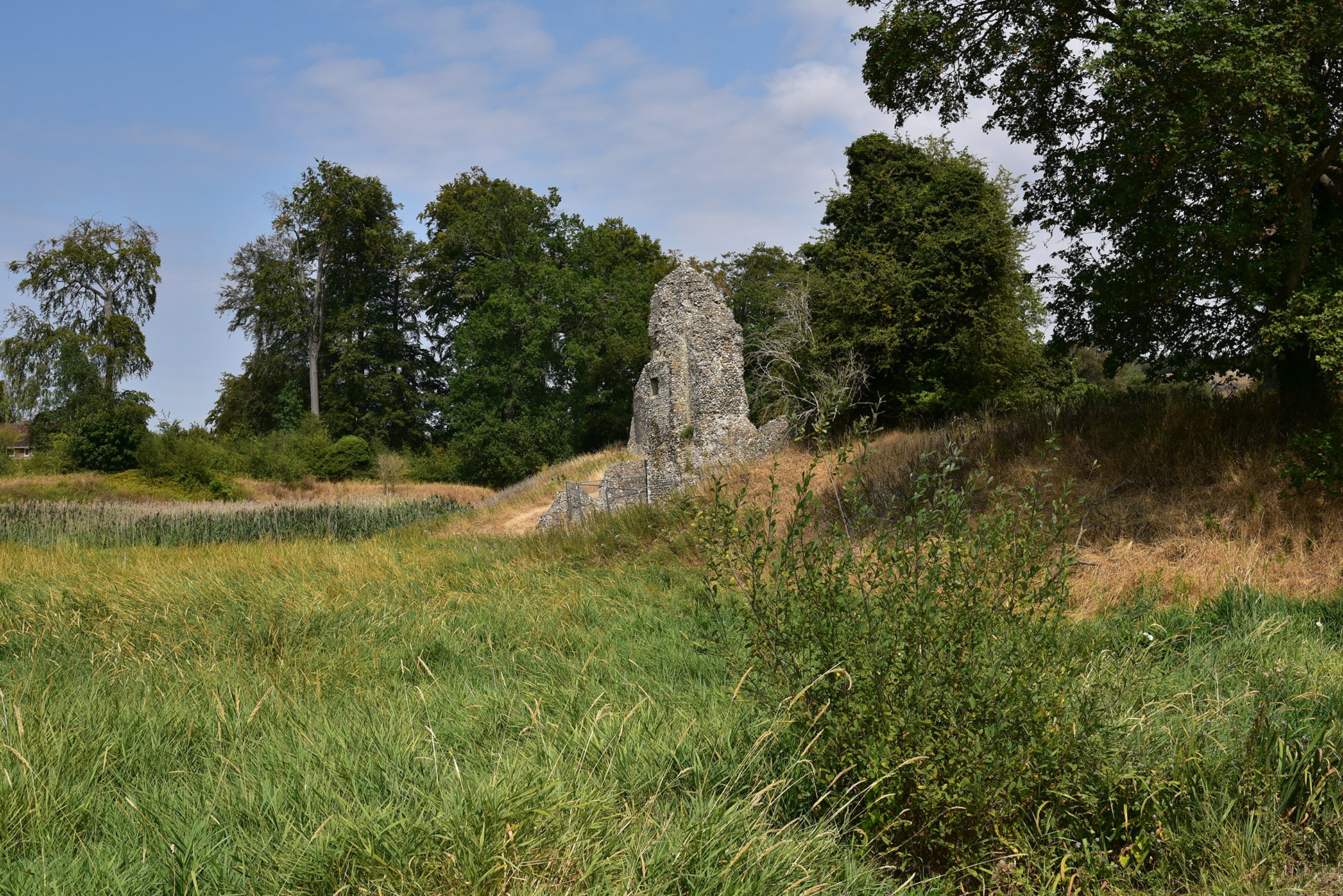
The Palace Tower.
Edward III's brother, John of Eltham, held the castle after 1327. When Edward came of age in 1330, he overthrew the regency and had Roger Mortimer executed, and he sent his mother, Isabella, who was in a very distressed state, to Berkhamsted to recuperate, and later to Windsor. When John died in 1336, the king took the castle back. A survey was held in February 1337, on St. Valentine's Day, to see what repairs the castle needed and what damage had been done to its woods. Two men, William the turner and Robert the shoveller, were found guilty of cutting down and carrying off the king's timber. The survey described a great painted chamber, a great chapel, and the Derne Gate with its drawbridge, and the repairs were estimated at £700 and were finished by 1340. In the same year, 1337, Edward III made his son Edward, the Black Prince, the first Duke of Cornwall, and gave him the castle as part of the new duchy. The castle has been part of the Duchy of Cornwall ever since, and a bench in the grounds carries the Duchy's arms.
The Black Prince was very much at home at Berkhamsted, and the town has not forgotten him. His grandmother, Isabella, was entertained by the prince at Berkhamsted over Christmas in 1354, and at times the following year. Archers from Berkhamsted and the district went with him to Crécy in 1346 and Poitiers in 1356, and they are said to have practiced at the butts in what is now Butts Meadow, in the town. After Poitiers, the French king, John II, whom the prince had captured on the battlefield, was imprisoned at the castle for a time. The prince hunted regularly in the deer park, and after his marriage to Joan, the Fair Maid of Kent, at Windsor in October 1361, the couple spent their honeymoon at the castle. After the Black Death, he extended the park to 991 acres. In 1371, when his health was failing, he came home from Aquitaine and he and Joan lived at Berkhamsted. He died at Westminster in 1376. In 1389, Geoffrey Chaucer was appointed clerk of the king's works, in charge of repairs to royal buildings that included Berkhamsted.
After the Black Prince, the castle passed through the hands of royal favorites, including Robert de Vere and John Holland. In 1399, on his accession, Henry IV granted the castle and estates to his son and heir, the future Henry V, and from him they passed to Margaret of Anjou, the queen of Henry VI. In 1469, Edward IV gave it to his mother, Cecily Neville, Duchess of York, and she is regarded as the castle's last noble resident. She died at the castle in 1495, and after that, nobody lived there, and the castle fell into ruin. Henry VIII granted the castle to three of his queens, Catherine of Aragon, Anne Boleyn, and Jane Seymour, but none of them is known to have visited. Edward VI later granted the castle to his sister, Elizabeth.
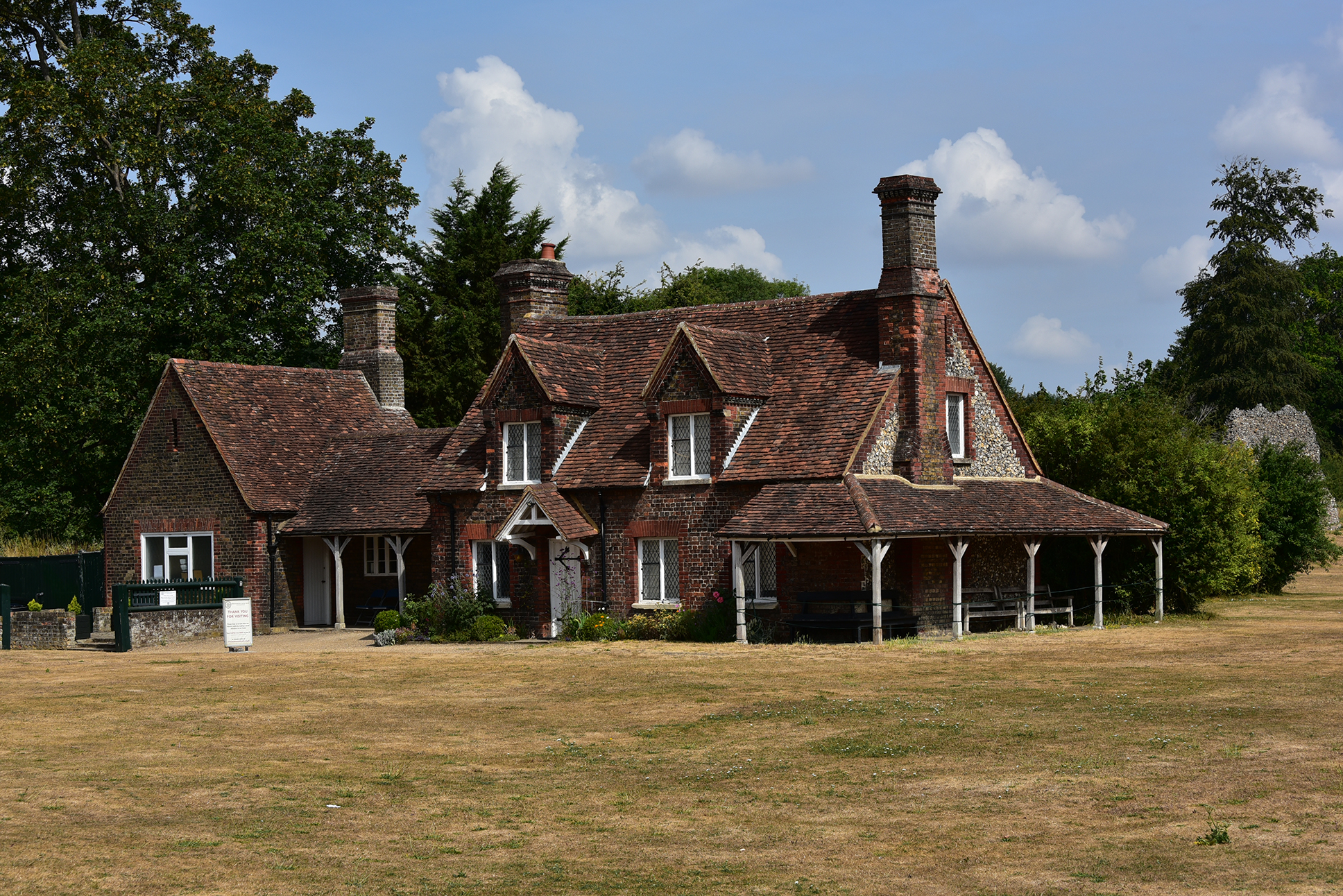
The lodge, built in 1865, was the custodian's cottage.
The ruins became a quarry. In the 16th century, the antiquary John Leland found the castle in "much ruine", and the stone was carried off to build houses in the town. In 1580, Elizabeth, by then queen, leased the manor to Sir Edward Carey, the keeper of the Queen's Jewels, for a rent of one red rose a year, and he built himself a new house, Berkhamsted Place, on the hill above the castle, using stone from the castle. William Camden described the castle as a heap of stones. Even so, it remained a focal point of the town, and in 1616, the Prince of Wales, the future Charles I, made an official visit to the manor of Berkhamsted and heard an address in Latin at the Grammar School. The railway came in the 1830s. The engineer of the London and Birmingham Railway, Robert Stephenson, first proposed a route that would have cut straight across the castle site, which was the natural line along the valley floor toward the Midlands. Local landowners, including the Bridgewater and Brownlow interests and people with estates at Gadebridge and Ashridge, and the townspeople, opposed it, and a protest meeting was held at the King's Arms coaching inn in Berkhamsted. The first bill was rejected in 1832, partly because of this resistance and the opposition of the canal and coaching interests. The revised Act received Royal Assent on May 6th, 1833, and sections 98 and 99 protected most of the castle by fixing the line of the railway along the existing outer embankment to the south and forbidding any other digging or building on or near the castle. It is widely regarded as the first statutory protection of a historic monument anywhere in the world, and a forerunner of the later ancient monuments laws. Even so, the Act did not fully shield the outermost southern features, which lay outside the outer embankment. Work began in the area around 1834, and the line opened through Berkhamsted in 1837 and 1838. The castle's own guide dates the loss of the barbican gateway and part of the outer moat to the building of the railway in 1837. The navvies cleared away the ruins of the barbican, the outer gatehouse that guarded the southern approach from the town, which stood at the end of a bridge across the moat. The barbican had been a ruin for centuries, and it appears in a painting by Jan Wyck from 1680, but what survived of it was lost to the railway. The southern part of the outer moat was filled in, the marshy ground around it was drained, and a large embankment was built up on deep foundations, using material from cuttings farther south, including the Sunnyside cutting. It has been pointed out that the French siege engines of 1216, and the centuries of neglect and stone-robbing, left more of these outer works standing than the Victorian railway engineers did. The railway has been both a curse and a blessing for the castle. It destroyed the barbican, but it also brought visitors from London, because the station is an easy walk from the castle. From about 1841 until 1897, the Countess of Bridgewater is said to have run a soup kitchen for the poor of the town in the ruins. In June 1864, the Duke of Cornwall granted Earl Brownlow "the site and remains of Berkhamsted Castle" at a rent of £1 a year. Brownlow gained no benefit from the property, and he simply maintained it for the recreation of the people of Berkhamsted. The castle stayed with the Duchy of Cornwall, and the lodge to the left of the entrance dates from 1865.
In December 1929, the Duchy handed the castle to the Office of Works, the forerunner of English Heritage, and the walls were cleared and repaired the following year. While the earthworks were being cleared, a crossbow stave from the 13th century was found in the inner moat. It spent 19 years on display at the Royal Armouries and is now in the British Museum. In June 1935, the Prince of Wales, the future Edward VIII, visited the castle, the first Duke of Cornwall to do so since 1616. For the duration of the Second World War, from 1939 to 1945, a number of London statues were brought to Berkhamsted for safekeeping, and they stood against the background of the castle ruins. Today, the castle is owned by the Duchy of Cornwall and managed by the Berkhamsted Castle Trust, a group of local volunteers, in partnership with English Heritage.
Castle Highlights
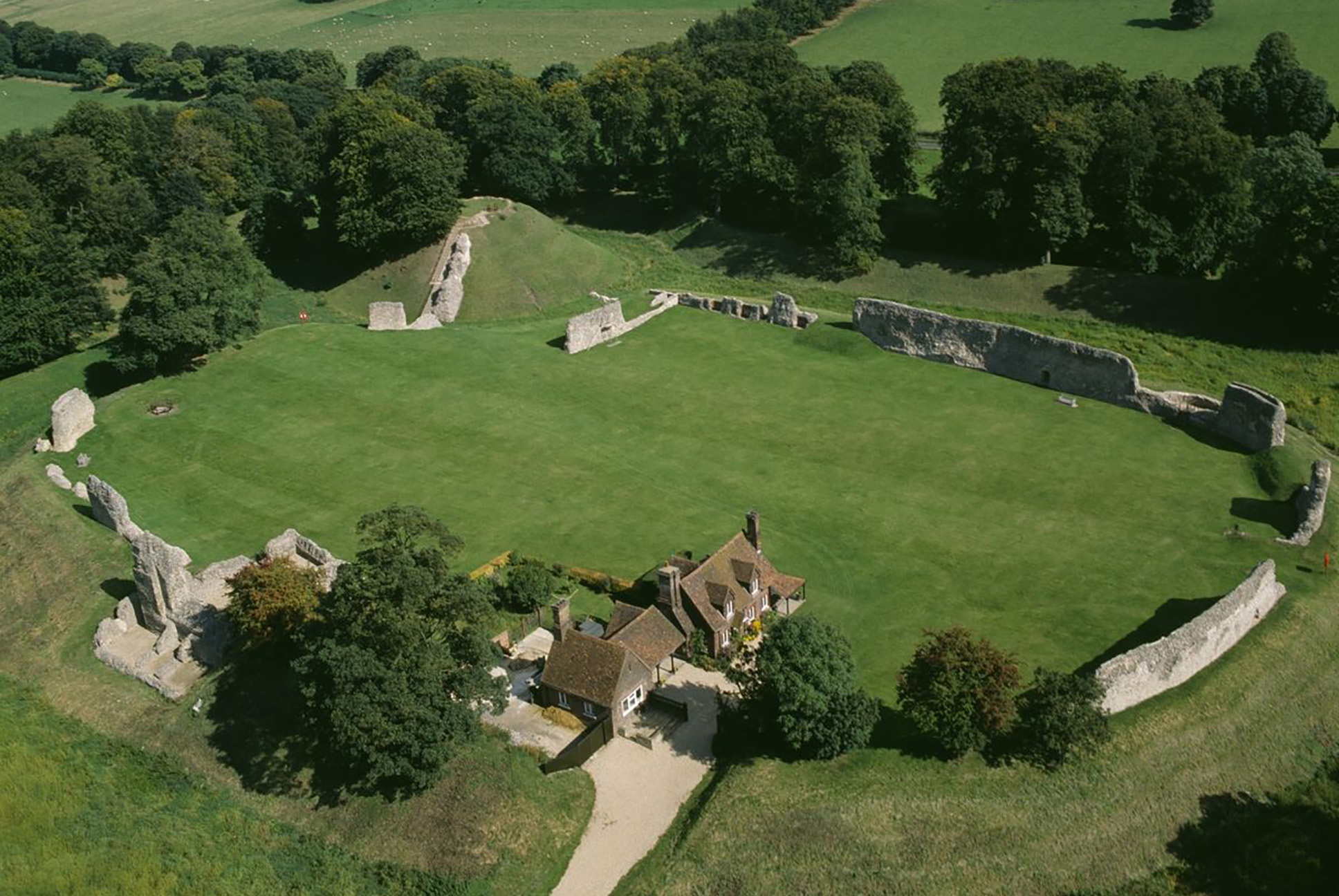
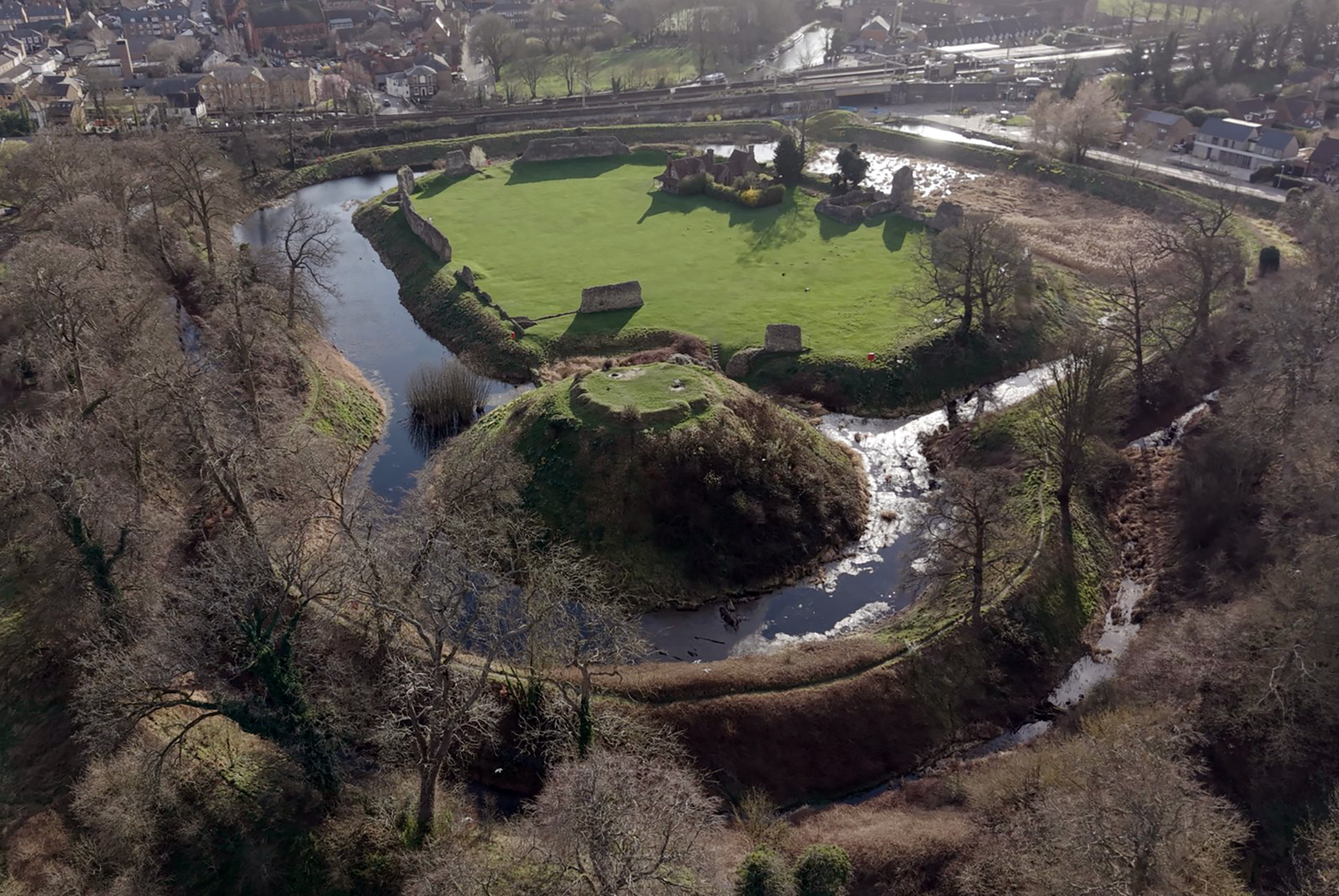
Berkhamsted Castle from the air, showing the bailey, the motte and the lodge.
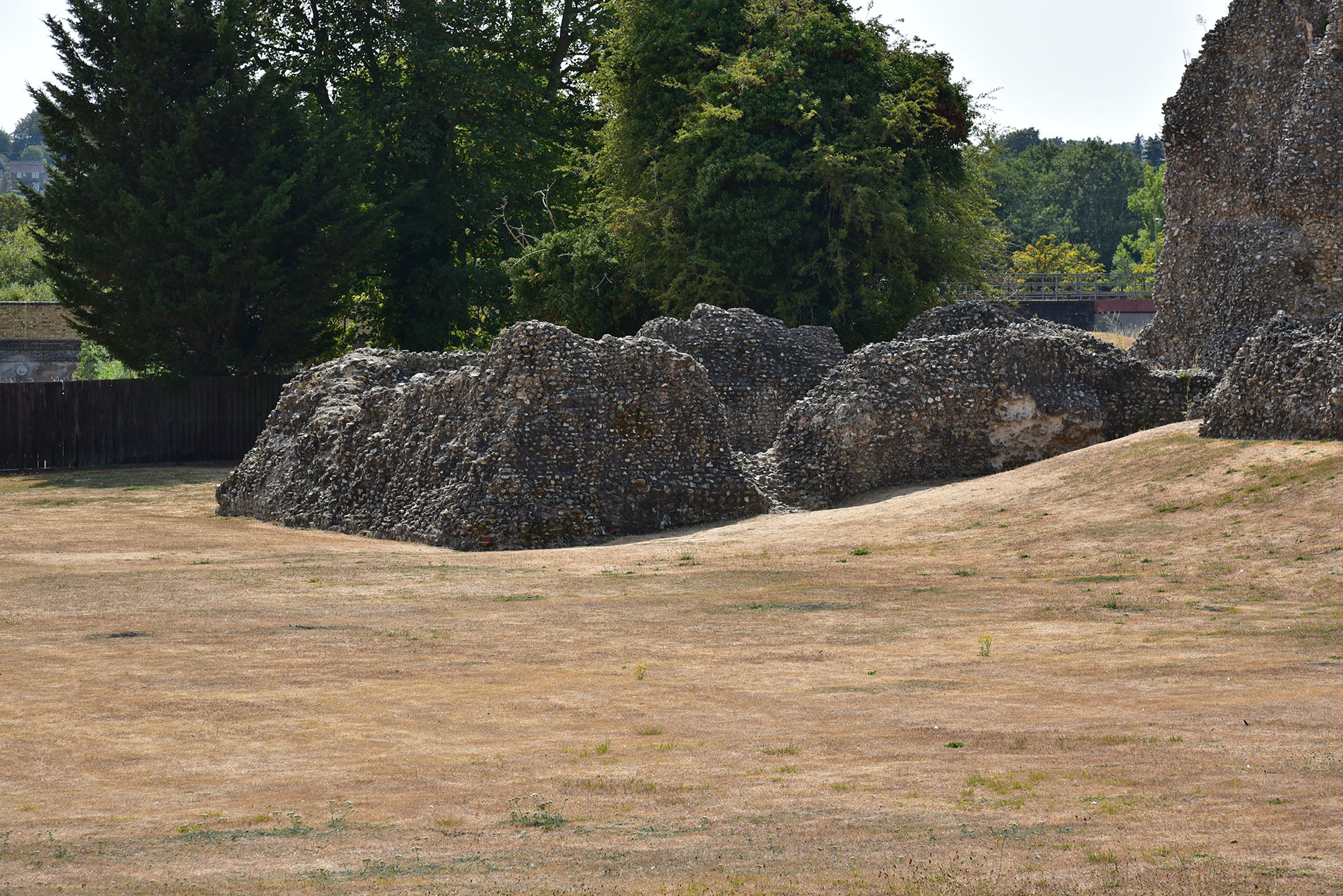
The castle is free to enter, and it is signposted off White Hill in Berkhamsted. The site is mostly open grass, with the ruins of the walls and towers around it, and it is easy to follow the shape of the castle. The curtain wall is a ring of flint rubble, and almost the whole circuit survives as a core of flint, the stone facing having been stolen centuries ago. The castle's most unusual feature is its double moat. Two moats, with a high earth bank between them, still surround the castle, and it is said to be unique among motte-and-bailey castles in having them. On the north and east sides are eight large earth mounds. It has been claimed that the Dauphin's French forces built them as platforms for mangonels when they besieged the castle in 1216, but that seems unlikely, since the attackers were in the area for such a short time. It is more likely that King John had them built, and the second ditch dug, when he strengthened the castle in 1215 and 1216. Both moats are usually dry now, except after very rainy weather, but they are easy to make out. Steps lead up onto the earth bank, which has a moat on each side of it, and walking around the ring of the bank gives you views of the castle from outside the walls and shows how strong its defenses once were.
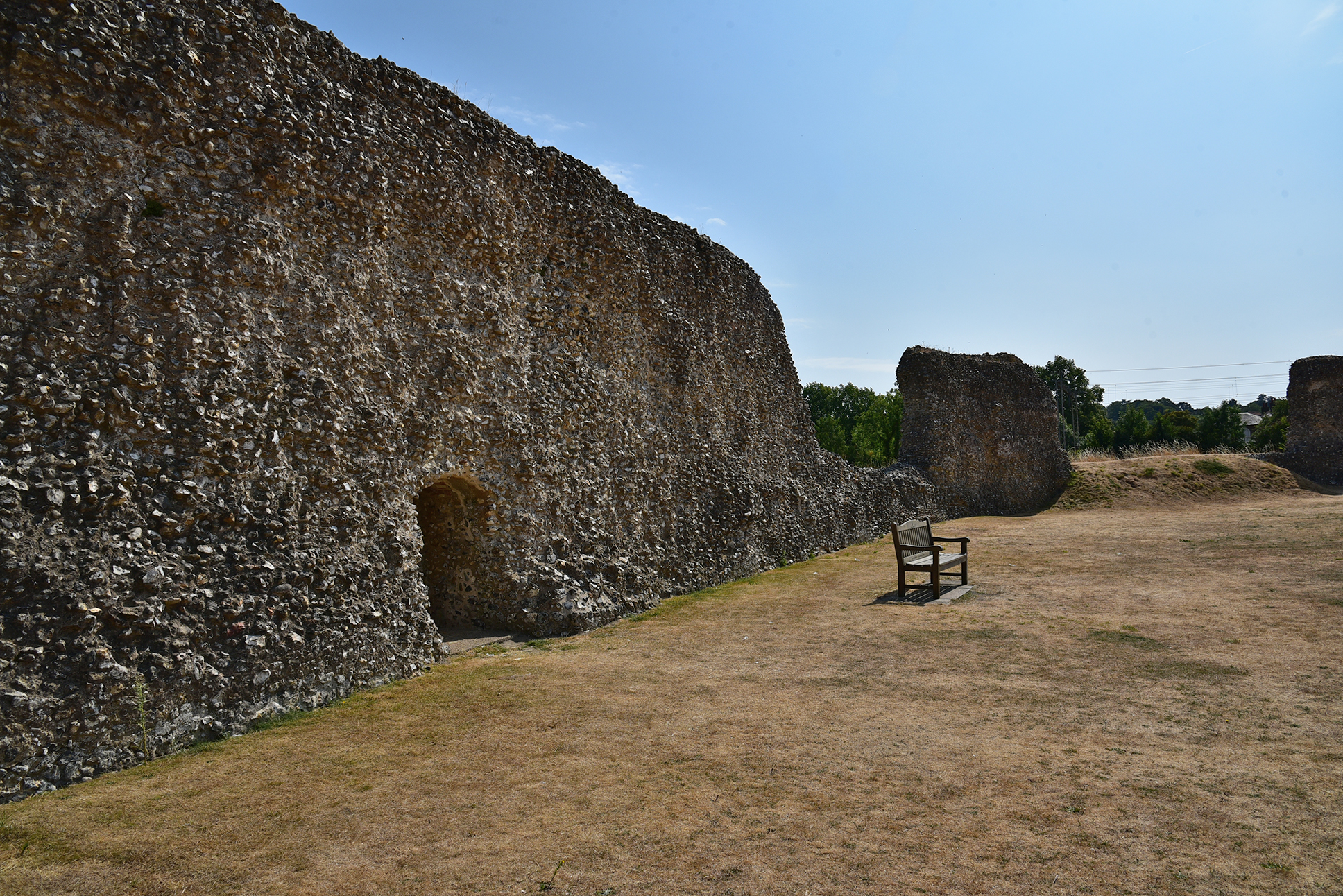
The east curtain wall and the East Postern Gate.
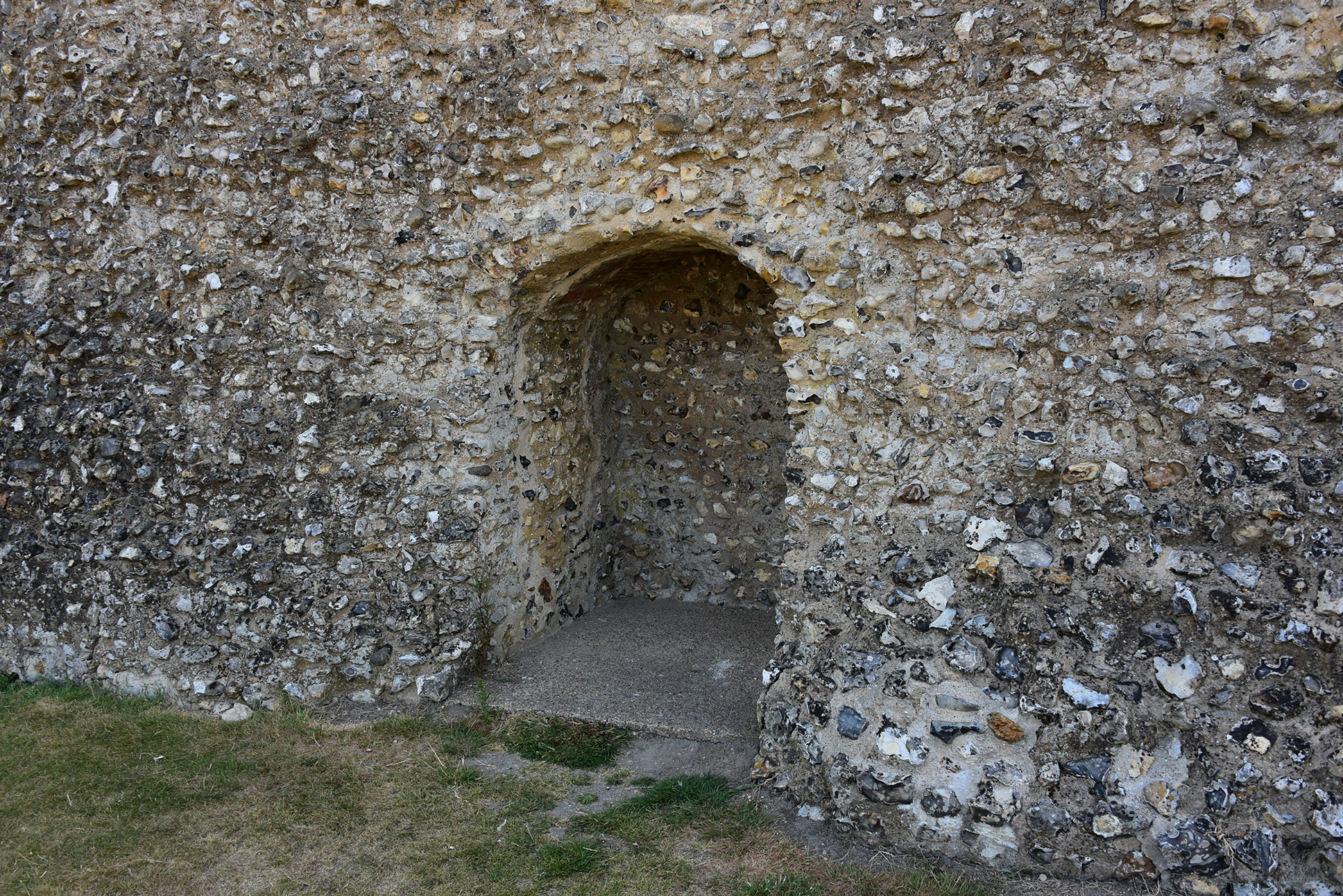
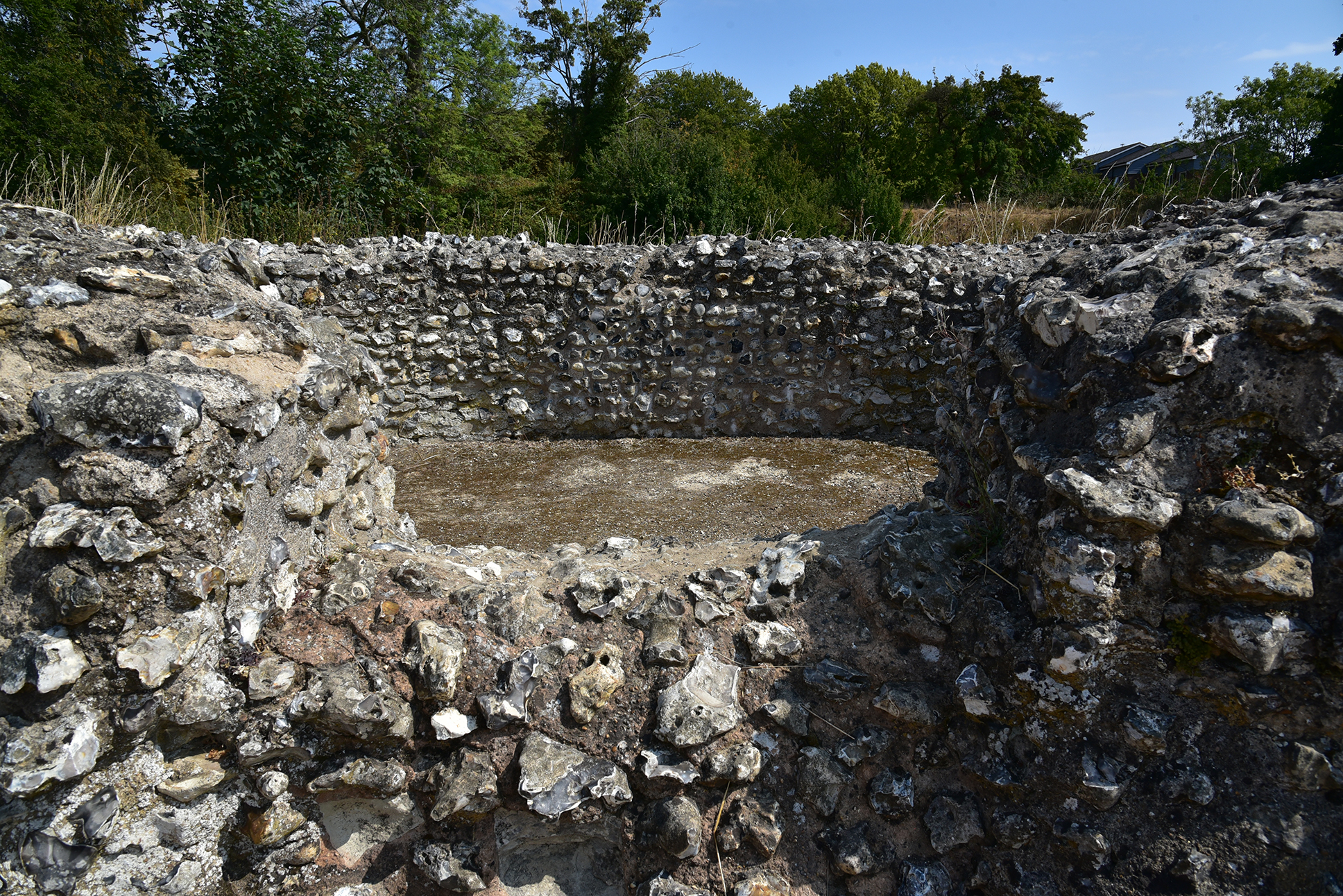
The great mound of the motte, with its steps, rises on the north side, and on top of it are the foundations of the keep, a circle of flint about 18 meters (59 feet) across with a well in the middle. All that is left of the Palace Tower today is a tall piece of flint wall, but the tower once straddled the curtain wall, with part of it inside the bailey and part outside it. Beside the Palace Tower are the rectangular ruins of the chapel. You can also walk to the half-round towers on the curtain wall, the kitchen and stables, and the two postern gates, which were small back doors in the walls. The floor plan shows where they are. The main entrance was on the south side, over a wooden bridge across the moat.
The lodge is open as a visitor room on some bank holidays and summer weekends, and guided tours are held at weekends in spring and summer. There are no toilets, refreshments or parking at the castle, but there is limited parking along the nearby streets, and the railway station, which is an easy walk away, is the more reliable place to park. Gravel paths suit wheelchairs and buggies, but there are steps up the motte and to the outer earthworks.
Many thanks to Peter Morgan, one of the Berkhamsted Castle Trust volunteers, for giving me a private tour of the castle. He did this on a weekday, when tours are not usually given.