Edward of Woodstock - The Black Prince
Prince of Wales and Prince of Aquitaine
Edward of Woodstock, the Black Prince, was the eldest son of King Edward III and Philippa of Hainault and the most celebrated English soldier of the Hundred Years' War. He won his spurs at Crécy at the age of sixteen, captured a King of France at Poitiers, and ruled Aquitaine as its prince. Yet he died a year before his father, so he never wore the crown, which passed to his ten-year-old son, Richard II.

Edward was born on June 15th, 1330, at Woodstock Palace in Oxfordshire. His father made him Earl of Chester in 1333, and on February 9th, 1337, in parliament, he became the Duke of Cornwall, the first English duke ever created, and his father gave him Berkhamsted Castle in Hertfordshire as part of the new duchy. On May 12th, 1343, he was created Prince of Wales.
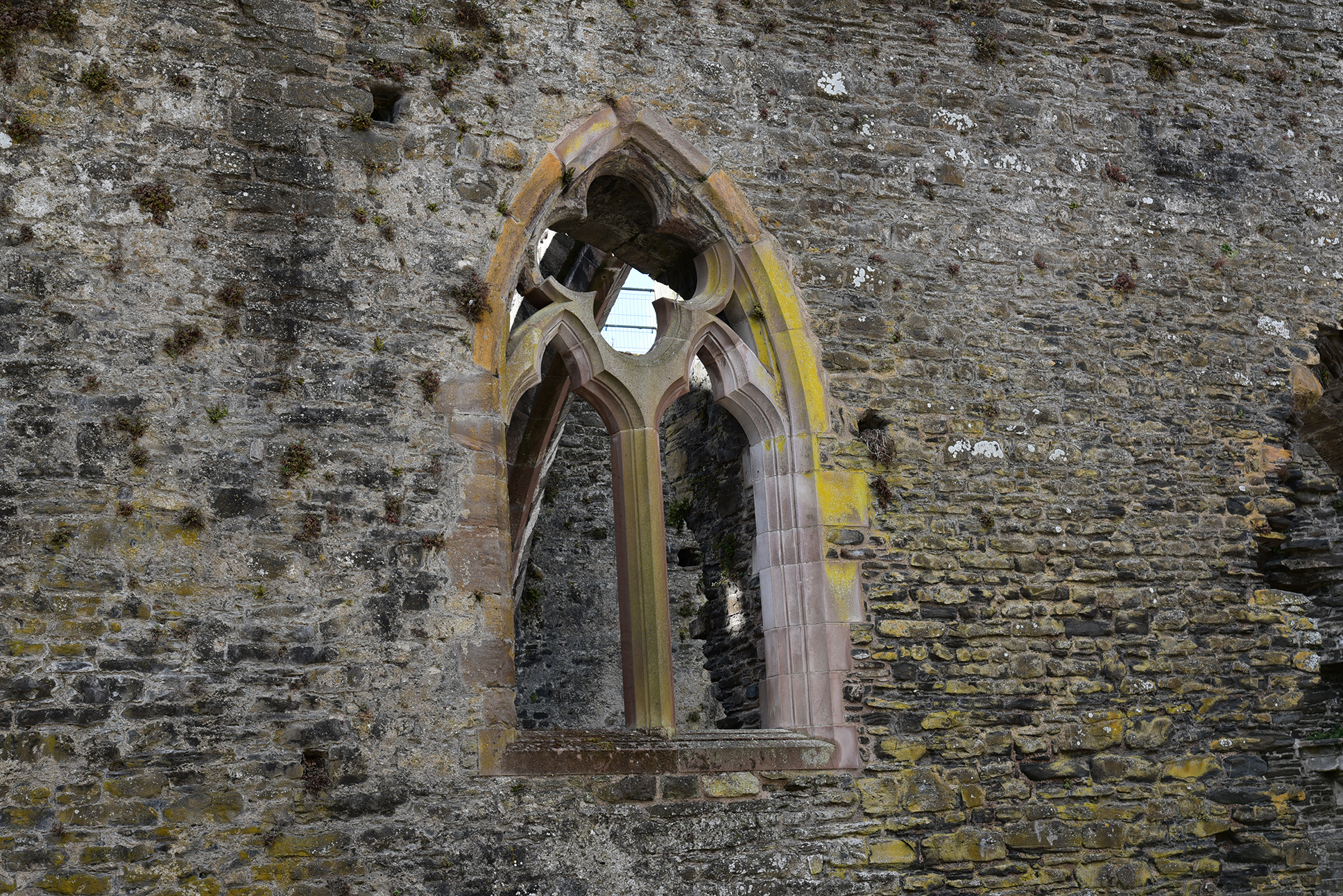
A Gothic window in the ruined great hall at Conwy Castle.
As Prince of Wales, Edward was responsible for the royal castles of North Wales, and they were in poor repair. A survey made for him in 1343 recorded the sorry state of Conwy Castle, where rotted roof timbers had left the hall and royal apartments open to the weather. In 1347, his chamberlain, Sir John Weston, carried out repairs and replaced the wooden roof trusses in the great hall range and the royal apartments with stone arches strong enough to carry new lead roofs. After the prince's death in 1376, Conwy fell into neglect again.
In July 1346, Edward III knighted his son at La Hougue in Normandy at the start of the campaign that led to Crécy. On August 26th, 1346, the sixteen-year-old prince commanded the English vanguard with the Earls of Warwick (Thomas Beauchamp), Oxford (John de Vere), and Suffolk (Robert Ufford), and he was unhorsed in the fighting. When his commanders sent to the king for help, Edward III is said to have refused, saying that the boy should win his spurs. The English longbowmen won the day, and among those who fought with the prince were archers he had brought from Berkhamsted and its district, who also followed him to Poitiers ten years later. He then went on to the siege of Calais. In 1348, he became one of the first Knights of the Garter, the order his father founded at Windsor Castle. He adopted the motto Ich dien, "I serve," and the badge of three ostrich feathers, which are still used by the Princes of Wales.

The Black Prince at Crécy, painted by Julian Russell Story in 1888. Public domain, Wikimedia Commons.
In 1355, Edward was appointed the king's lieutenant in Gascony, and on October 10th, he rode out of Bordeaux on a great raid, or chevauchée, through Languedoc. In about eight weeks, his army burned and plundered Avignonet, Castelnaudary, Carcassonne, and Narbonne, and it damaged the French king's finances and prestige. The next summer, he set out on a second campaign and found his retreat cut off near Poitiers. On September 19th, 1356, with about 7,500 men against a much larger French army, his archers and a flanking attack broke the French and captured King John II and his youngest son, Philip. Edward treated his prisoner with courtesy and dined with him on the evening of the battle, and he entered London on May 24th, 1357, with his royal prisoner. In 1360, he played a leading role in the Treaty of Brétigny, which gave Edward III Aquitaine and Calais.
Edward's marriage caused a stir. In 1361, he secretly married Joan, Countess of Kent, a widow with five children, and the daughter of Edmund of Woodstock, 1st Earl of Kent. The marriage was invalid without a papal dispensation, but Pope Innocent VI granted one, and the couple were married again in a public ceremony at Windsor Castle on October 10th, 1361, by the Archbishop of Canterbury, Simon Islip, in the presence of King Edward III. The couple spent their honeymoon at Berkhamsted Castle, whose deer park was one of the prince's favorite hunting grounds.

St George's Chapel at Windsor Castle, home of the Order of the Garter.
On July 19th, 1362, Edward's father granted him the Principality of Aquitaine and Gascony, and the couple made their home at Bordeaux and Angoulême. Their first son, Edward of Angoulême, was born in January 1365, and their second, the future Richard II, was born at Bordeaux in January 1367. In the spring of 1367, the prince led an army over the Pyrenees to restore the exiled Peter the Cruel of Castile, and on April 3rd, he defeated Peter's rival, Henry of Trastámara, at the Battle of Nájera. It was his last great victory. Peter never paid what he owed, and the prince's army fell ill, and Edward himself returned with an illness that stayed with him for the rest of his life.
Edward needed money to pay for his army, and in 1368, he persuaded the Estates of Aquitaine to grant a hearth tax. The Gascon lords were angry, and the Lord of Albret and others appealed to King Charles V of France. In January 1369, Charles summoned the prince to Paris, and Edward imprisoned the messengers, and open war resumed in April. In September 1370, the prince, by then so ill that he had to be carried in a litter, took the city of Limoges, whose bishop had surrendered it to the French, after his miners brought down its walls. The medieval chronicler Froissart says that about three thousand people died in the sack, but modern historians believe the figure was far lower, perhaps three hundred.
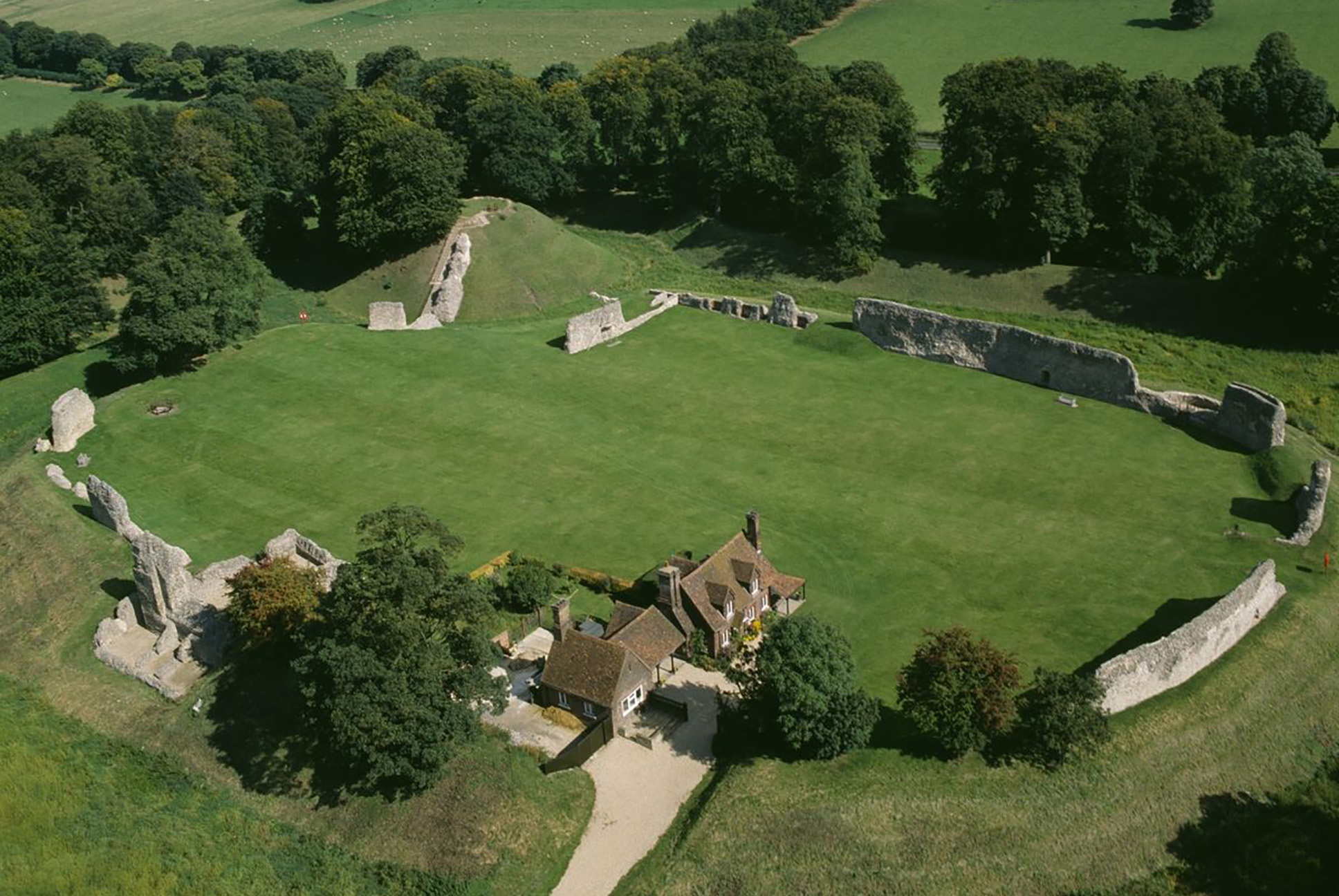
Berkhamsted Castle, where Edward and Joan lived.
Edward's eldest son died in 1370, and, with his own health failing, he returned to England in January 1371 and met his father at Windsor. On October 6th, 1372, he resigned the principality of Aquitaine, saying that its revenues were too small. He and Joan lived at Berkhamsted Castle in Hertfordshire, which the prince had held since 1337 as Duke of Cornwall, and the castle still remembers him with pride. In 1376, he sided with the Commons in the Good Parliament against the king's unpopular councillors, and he died on June 8th, 1376, at the Palace of Westminster, aged forty-five.
The Black Prince was buried in Canterbury Cathedral on September 29th, 1376, as his will directed. His bronze effigy lies beneath a canopy, and his helmet, surcoat, shield, and gauntlets once hung above it. Replicas hang there today, and the originals are in a glass case nearby. Edward III died the next year, and the crown went to the prince's ten-year-old son, Richard II. The nickname "Black Prince" is not recorded in writing until the 16th century, and no one knows how it began. It may refer to a black shield he used in tournaments, the "shield for peace," decorated with three white ostrich feathers, while some suggest the French coined the name for his harsh raids. English chroniclers saw him as the model of chivalry, but the French remembered his harsh raids.
