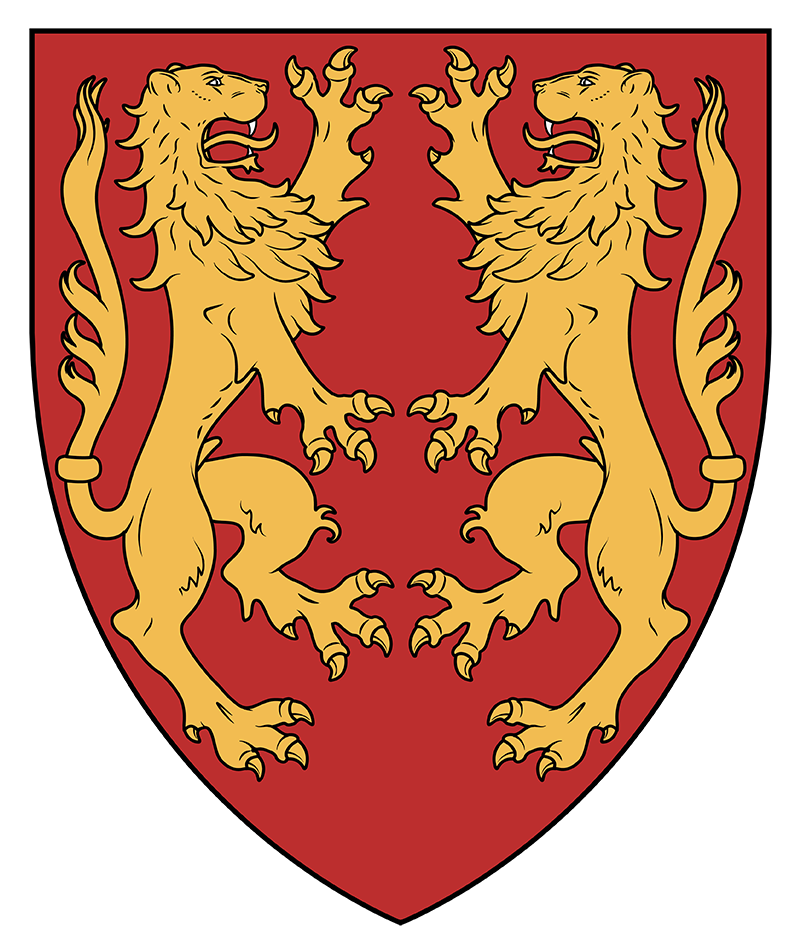
Richard I - King of England (1189-1199)
Richard the Lionheart
Richard I ruled England from 1189 to 1199 and is one of the best known of its medieval kings. He was a great soldier, the leader of the Third Crusade, and a king who spent perhaps six months of his ten-year reign in England. He was captured on his way home from the Holy Land and ransomed for a fortune, and he died of a crossbow wound while besieging a small castle in France.

Château de Chinon above the River Vienne. Henry II died here in 1189, and Richard came to take his father's treasure.
Richard was born on September 8th, 1157, probably at Beaumont Palace in Oxford, the third son of Henry II and Eleanor of Aquitaine. He was never expected to be king, because his elder brother, Henry the Young King, had been crowned as his father's heir, but he grew up in his mother's lands in Poitou and Aquitaine, and they were always his real home. He spoke French and Occitan, wrote poetry in both, and probably understood a little English. In 1172, at the age of fourteen, he was invested at Poitiers as Duke of Aquitaine, and he was given the lance and the banner of the duchy. By the time he was sixteen he was commanding his own army.
He used it first against his own family. In 1173 he joined his brothers and the French king in the rebellion against Henry II, a conflict the chronicler Jordan Fantosme called a "war without love." It failed, and in September 1174, Richard went to his father at Poitiers and begged his forgiveness. He then spent years putting down the rebellious barons of Aquitaine, and in the spring of 1179, he took the castle of Taillebourg in two days. He was already known as a fighter, and the Welsh churchman Gerald of Wales, writing in 1187, called him "our lion." The phrase le quor de lion is first recorded in the poem by Ambroise about the Crusade.
Richard became his father's heir when the Young King died in 1183, and Henry then demanded that he give up Aquitaine for his brother John. Richard refused. In 1187, he allied himself with Philip II of France, and in the summer of 1189, they drove Henry out of Le Mans and forced him to agree to Richard as his heir at Ballan. The old king died at Chinon two days later. One chronicler, Roger of Howden, says that his corpse bled from the nose when Richard came to see it, which people took as a sign of guilt. Richard had already taken the cross, and he was crowned at Westminster Abbey on September 3rd, 1189. During the ceremony, a bat is said to have flown in zigzags around the king's head, and people saw it as an evil omen. Richard was a Plantagenet, and the family told a story about their own origins, that "from the Devil we sprang and to the Devil we shall go." One of the first acts of his reign was to reward William Marshal, who had killed Richard's horse at Ballan, and not Richard, by giving him an heiress as a wife. He also released his mother, Eleanor, who had been kept a prisoner for the last ten years of Henry's reign.
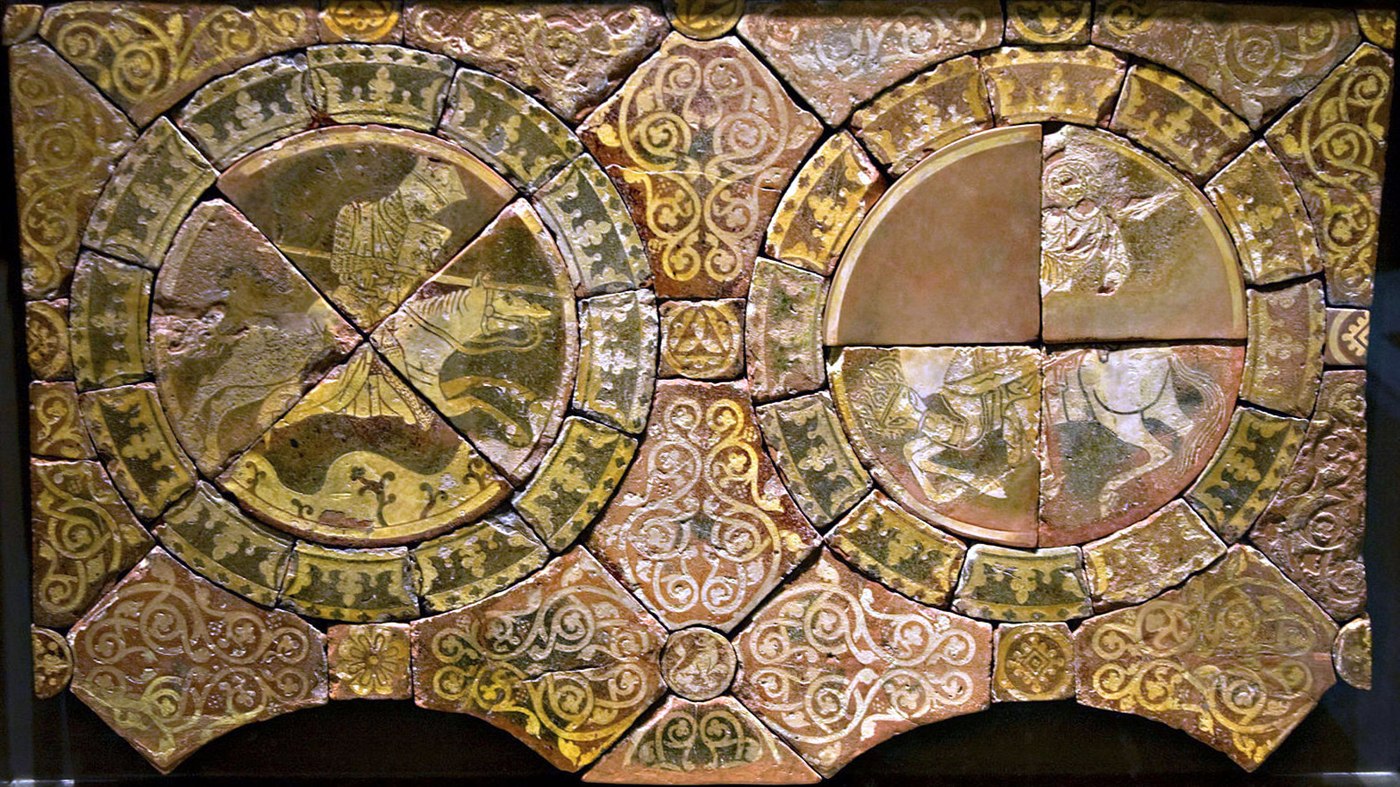
Richard and Saladin, on tiles made about 1250-60 for Chertsey Abbey. British Museum. Photo from Wikimedia Commons, CC BY-SA 3.0, resized.
His coronation was marked by a tragedy. Jewish leaders came to bring gifts, and the courtiers drove them away, and a rumor spread that the king had ordered the killing of all Jews. In the riots that followed, a mob in London burned Jewish houses and killed some of their owners, and others were forcibly converted or took refuge in the Tower. Richard ordered the ringleaders to be hanged and sent out a writ telling people to leave the Jews alone, but it was barely enforced, and in March 1190 the violence broke out again in other cities, including York, where the Jews who had taken refuge in the royal castle died.
The Crusade needed money, and Richard raised it by every means that he could. He taxed the country, sold offices and sold the king of Scotland his freedom from homage for 10,000 marks. "I would have sold London," he is supposed to have said, "if I could find a buyer." He left his government in the hands of regents, and in July 1190, he set out for the Holy Land with a fleet of more than 100 ships and 8,000 men, intending to return in three years. But that was not to be. He went by way of Sicily, where he fell out with the people of Messina, and he took the city by storm on October 4th and burned it.
In May 1191, he sailed east for Acre, and a storm scattered his fleet. Some ships, with his sister Joan and his bride, Berengaria of Navarre, were wrecked off Cyprus, where the island's ruler, Isaac Komnenos, seized the survivors. Richard landed at Limassol on May 1st and married Berengaria there on the 12th. By June 1st, he had conquered the island, and Isaac surrendered on the condition that he would not be put in irons, so Richard had him put in silver chains. He reached Acre on June 8th, 1191. The Christian siege of the city had begun in about August 1189, and it had gone on for nearly two years, until Philip II arrived in April 1191 and Richard followed him, and the two kings' siege engines and miners made breaches in the walls. The garrison offered to surrender on July 4th, but the terms were rejected, and after a final battle on the 11th, the city surrendered on July 12th. The terms were a large ransom, the return of the True Cross and the release of Christian prisoners, and the Muslim defenders were held as hostages until they were met. The banners of Jerusalem, France, England and Austria were raised over the walls.
The crusade then went wrong. Richard backed Guy of Lusignan for the kingdom of Jerusalem, and Philip II and Leopold V of Austria backed Conrad of Montferrat. Leopold's banner was raised on the walls of Acre, and Richard's men threw it into the moat, and Leopold left in anger and did not forget. Philip sailed for France on August 3rd, and Richard held about 2,700 Muslim prisoners as hostages, but when Saladin did not pay the agreed ransom on time, he had them all executed outside the walls on August 20th. The massacre was condemned by Muslims and was defended by Richard's own writers, and it has remained the darkest mark on his record.
On September 7th, 1191, at Arsuf, about thirty miles north of Jaffa, Saladin's army attacked the crusaders as they marched down the coast. Richard held his men in line until the Hospitallers broke ranks and charged, and he then launched a general counterattack that routed the enemy. It was the greatest victory of the crusade, but he could not take Jerusalem. At the start of 1192, he came within twelve miles of it before exhaustion, sickness and shortages of supplies forced him back, and in June 1192, his army came within sight of the city and retreated again, because Richard did not think that he could hold it. At one point, he proposed that Saladin's brother, al-Adil, whom the crusaders called Saphadin, should marry Richard's sister Joan and rule Jerusalem with her, but Joan refused. Conrad of Montferrat was murdered at Tyre by two Assassins on April 28th, 1192, soon after being elected king of Jerusalem, and many people at the time suspected Richard of arranging it. The killing was never solved.
In the summer of 1192, Saladin took Jaffa, and Richard retook it with a small force by landing from the sea. Saladin's biographer, Baha ad-Din, who was there, wrote that none of the sultan's soldiers would leave the ranks to attack Richard. On September 2nd, they agreed to a three-year truce that left the coast to the crusaders, ordered the walls of Ascalon to be torn down and allowed pilgrims to enter Jerusalem. Richard left the Holy Land on October 9th, 1192, sick and exhausted, and he never saw it again.
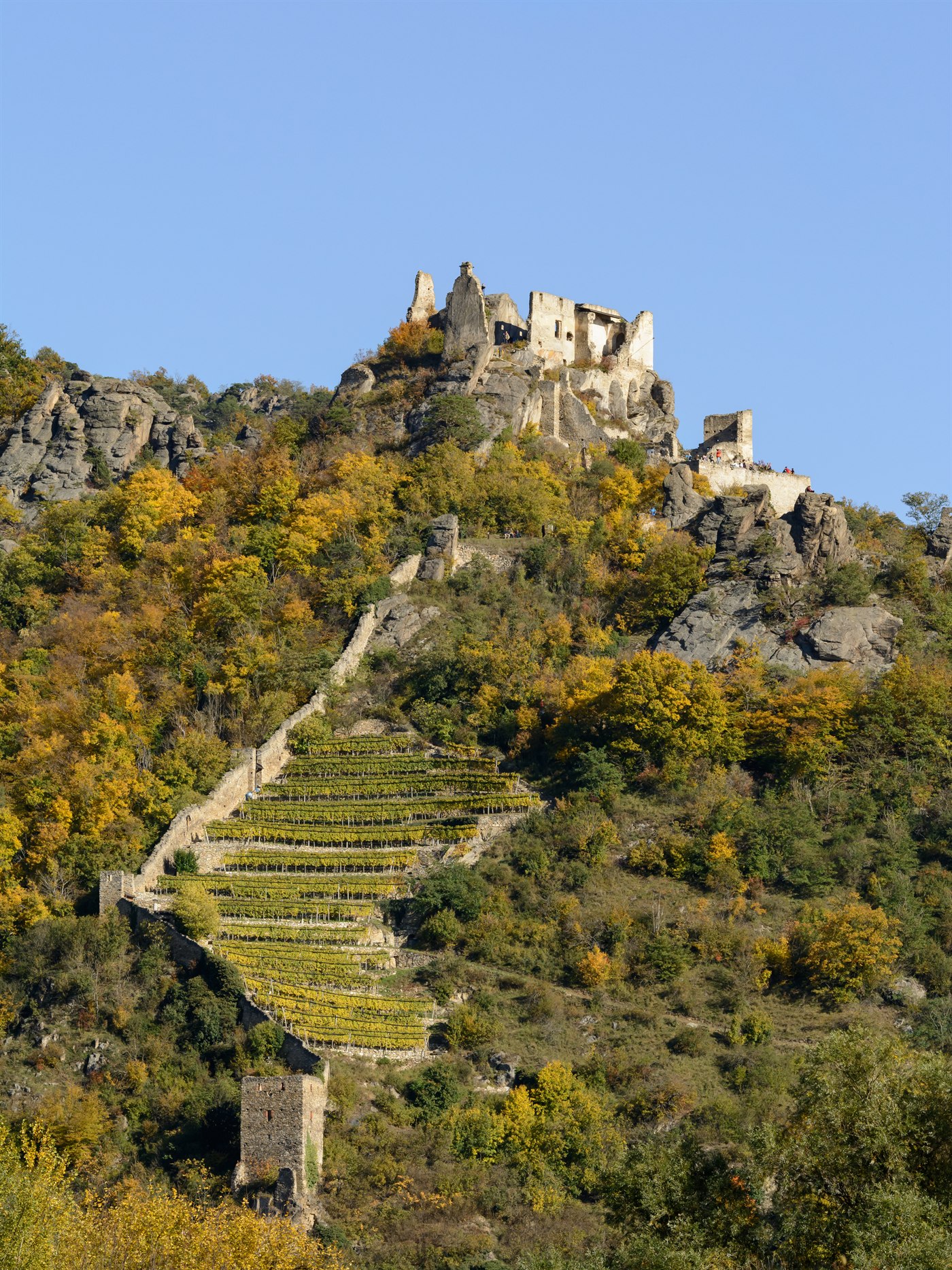
The ruins of Dürnstein Castle in Austria, where Richard was held. Photo by Uoaei1, Wikimedia Commons, CC BY-SA 4.0, resized.
His ship was wrecked near Aquileia on the Adriatic, and since his enemies controlled the roads, Richard tried to cross Europe in disguise, as a Knight Templar. A few days before Christmas 1192, he was recognized near Vienna and was arrested by Leopold, who accused him of murdering Conrad and insulting the banner at Acre. He was held at Dürnstein Castle on the Danube, and on March 28th, 1193, Leopold handed him over to the Holy Roman Emperor, Henry VI, who imprisoned him in Trifels Castle. The pope excommunicated Leopold for seizing a crusader. At Speyer, Richard is said to have told the emperor that he was "born of a rank which recognizes no superior but God." In prison, he wrote the song Ja nus hons pris, in which he says that no prisoner can speak his mind properly unless it is in sorrow, and it was addressed to his half-sister, Marie.
The price of his release was 150,000 marks, which was two or three times the annual income of the English crown. His mother, Eleanor, helped to raise it, and every possible money-raising device was used. Church gold and silver plate was seized and sold, and a whole year's wool crop was taken from the farms run by two Cistercian monasteries. A hefty 25 percent tax was levied on all income, and there were special levies on land. Meanwhile, his brother John and Philip II offered the emperor 80,000 marks to keep Richard in prison until Michaelmas of 1194, but Henry VI refused. Richard was freed on February 4th, 1194. Philip sent a warning to John: "Look to yourself, the devil is loose."

The gatehouse at Nottingham Castle.
Richard landed in England in March 1194 and took Nottingham Castle from John's supporters after a short siege. John had tried to seize the throne while his brother was in prison, and Richard meant to show everyone that he was king. On April 17th, the octave of Easter, he was crowned for a second time in the cathedral at Winchester, with Archbishop Hubert Walter officiating and his mother, Eleanor, present, to wipe out the disgrace of his captivity. He left for Normandy a few weeks later, and he never came back. He had spent about six months in the country during his reign, and he spent the last five years of it fighting Philip II in France.
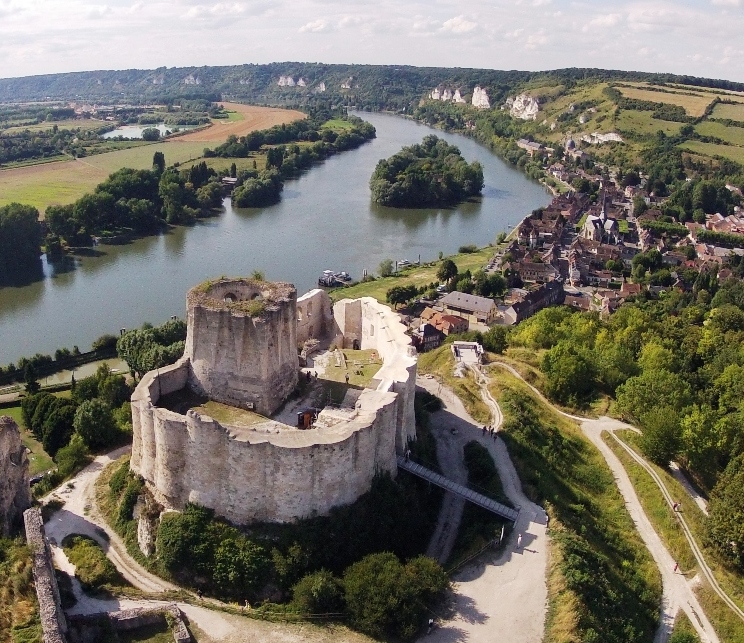
Aerial view of Château Gaillard, high above Les Andelys and the Seine. Photo by Sylvain Verlaine, Wikimedia Commons, CC BY-SA 3.0.
The war was fought over castles. Philip took the Norman Vexin and the castle of Gisors in 1193, and Richard answered by building a fortress on a cliff above the Seine at Les Andelys, in the heart of the disputed territory. Château Gaillard was built between 1196 and 1198 at a cost of about £15,000 to £20,000, and it was finished in about two years, which was astonishingly fast. Richard called it his "saucy castle." Philip is said to have boasted that he would take it if its walls were made of steel, and Richard answered that he would hold it if they were made of butter. The historian Allen Brown called it "one of the finest castles in Europe." Richard won a battle at Fréteval in 1194, where Philip fled and left his archive of financial records to be captured, and another at Gisors in 1198, where he took "Dieu et mon droit" as his motto. His second great seal in the same year was the first to show the three lions of England.
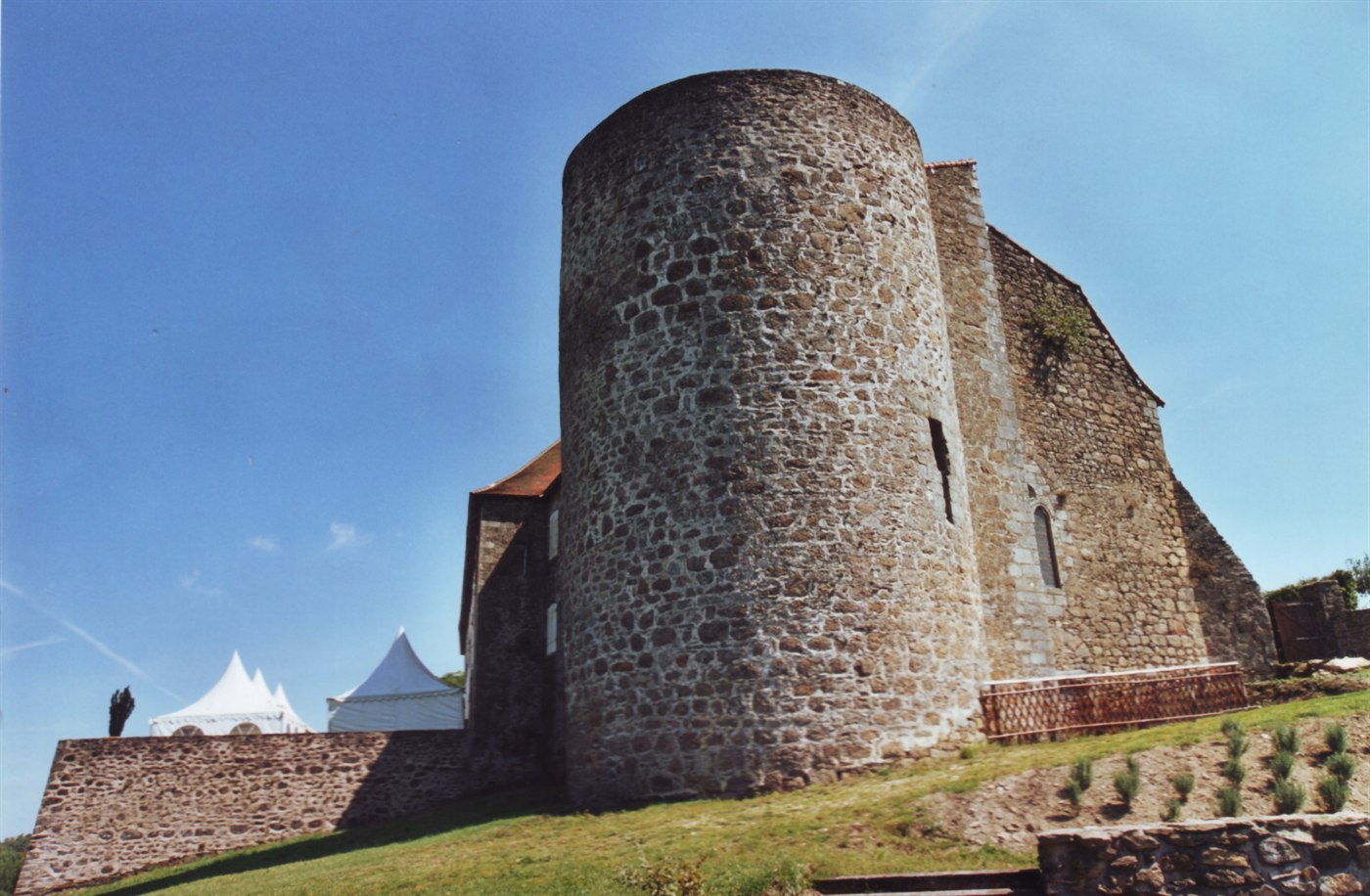
The corner tower of Château de Châlus-Chabrol. Photo by Fonquebure, Wikimedia Commons, CC BY-SA 3.0, resized.
In March 1199, Richard was in the Limousin, laying waste to the lands of the Viscount of Limoges, and he laid siege to the small castle of Châlus-Chabrol. Some chroniclers said that a peasant had found a hoard of Roman gold there, and that Richard wanted it. On March 26th, as he walked around the walls without his armor, a crossbow bolt struck him in the shoulder, fired by an archer who is said to have used a frying pan as a shield. The surgeon broke the shaft as he pulled it out and left the head in the wound, and it turned gangrenous. Richard knew that he was dying. The man who had shot him is named in different sources, and some say he was a boy. He said that Richard had killed his father and his brothers, and the king pardoned him, saying, "Live on, and by my bounty behold the light of day," and ordered that he be freed and given a hundred shillings. After Richard died, the captain of his mercenaries, Mercadier, is said to have had the man flayed and hanged.
Richard died on April 6th, 1199, in his mother's arms. His heart was buried at Rouen, his entrails at Châlus, and his body at Fontevraud Abbey in Anjou, at the feet of his father. The heart was found again at Rouen in 1838, and in 2013, French scientists reported that it had been embalmed with spices, plants and incense, and that the pollen in it suggested that he had died in April. His queen, Berengaria, had never been to England in his lifetime, and she was not sent for when he died. She settled at Le Mans, entered the abbey of L'Épau and died there in 1230. He left no legitimate children, only one illegitimate son, Philip of Cognac. He was succeeded by John, though much of his French lands wanted John's nephew, Arthur of Brittany, and the Angevin Empire began to come apart.
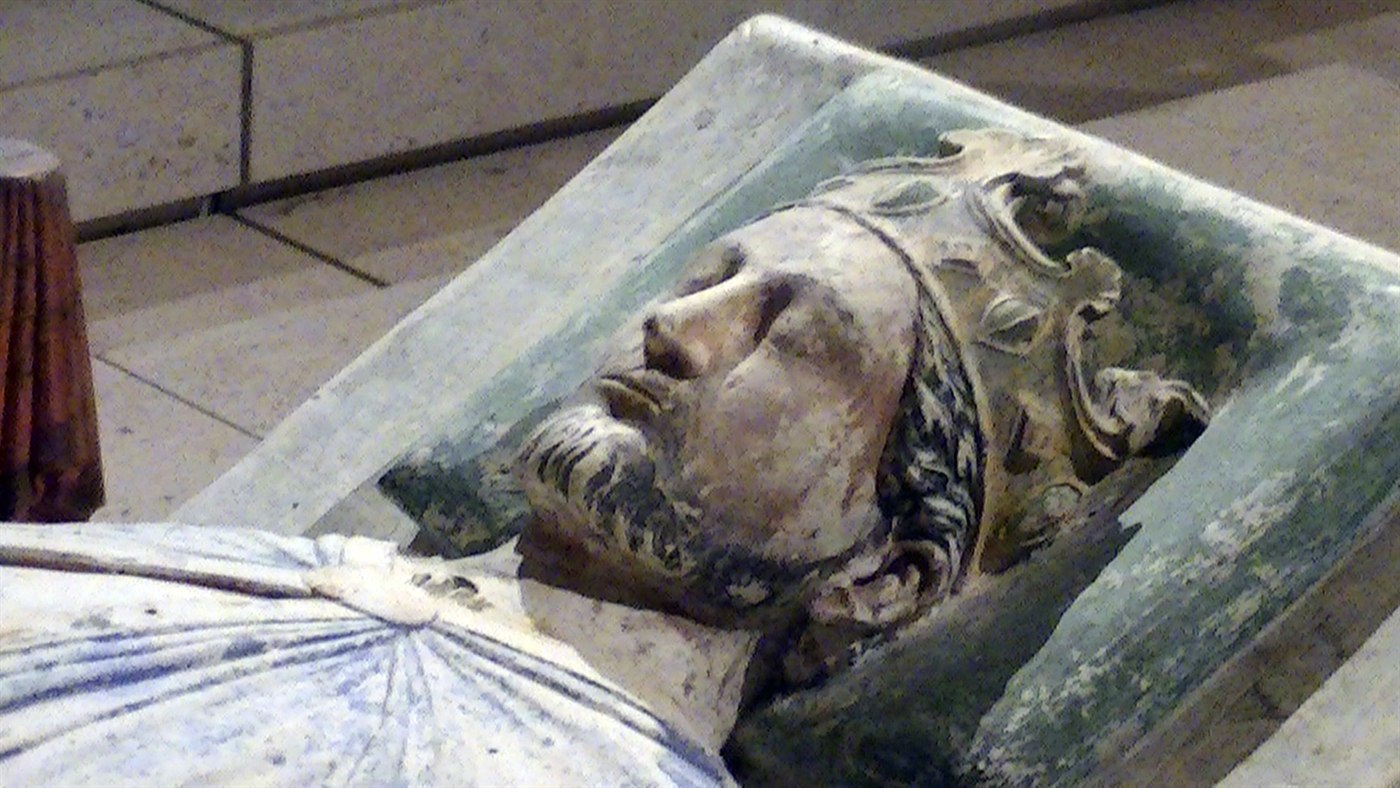
Richard's effigy at Fontevraud Abbey. Photo by Adam Bishop, Wikimedia Commons, CC BY-SA 3.0, resized.
For four hundred years, Richard was held up as the model of a medieval king. In the 19th century, the historian William Stubbs called him "a bad son, a bad husband, a selfish ruler, and a vicious man," and Steven Runciman agreed that he was a bad king but "a gallant and splendid soldier." Some historians point out that a king who raised an enormous ransom, held his lands together for ten years from a distance and left his enemies with nothing but a few castles was not a failure at government. The legend grew without him, and the story of the minstrel Blondel, who found him in prison by singing outside every castle, is a 13th-century invention. Richard's half-brother, William Longespée, fought for John, who lost Normandy and most of Richard's other lands within five years.
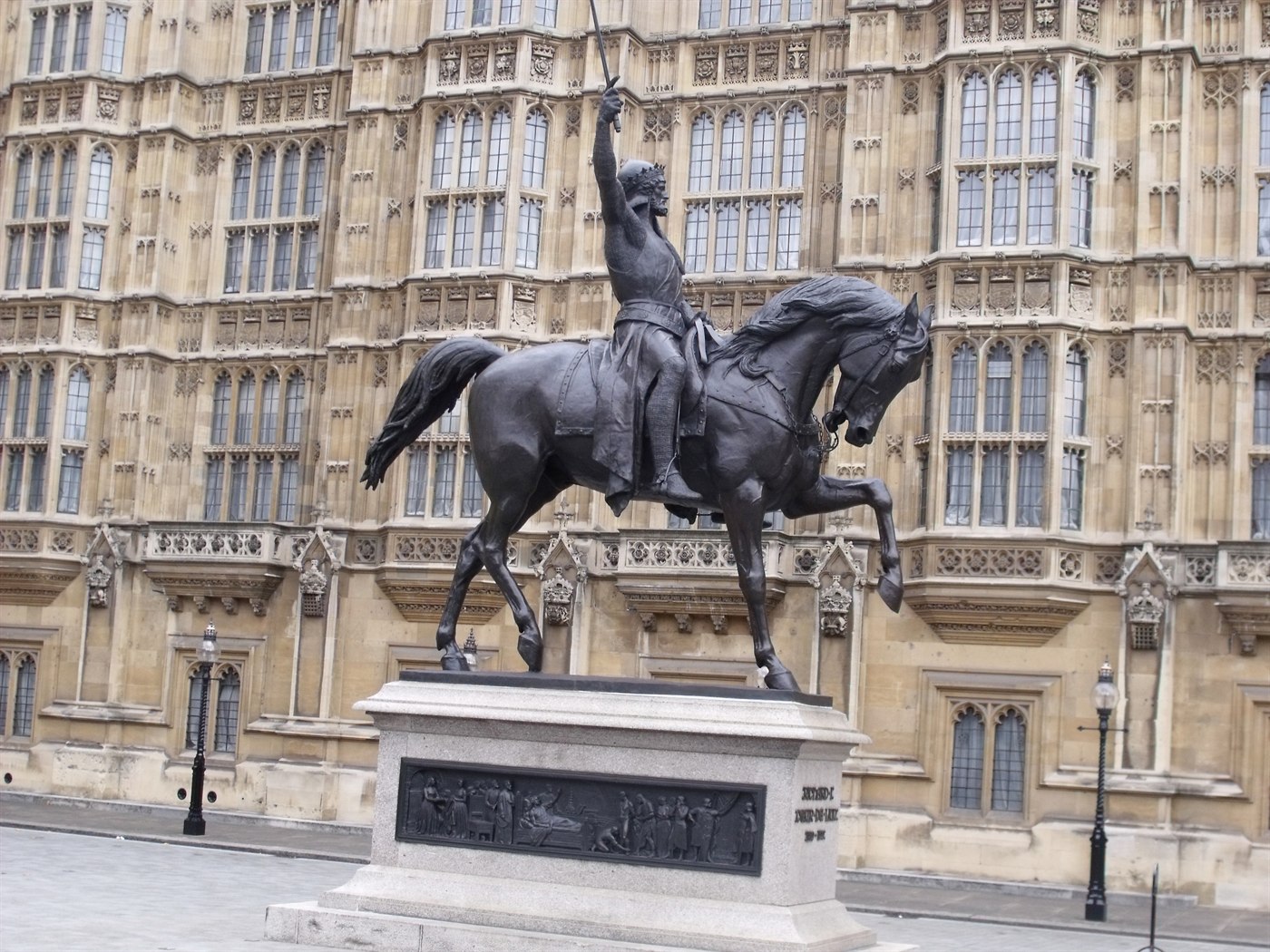
The statue of Richard I outside the Houses of Parliament, by Baron Carlo Marochetti. Photo by Elliott Brown, Wikimedia Commons, CC BY 2.0, resized.
The most famous monument to him is not at Fontevraud but in London, where Baron Carlo Marochetti's bronze of Richard on horseback, with his sword raised, has stood outside the Houses of Parliament since 1860. He is also the king in the Robin Hood stories, which were attached to his name in the 16th century and have been told ever since, with the Sheriff of Nottingham as the villain and Prince John as the wicked regent. The real Richard did not know Sherwood Forest, but he did take Nottingham Castle.