Conwy Castle / Castell Conwy
History
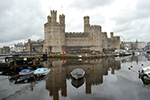
Conwy Castle stands on a rocky ridge beside the River Conwy in North Wales. Before the castle was built, the site was home to Aberconwy Abbey, a Cistercian monastery favored by the Welsh princes of Gwynedd.
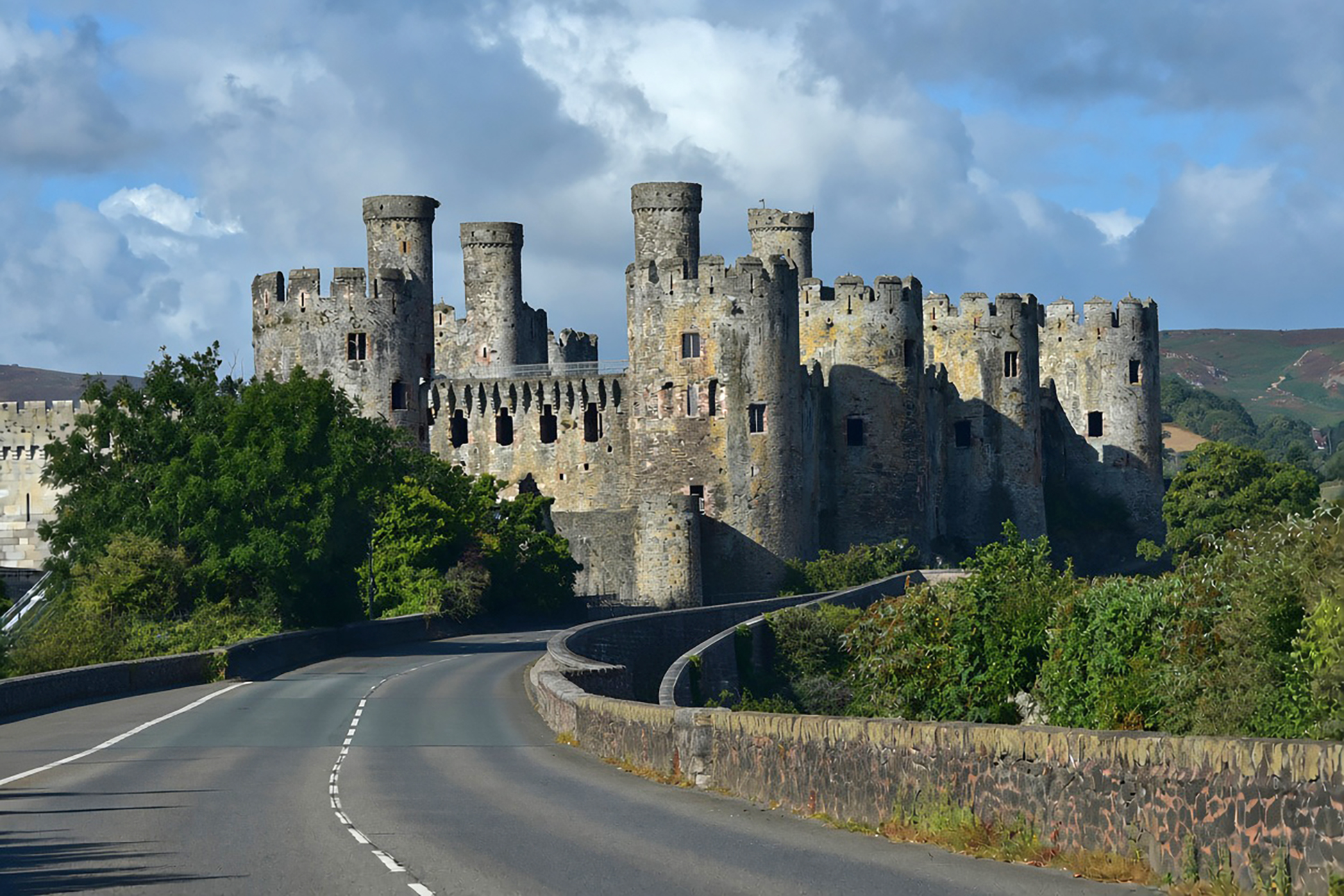
In 1282, Wales rose again against Edward I, and Llywelyn ap Gruffudd, Prince of Wales, was killed that December. Edward pushed into Gwynedd, captured Aberconwy in March 1283, and immediately ordered a castle and a walled English town built on the spot. The monks were moved eight miles up the valley to a new abbey at Maenan, a clear sign of who now ruled Wales.
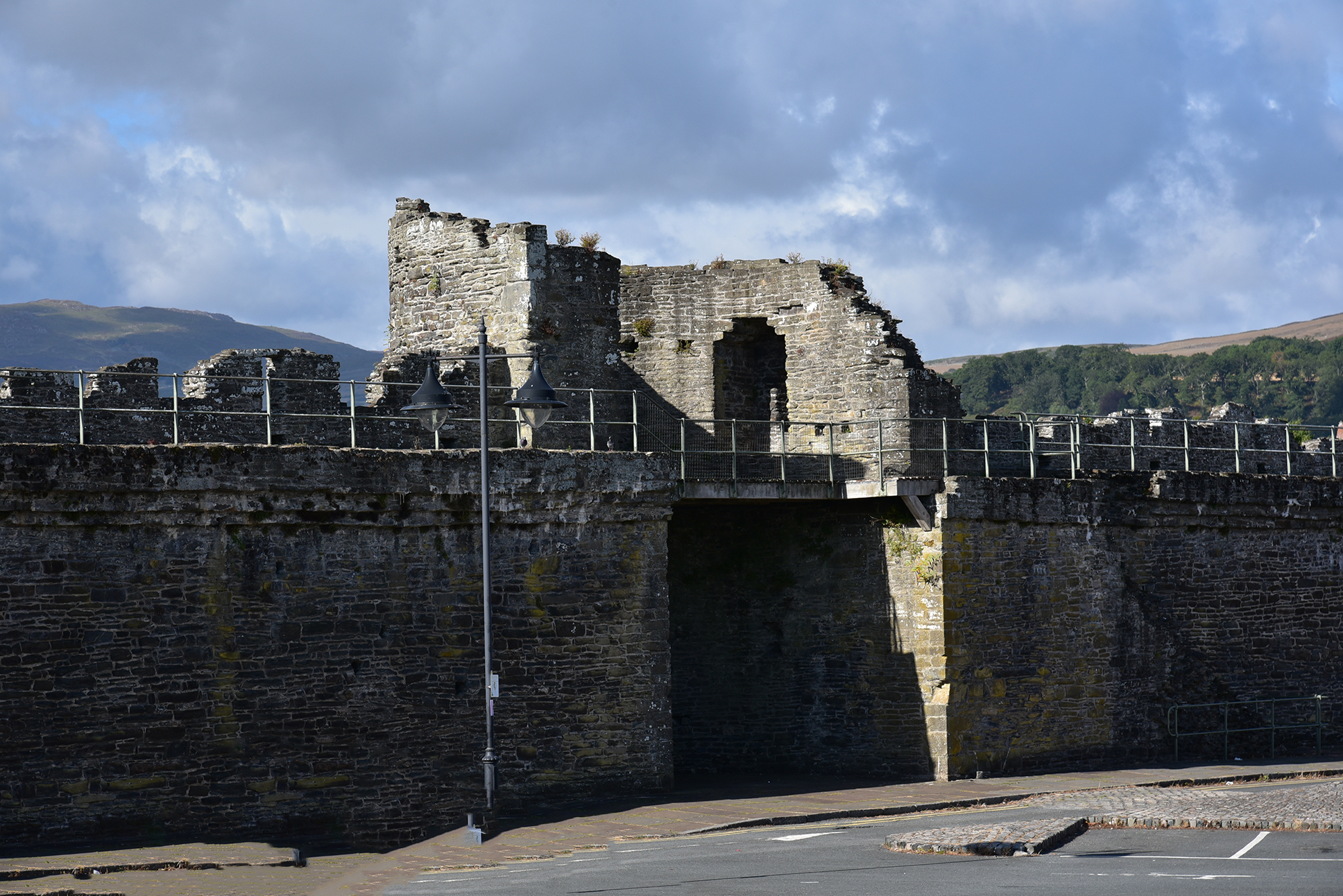
Part of Conwy's town wall, seen from inside the walls.
Construction began under Master James of St George, who had worked on Rhuddlan Castle and Flint Castle and would go on to oversee Caernarfon, Harlech, and Beaumaris castles. A document from 1286 records the house belonging to Master James inside the new town walls, on a site now covered by the car park beside the castle. The outer walls and towers went up first, in 1283 and 1284, followed by the interior buildings and the town walls through 1286, and by 1287 the castle was finished. Its eight massive towers and two wards were built at remarkable speed, and the castle and town walls together cost about £15,000, an enormous sum for the time. Laborers were recruited from across England and gathered at Chester before marching into Wales. The new town, protected by walls about three-quarters of a mile long, was meant to be settled by English burgesses.
The castle's strength was tested during the Welsh uprising of Madog ap Llywelyn. Edward I himself was besieged at Conwy from December 1294 until January 1295, with supplies reaching him only by sea, until a relief force arrived in February. Conwy was normally held by a small garrison of about thirty men, including fifteen crossbowmen, under a constable who was also the mayor of the new town.
The castle soon began to decay. As early as 1321, it was recorded that “In the hall of Conwy Castle several of the roof trusses have failed, and in other buildings and towers many of the trusses and much of the rest of the timber have perished for want of a covering of lead.” By 1322, the castle was no longer fit to accommodate the king. A survey carried out for Edward the Black Prince in 1343 recorded its poor state of repair. In 1347, repairs were carried out under his chamberlain, Sir John Weston, and the wooden trusses in the great hall range and the royal apartments were replaced with stone arches strong enough to bear the weight of new lead roofs. After the Black Prince's death in 1376, Conwy fell into neglect again.
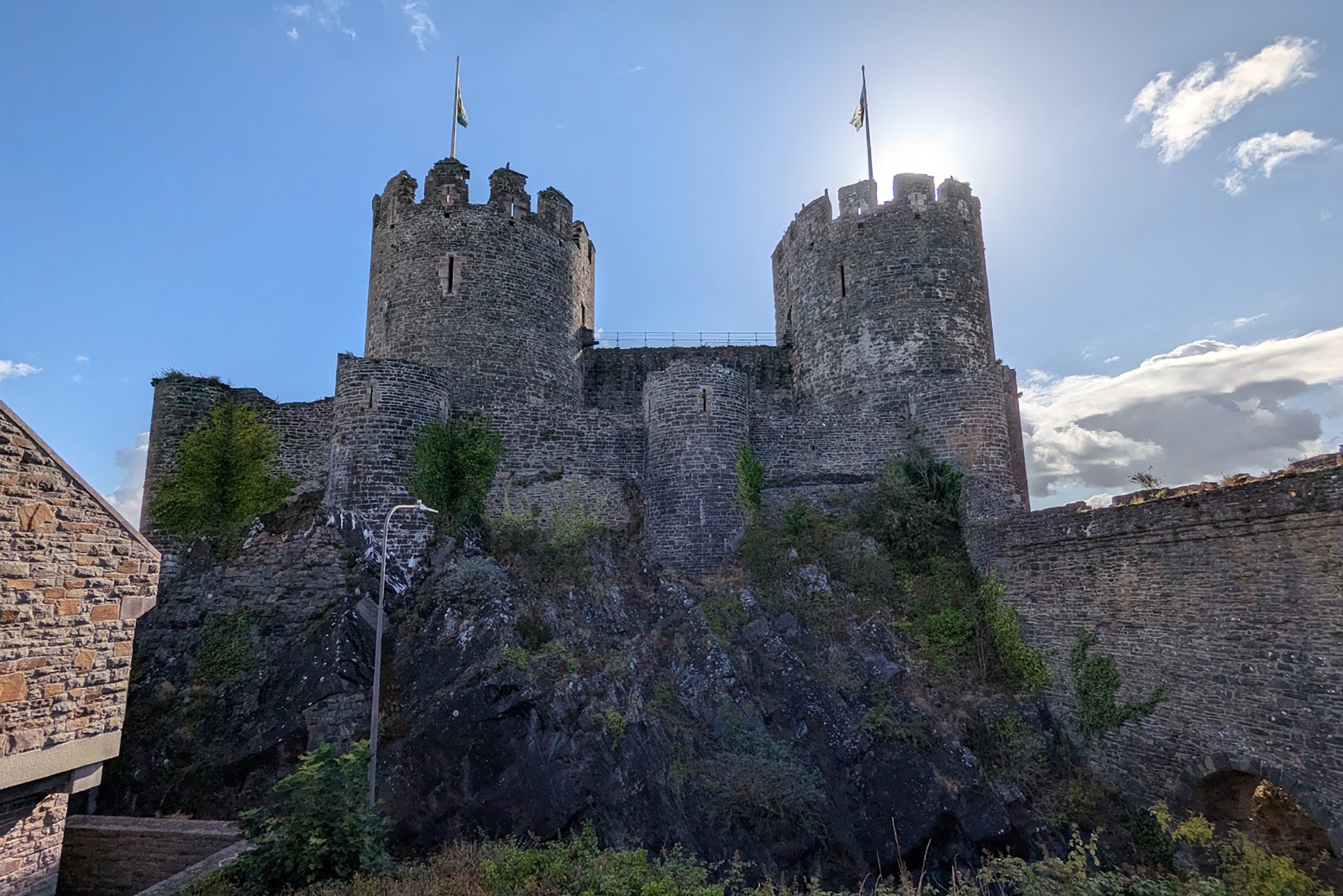
The towers of Conwy Castle rising above the rock.
In August 1399, Richard II returned from Ireland and withdrew to Conwy as his rival, Henry Bolingbroke, gathered strength. Henry Percy, Earl of Northumberland, came to Conwy as Bolingbroke's envoy and swore an oath in the castle chapel that the king would not be harmed. Richard then left for Flint Castle, where he surrendered on August 19th and was taken to the Tower of London.
On Good Friday in 1401, Rhys and Gwilym ap Tudur, cousins of Owain Glyndŵr and the great-uncles of Edmund and Jasper Tudor, disguised themselves as carpenters, killed the two watchmen, and seized the castle. Henry "Hotspur" Percy and Prince Hal were sent to retake it. After about three months, the brothers negotiated their surrender and received pardons from Henry IV.
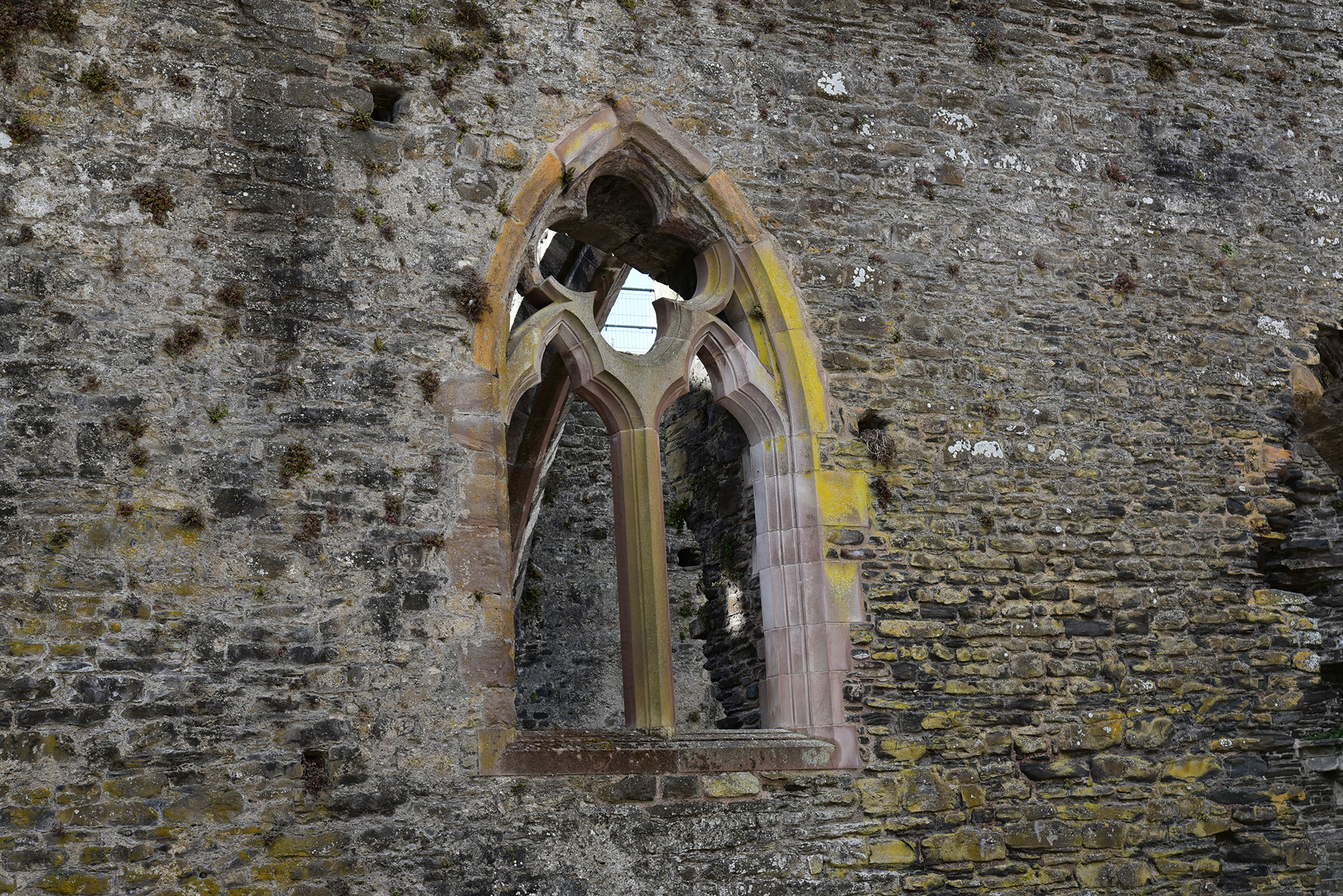
A Gothic window in the ruined great hall at Conwy Castle.
In 1627, Charles I sold Conwy Castle to Edward Conway, 1st Viscount Conway, for £100. When the English Civil War began in 1642, Archbishop John Williams of York took charge of the castle for Charles I and paid for repairs and a larger garrison out of his own pocket. In 1645, Sir John Owen was appointed governor instead, and the two men quarreled so bitterly that Williams switched sides and joined Parliament. The town fell to Parliamentary forces in August 1646, and General Thomas Mytton captured the castle after a siege that ended in November. In 1655, Parliament's Council of State ordered the castle slighted.
After the Restoration, Edward Conway, now Earl of Conway, regained the castle. In 1665, he had the remaining iron and lead stripped and sold, which left the castle a ruin despite the objections of the people of Conwy. By the late 18th century, the ruins were attracting artists such as J.M.W. Turner, and Thomas Telford's suspension bridge of 1826 made the castle easier for visitors to reach. In 1865, the castle was transferred to the town, and in 1953 the Ministry of Works leased it and began extensive repairs. Conwy Castle, with Caernarfon, Beaumaris, and Harlech, became part of the UNESCO World Heritage Site "Castles and Town Walls of King Edward in Gwynedd" in 1986. Today it is run by Cadw, the Welsh Government's historic environment service.
Castle Highlights
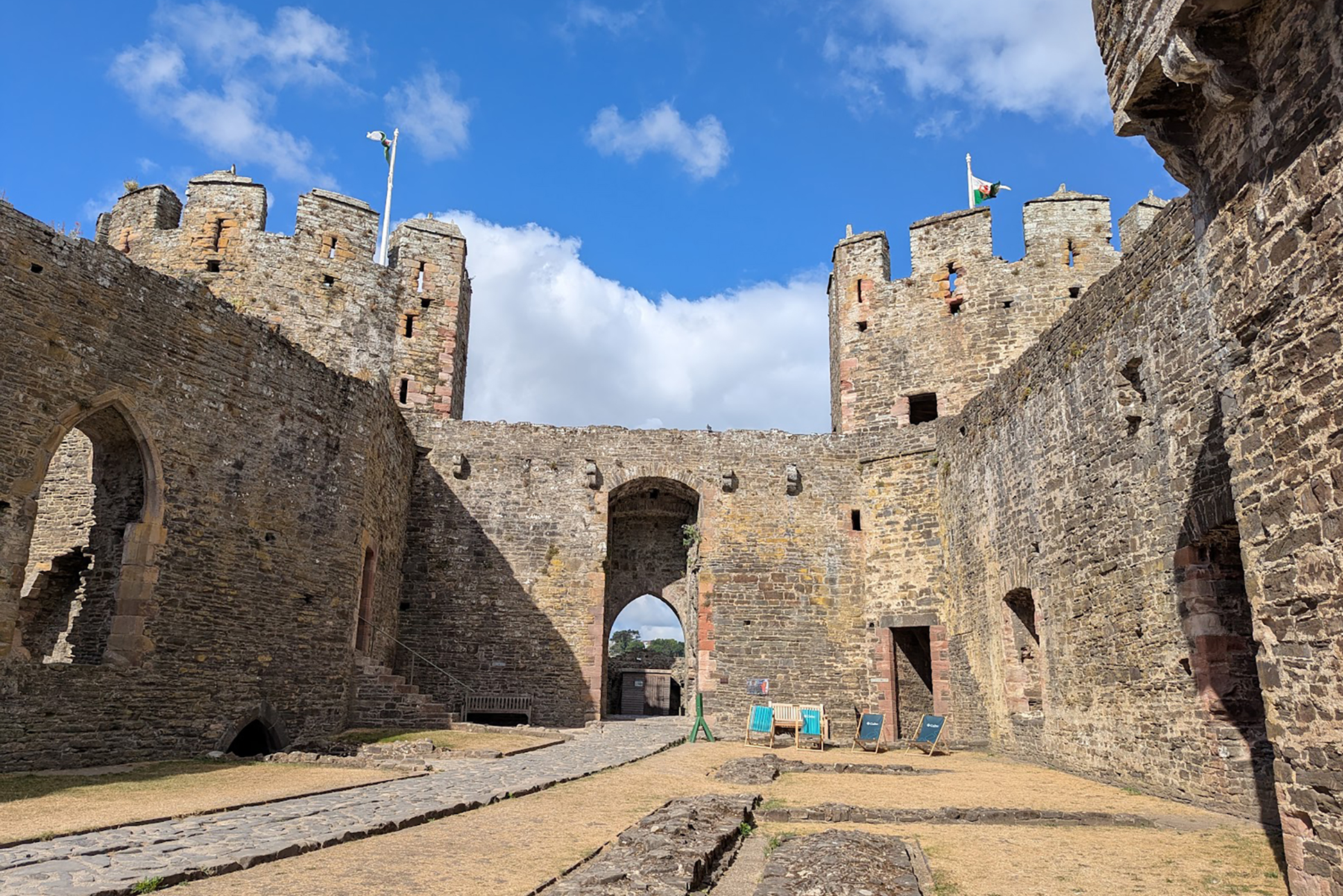
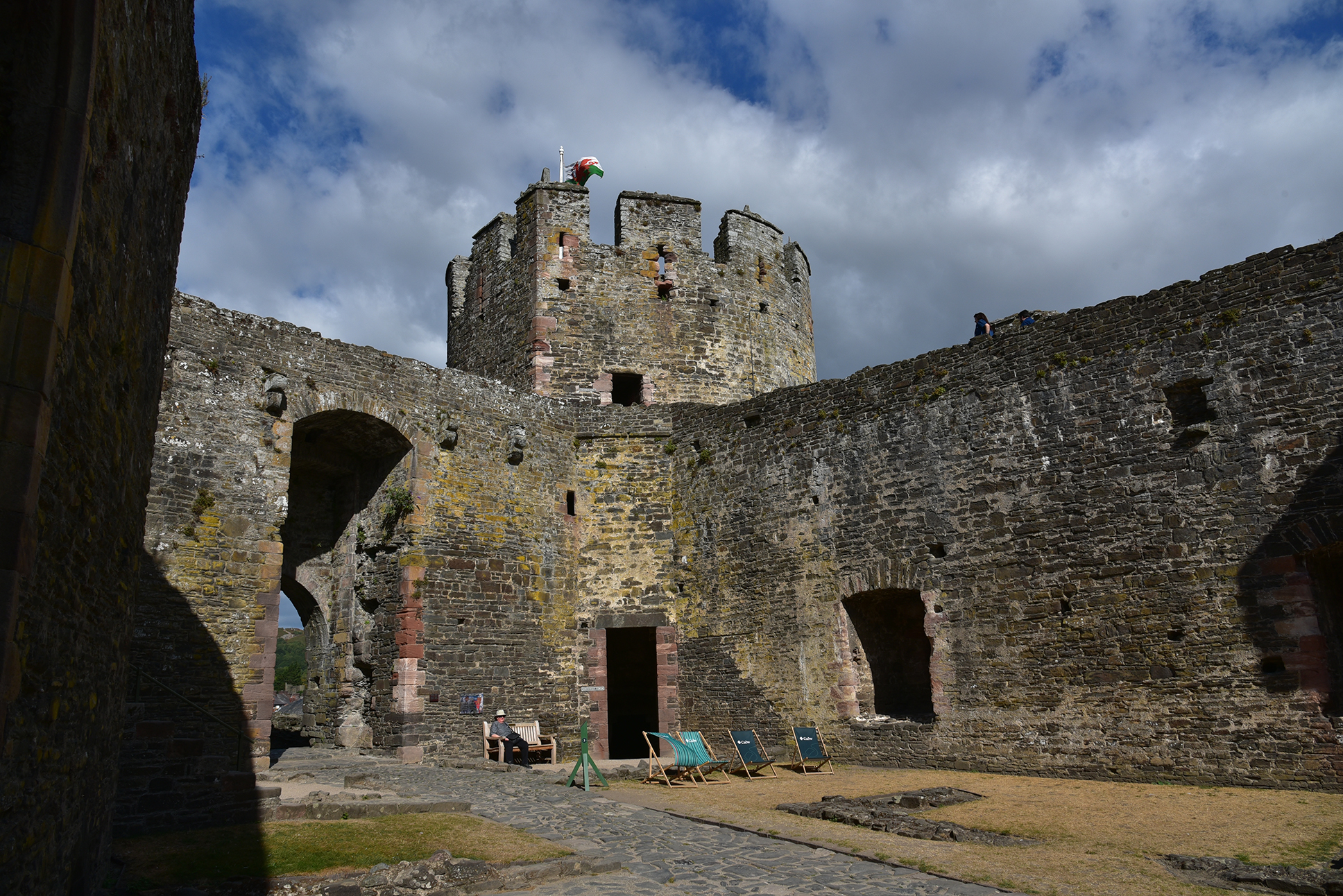
The outer ward at Conwy Castle.
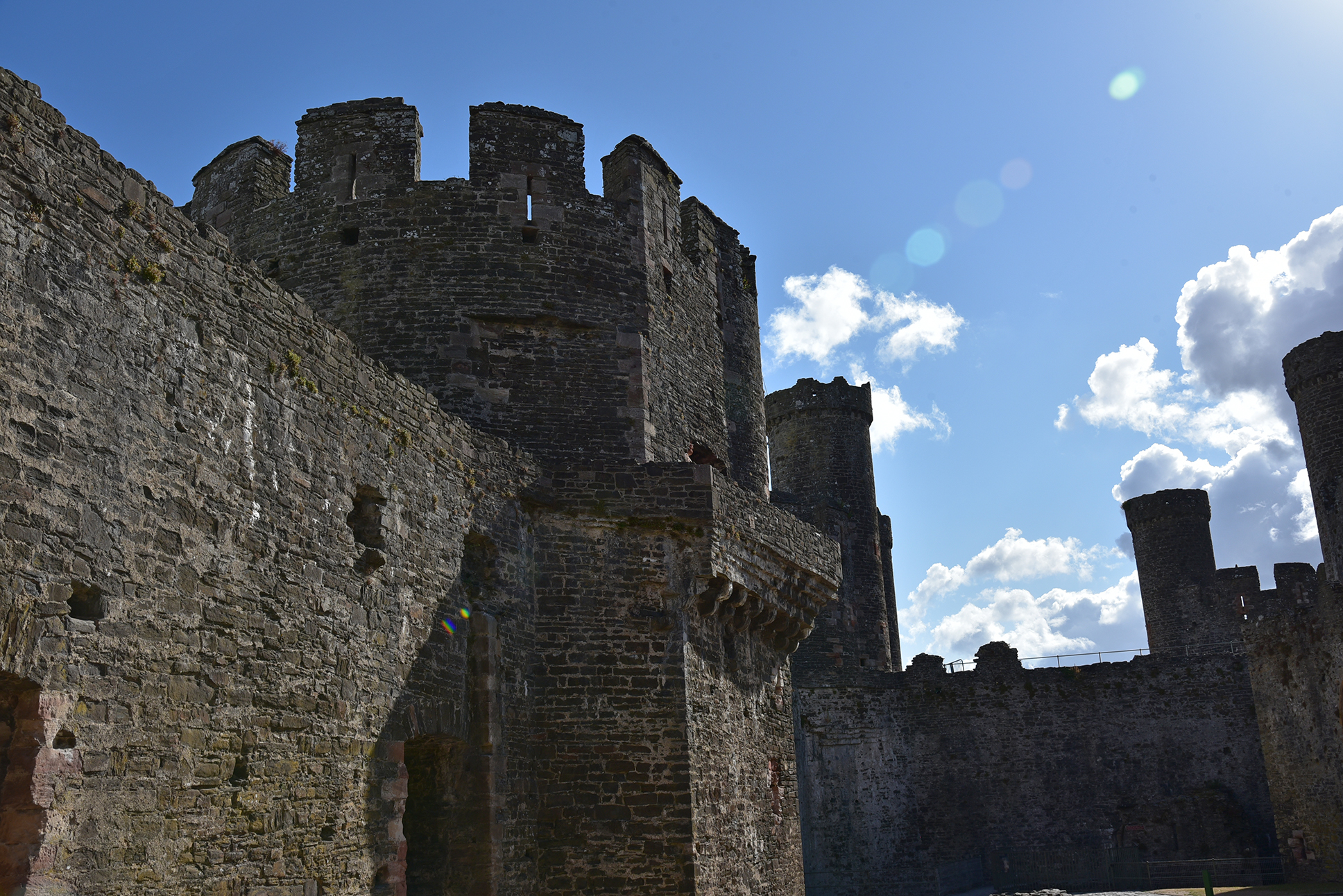
Conwy Castle is a rectangular fortress built on a rocky ridge and divided into an outer ward and an inner ward by a cross wall. Eight massive round towers and two barbicans defend it, with four towers guarding each ward. Watchtower turrets rise above the four inner ward towers, which gives the castle its distinctive skyline from across the River Conwy. The outer ward held the great hall, the chapel, and the service buildings, while the inner ward was a private royal palace designed to be sealed off from the rest of the castle.
The inner ward holds the best-preserved suite of medieval royal apartments in Wales. The rooms sit on the first floor around an inner courtyard, and the Chapel Tower once held the king's private chapel. The Kitchen Tower served the service buildings, and the Bakehouse Tower was partly pulled down when the castle was slighted in the 17th century. A spring-fed well, about 91 feet deep, supplied the castle with water, and the east barbican enclosed a castle garden.
The town walls are an important part of the story. Built with the castle between 1283 and 1287, they run for about 1.3 kilometers (0.8 miles) around the old town and are defended by 21 towers and three original gateways. Castle and walls were planned as a single unit, and together they are part of the UNESCO World Heritage Site that includes Caernarfon, Beaumaris, and Harlech. You can still walk much of the wall circuit today. The Mill Gate, the gateway closest to the castle, is now just an archway in the wall that traffic drives through, and the first couple of towers along the wall protect it.
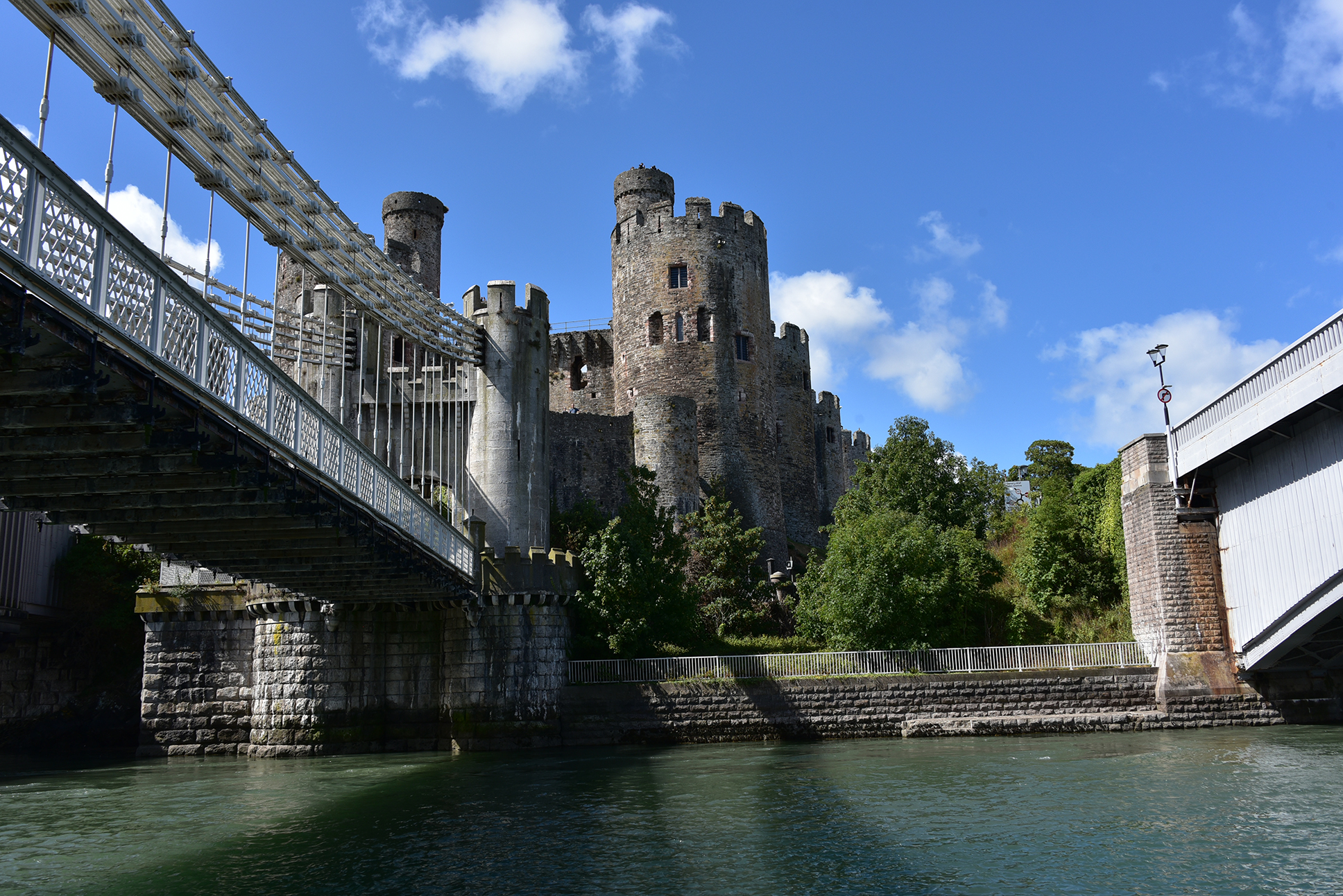
Conwy Castle behind Telford's suspension bridge, with the road bridge at the right.
Two famous bridges stand beside the castle. Thomas Telford's suspension bridge of 1826, now owned by the National Trust and open only to pedestrians, replaced the old ferry across the river. Robert Stephenson's tubular railway bridge of 1848 is the only surviving example of his tubular iron bridges. Telford even designed the castle-style stone towers of his bridge to match the medieval castle.
One of the best views of Conwy Castle is from the water. Sightseeing Cruises Conwy, a family-run business operating since 1946, runs half-hour river cruises from the Quay on Lower Gate Street from February to October, tide permitting. The boat passes under the bridges, turns around beyond them, and returns to the quay, giving views of the castle and its bridges that you cannot get from land. It is worth checking the tide times before you visit.
Conwy Castle is also haunted.