Dolwyddelan Castle / Castell Dolwyddelan
History
A Snowdonian stronghold of the Princes of Gwynedd, Dolwyddelan Castle was probably begun around 1210 by Llywelyn the Great, who served as Prince of Gwynedd and Wales, and work continued until about 1240. The original stone castle was a rectangular keep, soon joined by a curtain wall. It guarded the pass from Nant Conwy toward Meirionydd, the route that most roads from the north still follow through these mountains, past Dolwyddelan, to Harlech or Criccieth unless you take the coastal route.
The castle was reputed to have been the birthplace of Llywelyn the Great, but historians now believe he was born at nearby Tomen Castell, a small tower probably built by his father, Iorwerth Drwyndwn, which the castle replaced.

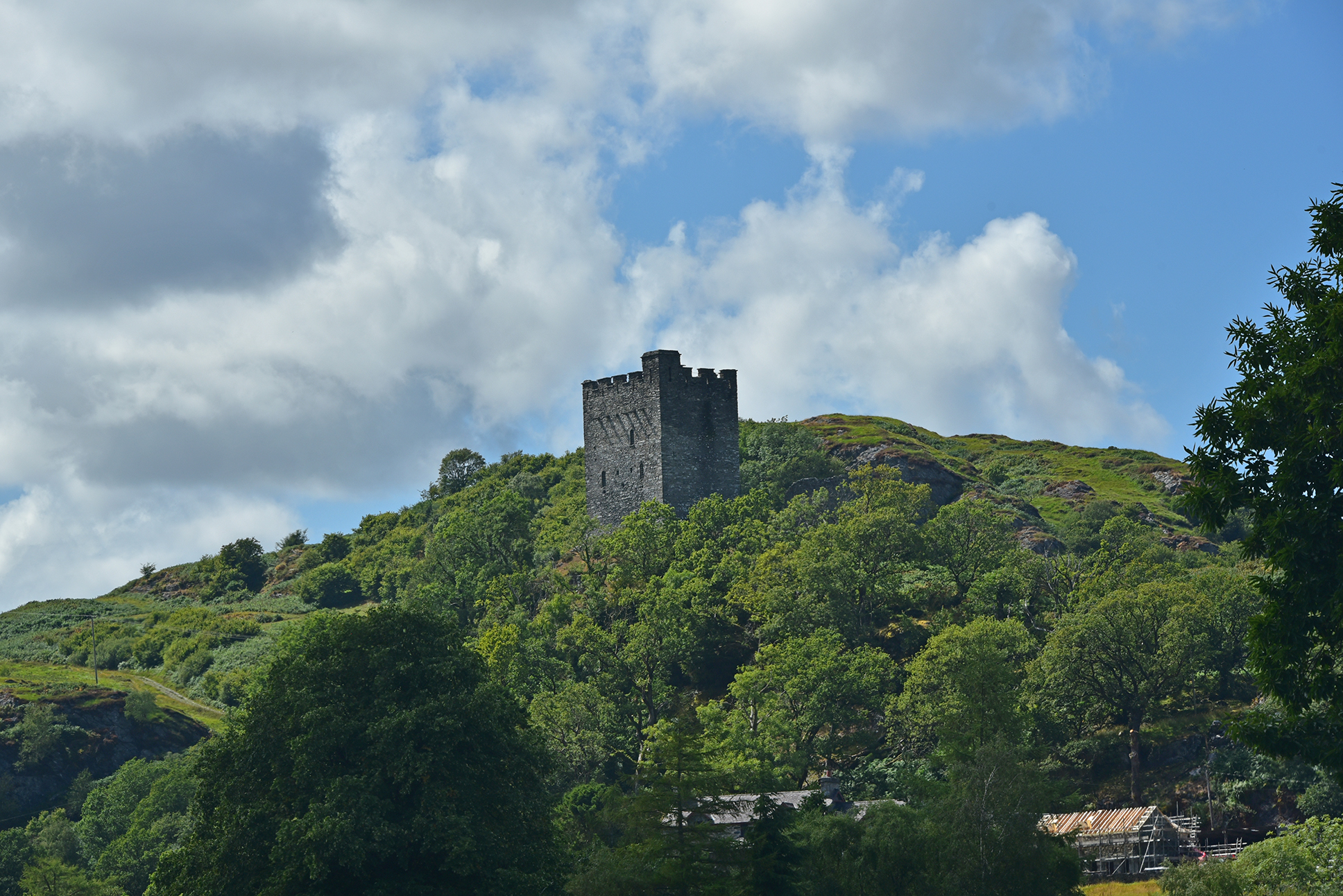
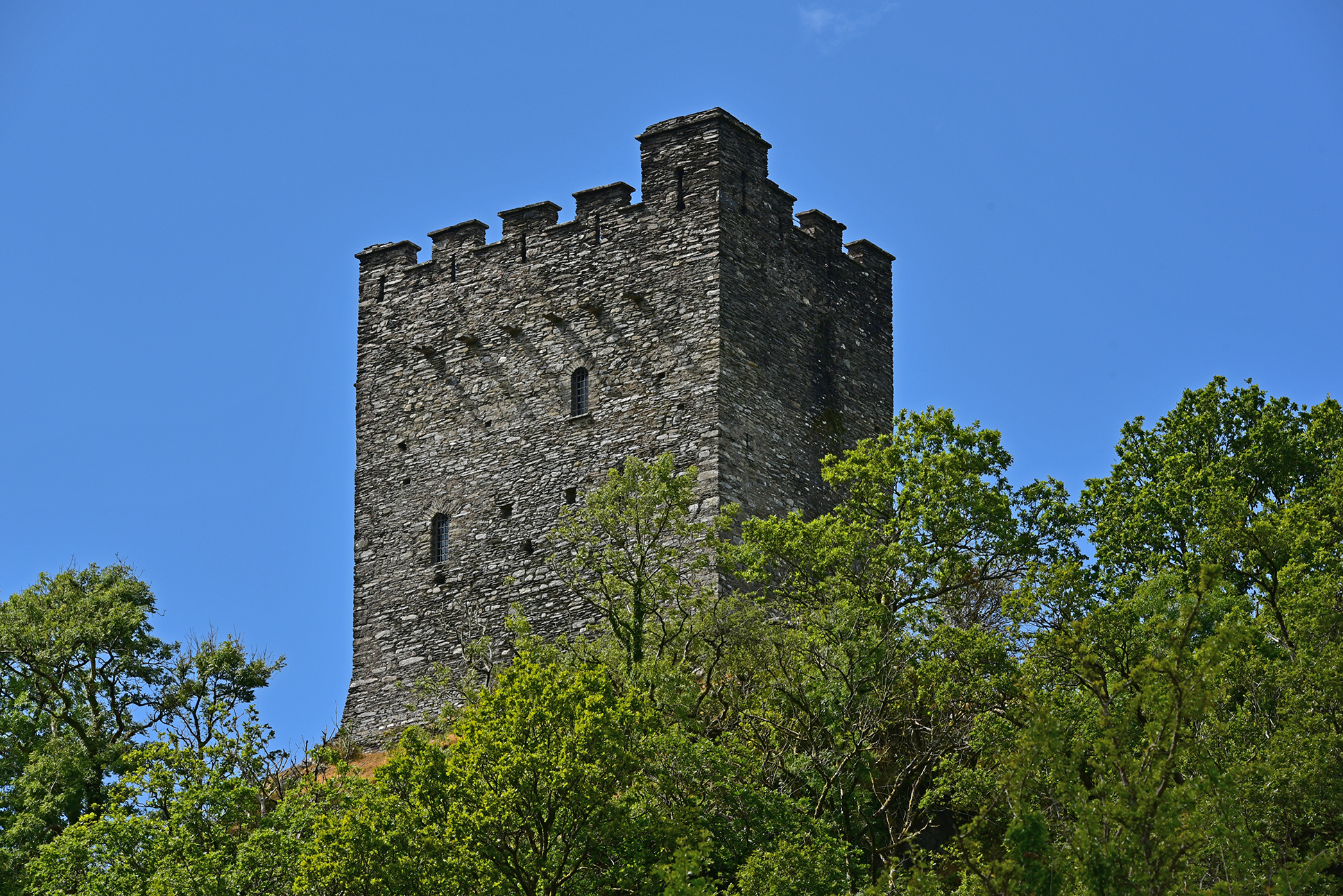
The keep on its rocky ridge.
On January 18th, 1283, the castle fell to the army of Edward I of England after a brief siege, during the final stages of Edward's conquest of Wales and his campaign against the revolt led by Dafydd ap Gruffudd, following the death of Llywelyn ap Gruffudd the month before. Works were put in hand the very day the castle was occupied, and the garrison was hastily equipped with camouflage clothing of white tunics and stockings, suitable for winter warfare in the mountains. The defenses were reinforced with a siege engine made at Betws and carried down the pass to be installed at the castle. The English also added a western tower and built a bridge and a watermill to support the garrison, although some historians think the west tower may instead date from the last years of Llywelyn ap Gruffudd. The two towers were surrounded by a curtain wall with a courtyard in the center. Repairs continued through at least 1286, and the English maintained a garrison at the castle until about 1290, before turning their resources to the more accessible coastal fortresses such as Conwy.
Nearly two centuries later, in 1488, Maredudd ab Ieuan, a local landowner connected to the Gwydir estate, acquired the lease to the castle. He made minor repairs and consolidations, including adding an upper story to the keep, but these efforts could not stop the castle's slow decay from the weather and lack of investment. He later bought Gwydir Castle, around 1515, and Dolwyddelan remained part of the Gwydir estate until it was sold in 1895.
It was reported that one of the towers may have collapsed around 1810. Between 1848 and 1850, Lord Willoughby de Eresby restored and partially remodeled the castle, raising the keep to its present height and adding the battlements. In 1930, the castle was placed under the guardianship of the Ministry of Works, and it is now under the protection of Cadw, which functions as the Welsh Government's historic environment service. In 1980, it was used as a filming location for the movie Dragonslayer.
Castle Highlights
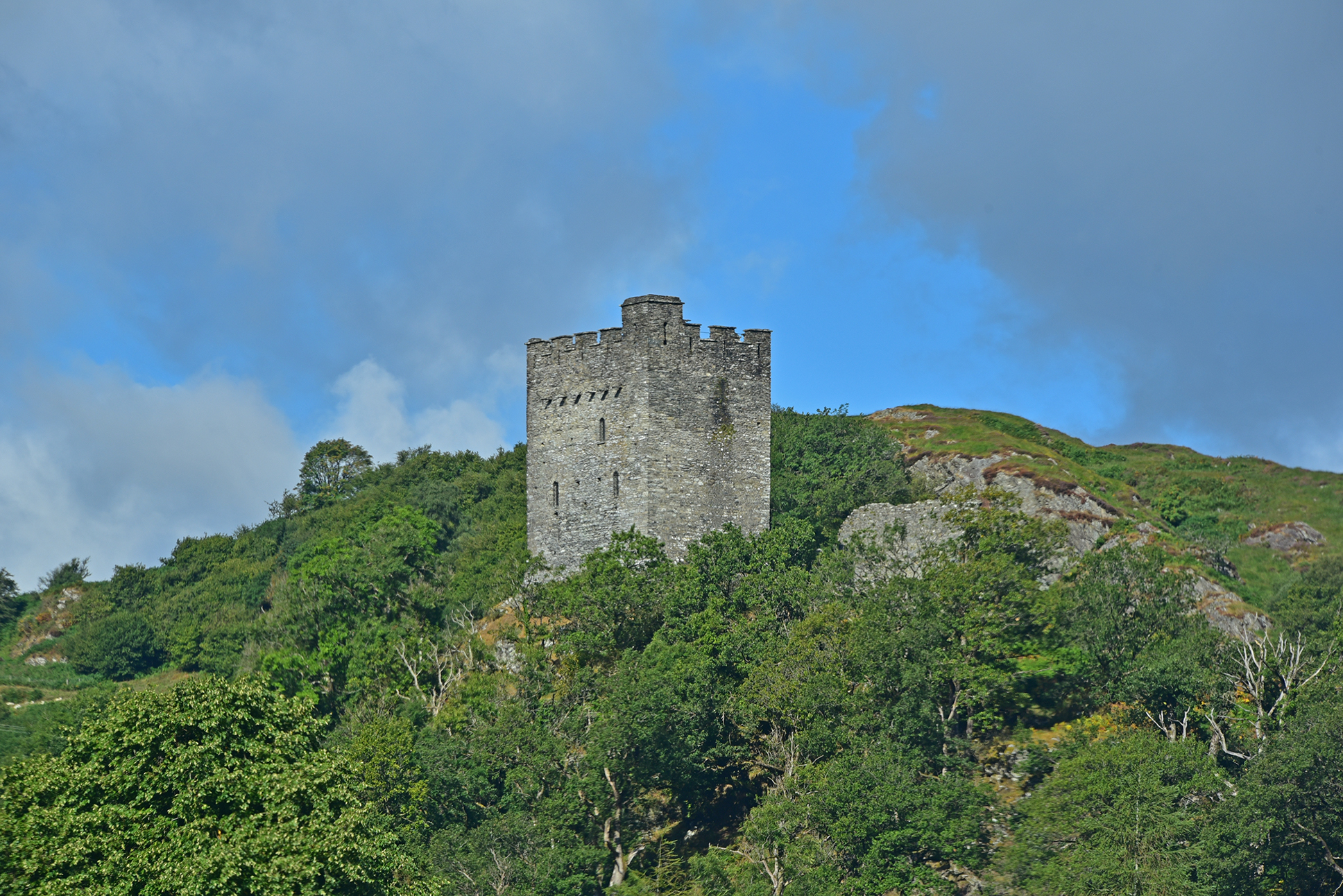
Dolwyddelan Castle sits high atop an outlying ridge facing the rugged grandeur of Moel Siabod. The original tower represents the most impressive feature of the castle. Its entrance is on the first floor, reached by steps. The keep is still partially intact, along with fragments of the curtain wall, which stands up to about four meters high in places. Spectacular views of the Snowdonian Mountains exist.
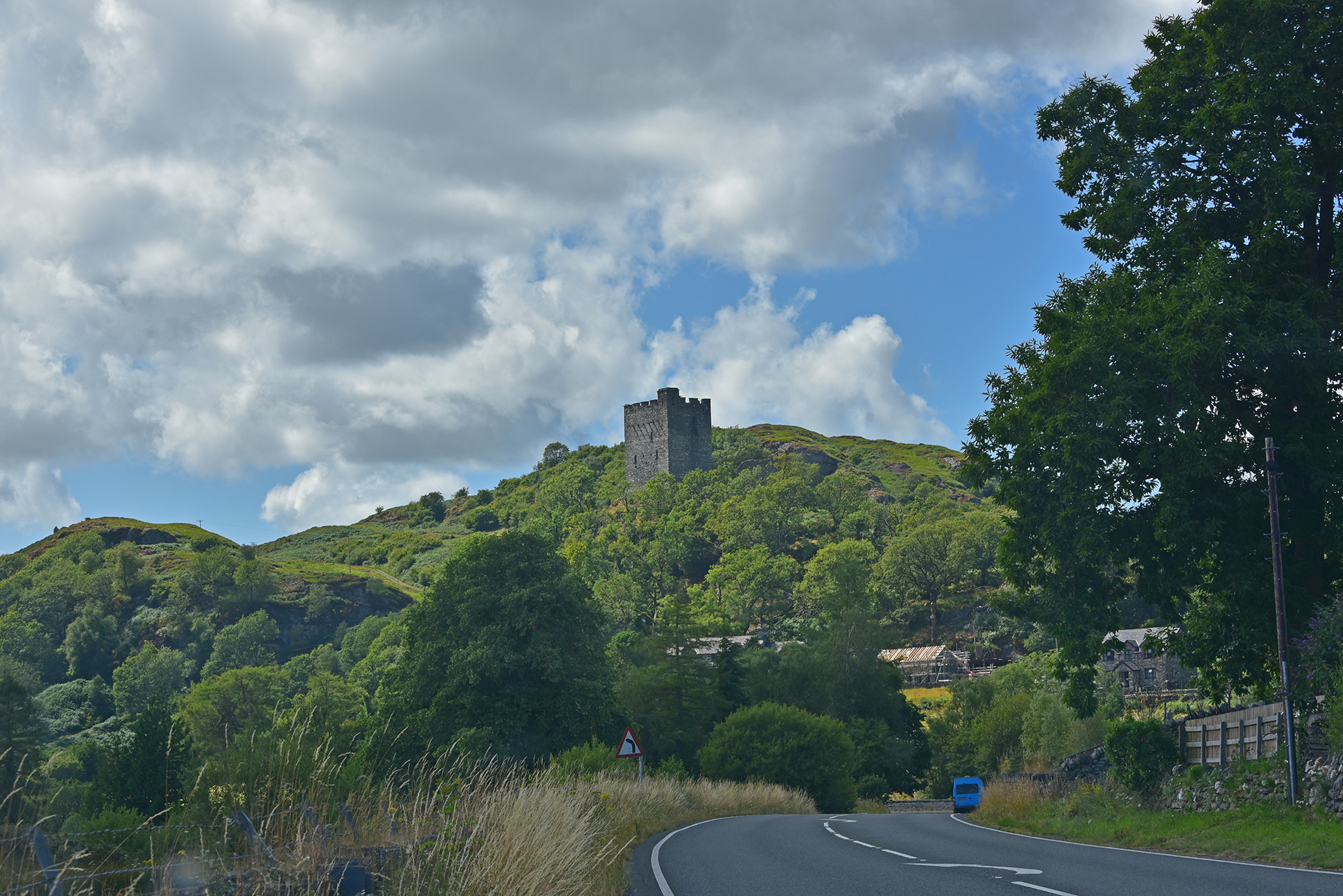
The keep high on its ridge, seen from the road.
Entry is free, but the castle is open to visitors only on Fridays, Saturdays, Sundays, and Bank Holidays from April through September, from 10am to 4pm. From October through March, it can be viewed from the outside only. There is no car park for the castle, and visitors should not use the car park near the farmhouse, because the path through the farm is private. Limited parking is available in a layby on the A470 about 500 meters east of the castle, followed by a walk of roughly 15 minutes on farm tracks. Cadw rates the terrain as strenuous. The paths can be muddy, the entrance stone is slippery when wet, and the internal staircase to the upper wall walks is steep. Livestock may be present in the outer grounds, and only assistance dogs are allowed. It is possible to conduct a thorough visit in only an hour or two.
If you want to explore more nearby castles, the ruins of Dolbadarn Castle are approximately 10 miles away. The castles of Conwy or Caernarfon may also be visited on the same day. It works well to start at one of these castles and finish the day at Dolwyddelan Castle.