Caernarfon Castle / Castell Caernarfon
History
Caernarfon Castle is situated on the River Seiont and the southern end of the Menai Strait. The site served as a strategic location in northwest Wales for the Roman fort of Segontium before the construction of the castle in about 1093 by Hugh D'Avranches, Earl of Chester. The castle, one of the most impressive in Wales, featured traditional Norman motte-and-bailey style architecture with earthen banks and wooden palisade walls.

By about 1115, the Welsh had regained control of Gwynedd. The site became associated with the Welsh princes, including Llywelyn the Great and Llywelyn ap Gruffudd (Llywelyn the Last), and served as a royal court until the English conquest.
In 1283, during the Second War of Welsh Independence, King Edward I of England began constructing the current Caernarfon Castle and nearby Conwy Castle and Harlech Castle to control Northern Wales. The motte of the Norman style castle was incorporated into the Edwardian Castle that constitutes the upper ward of Caernarfon Castle today. Due to its location along the River Seiont, building materials and stone could be easily transported by boat to the construction site. The architectural design and construction of Caernarfon Castle were handled by the king's master mason, James of Saint George, who worked on other castles in Wales. Foundations for the towers began, and stone curtain walls rose to 12 meters.
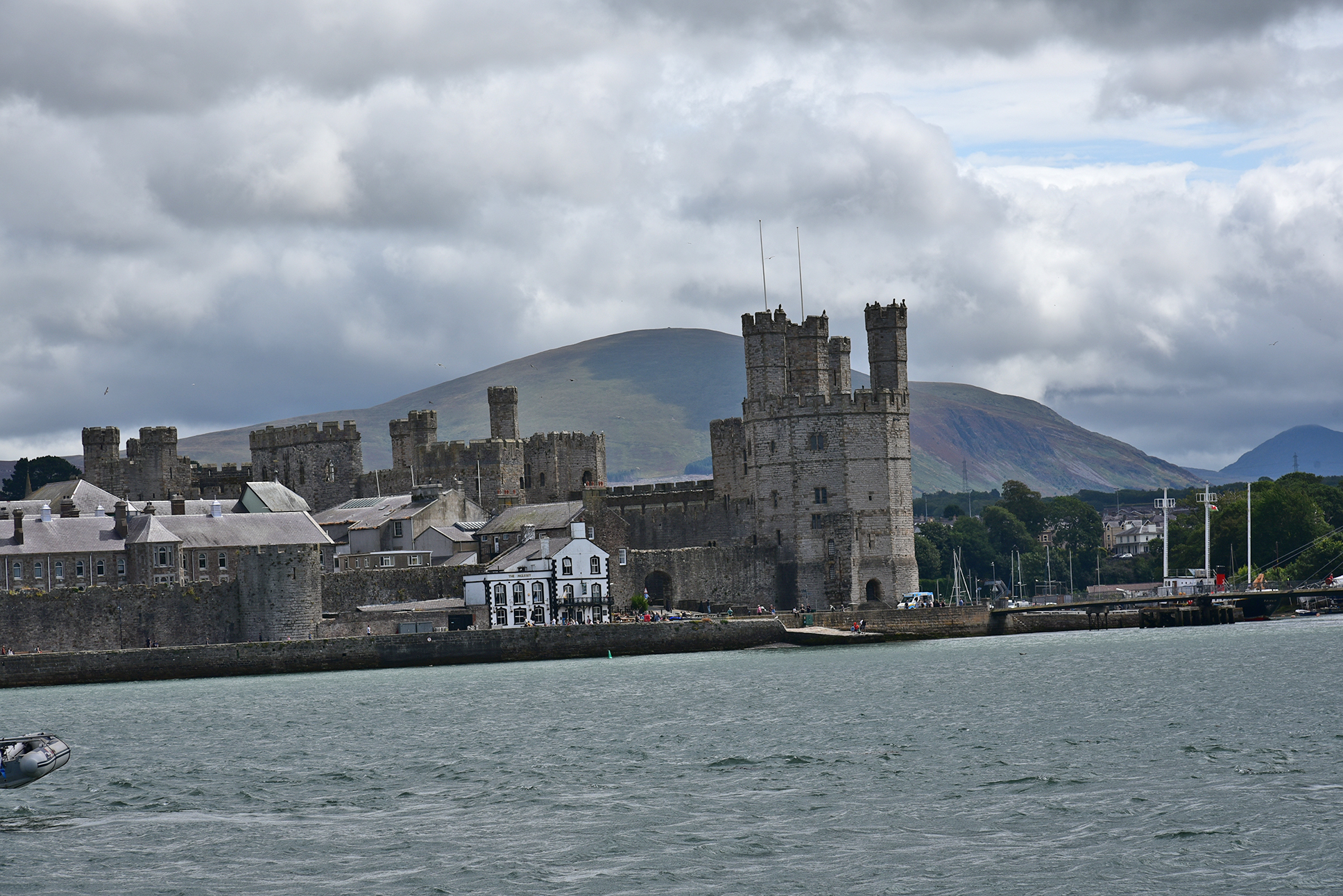
Caernarfon Castle from the Menai Strait, with the mountains of Snowdonia behind.
In 1294, a Welsh rebellion led by Madog ap Llywelyn attacked the castle and town of Caernarfon, overrunning defenders and setting fire to everything combustible within the castle. However, the English regained control of the castle and town by the following summer and rebuilt the defenses by November 1295. Thereafter, repairs to the castle and significant construction activities were performed to complete previously unfinished work. According to legend, Edward promised the Welsh population he would name "a prince born in Wales, who did not speak a word of English." To their surprise, an infant son of the king was born in 1284. Later known as Edward of Caernarfon, his son became the Prince of Wales in 1301, thereby fulfilling King Edward's prophecy.
In 1317, the massive Eagle Tower of Caernarfon Castle was nearly complete, with a carved stone eagle affixed to the top of one of the tower turrets. Most construction on the castle, which remains visible today, was completed by 1330. Between about £20,000 and £25,000 was spent on the castle and town walls over the whole building campaign. The castle would serve as Edward's administrative center for managing lands grouped in the new shires of Caernarvon. When Henry Tudor came to the English throne in 1485, his Welsh lineage softened pre-existing hostilities between the English and Welsh. As a result, the likelihood of conflict and, consequently, the need for structural defenses were significantly reduced. Thereafter, the great Edwardian castles of Wales began to fall into neglect and ruin. By 1620, the Eagle Tower and the King's Gate remained the only portions of Caernarfon Castle still roofed.
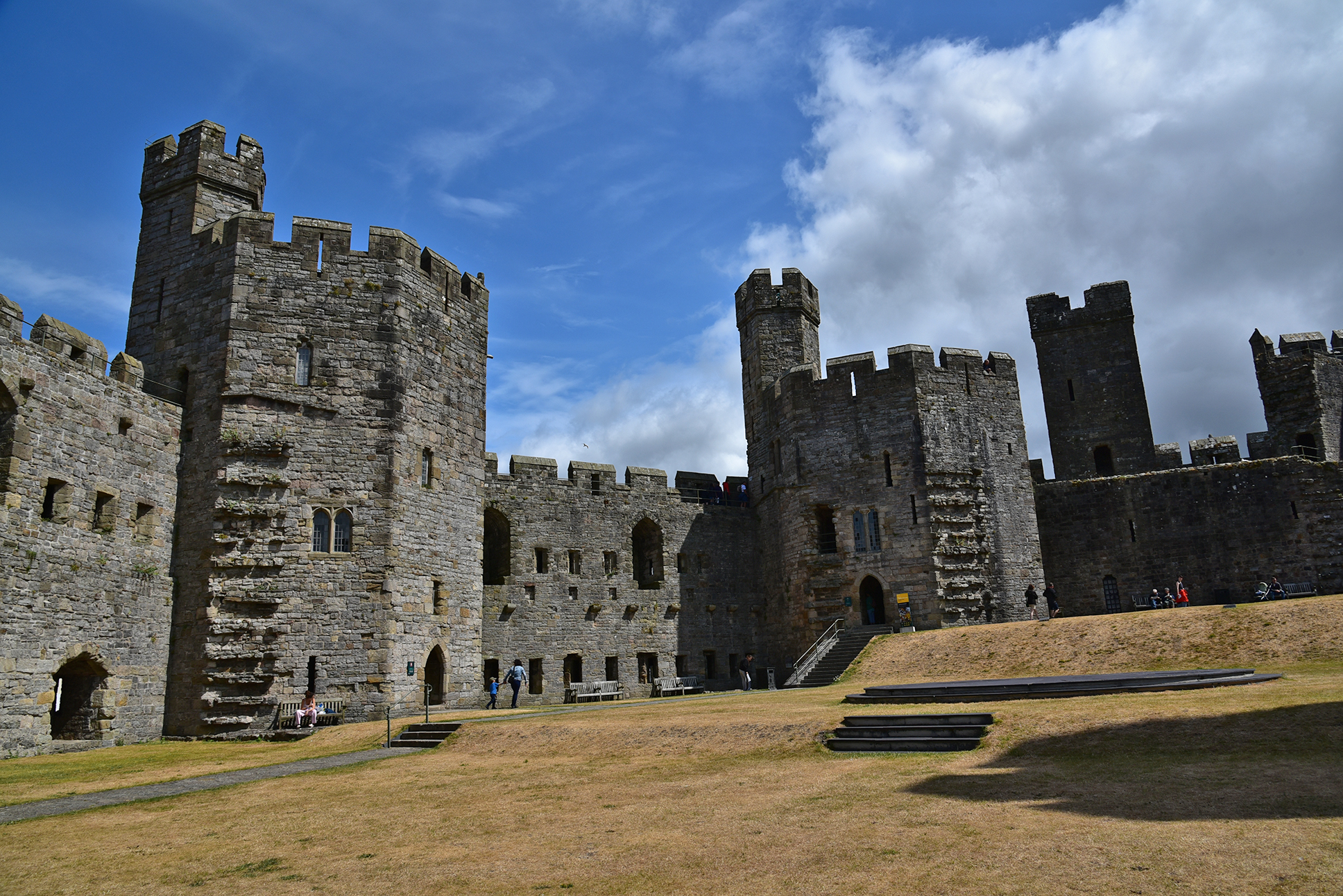
The Granary Tower and North-East Tower.
During the English Civil War from 1642 to 1648, the castle was besieged three times; however, its outer walls remained intact. The constable, John Byron, surrendered to Parliamentarian forces in 1646, the last time the castle was used in war. In 1660, the government gave the order to dismantle and demolish the castle and the town walls. As the order went unfulfilled, the castle and town walls were never demolished; thus, they still marvel to this day. Government-funded repairs began in the 1870s under the deputy constable, Llewelyn Turner, though his work was controversial. The title began in 1301 when Edward I formally created his son Prince of Wales. It is intended for the male heir apparent to the throne but is an appointment rather than a birthright. Edward, later Edward VIII, the 20th holder, was invested at Caernarfon Castle in 1911. Charles, the 21st, was created Prince of Wales in 1958 at the age of nine and was invested at Caernarfon Castle on July 1st, 1969. Since September 2022, the title has been held by his son William, the 22nd, who has not had an investiture ceremony at Caernarfon.
Castle Highlights
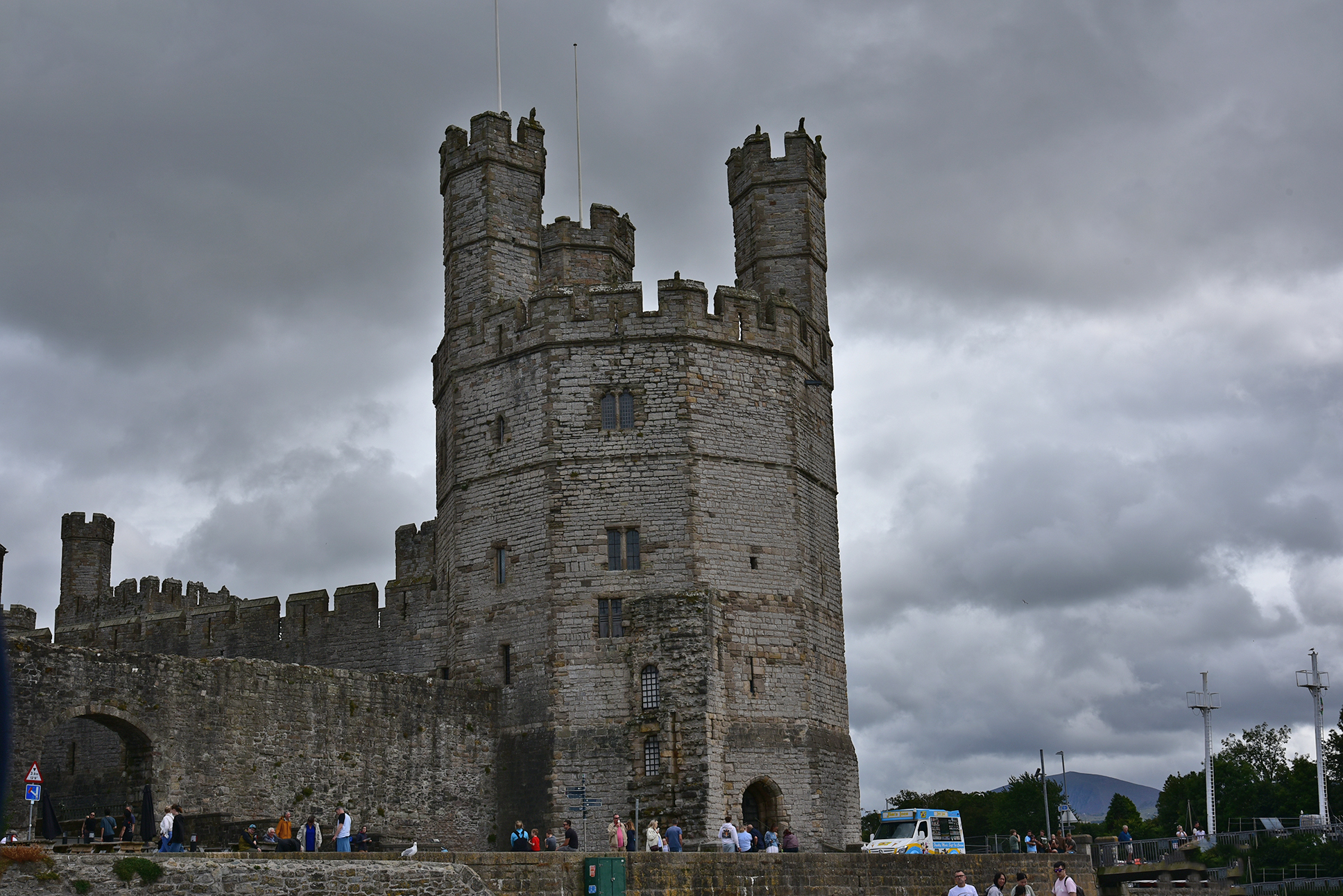
The Eagle Tower, with its three turrets.
Unlike other Edwardian castles in Wales, Caernarfon Castle is adorned with multi-angular towers, and broad bands of different colored stone said to resemble one of the best-known monuments of imperial Rome, the city walls of Constantinople. Therefore, it is presumed Edward I planned for Caernarfon Castle to serve as his seat of power in Wales dating back to its construction. The most impressive part of the castle is its massive Eagle Tower, which contains five apartments on each of the three floors above the basement chamber. The roof of the Eagle Tower includes three smaller turrets. A multimedia exhibit within the Eagle Tower provides an informative presentation regarding the castle's history. The ground floor of the tower, a room of noble proportions, is currently occupied by an exhibition that includes statues of kings, among them Edward I. Cadw notes that the design combines defense with imperial Roman references and a Welsh legend about Macsen Wledig. Caernarfon Castle is part of the World Heritage Site "Castles and Town Walls of King Edward in Gwynedd," listed by UNESCO in 1986, together with Conwy, Beaumaris, and Harlech.
The King's Gate serves as the current entrance to Caernarfon Castle. If original construction plans had been completed as intended, the structure would have included a drawbridge, five wooden doors, six portcullises, and an array of murder holes and arrow slits. The Granary Tower contains multiple groupings of arrow slits that enable an archer to defend three sides of the tower from a single location. The angles of the walls and slits on the interior gave a maximum range for shooting while protecting archers from enemy crossfire outside the castle.
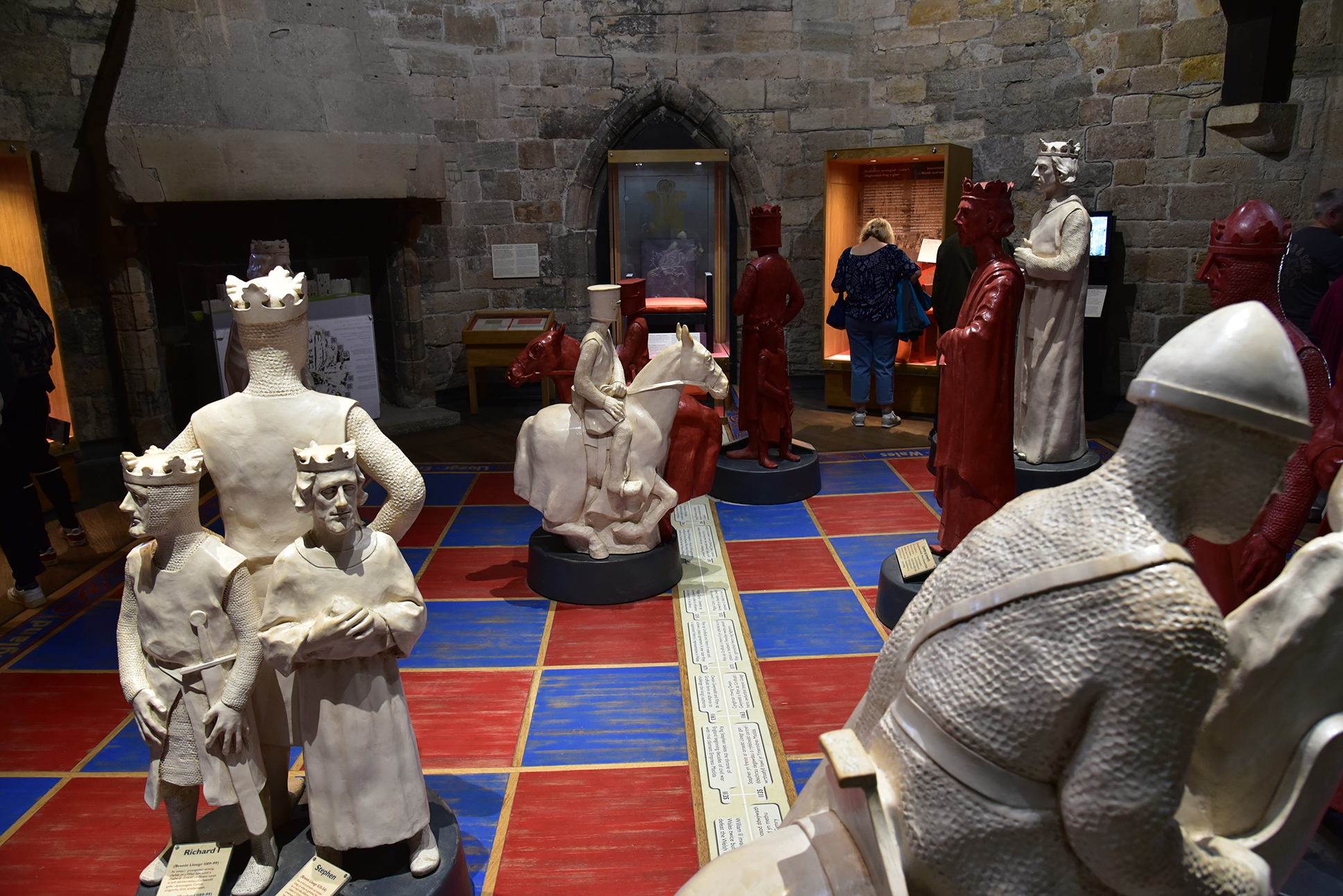
The ground-floor exhibition in the Eagle Tower, with statues of kings and knights.
The Royal Welch Fusiliers Museum is also housed in two of the towers of Caernarfon Castle, providing a wealth of exhibits telling the story of over 300 years of service by Wales' oldest infantry regiment.
I recommend visiting Caernarfon Castle during high tide and walking across the bridge spanning the River Seiont. The views of the castle with its walls reflecting in the river are spectacular. While still a nice view at low tide, reflections of a muddy riverbed will be seen instead. Sightseeing boat trips leave from beside the castle, and I took one to photograph it from the Menai Strait, which shows the castle against the mountains of Snowdonia. Visiting Caernarfon Castle should only take a part of the day unless you include the walled town. Conwy Castle is close to the east and makes a good companion visit on the same day.
Caernarfon Castle is also haunted.