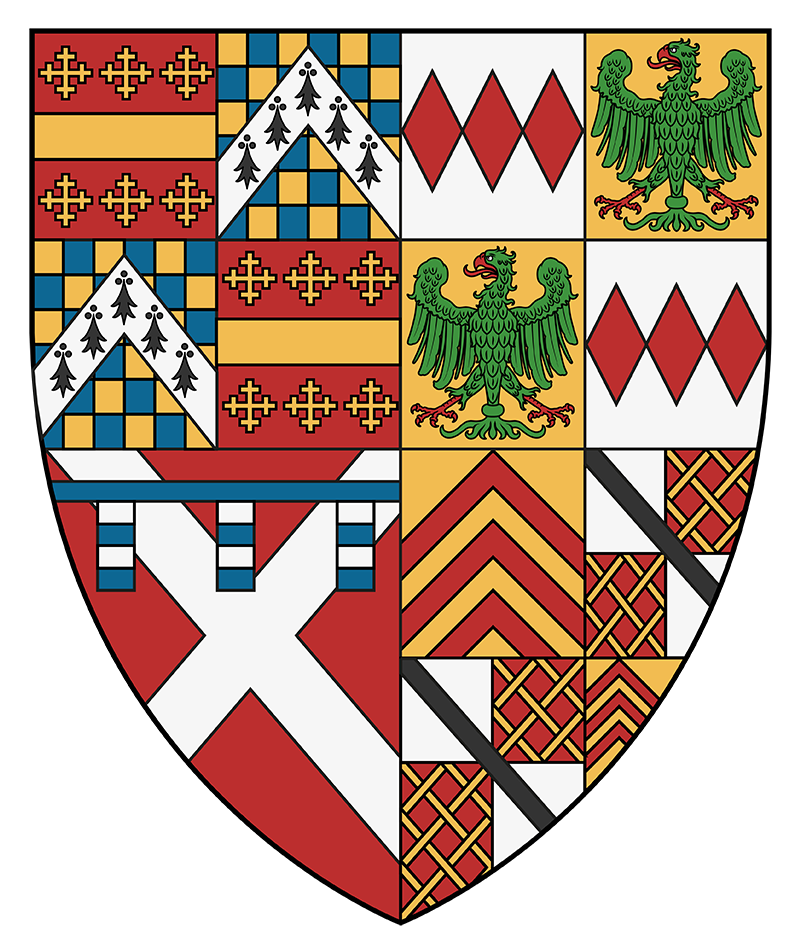
Richard Neville - Warwick the Kingmaker
Earl of Warwick and Earl of Salisbury
Richard Neville, 16th Earl of Warwick and 6th Earl of Salisbury, was the most powerful nobleman in England during the Wars of the Roses. He became known as "the Kingmaker" because he helped put Edward IV on the throne in 1461 and then, in 1470, drove Edward out and restored the old king, Henry VI. He was killed at the Battle of Barnet in 1471.

Richard was born on November 22nd, 1428, the eldest son of Richard Neville, 5th Earl of Salisbury, and Alice Montagu, and his birthplace is not known. The Nevilles were a great northern family, and their lands included Middleham Castle in Yorkshire. In 1436, he married Anne Beauchamp, who was about eight years old and the sister of Henry de Beauchamp, Duke of Warwick. Richard was knighted in 1445, probably at the coronation of Margaret of Anjou on May 30th.
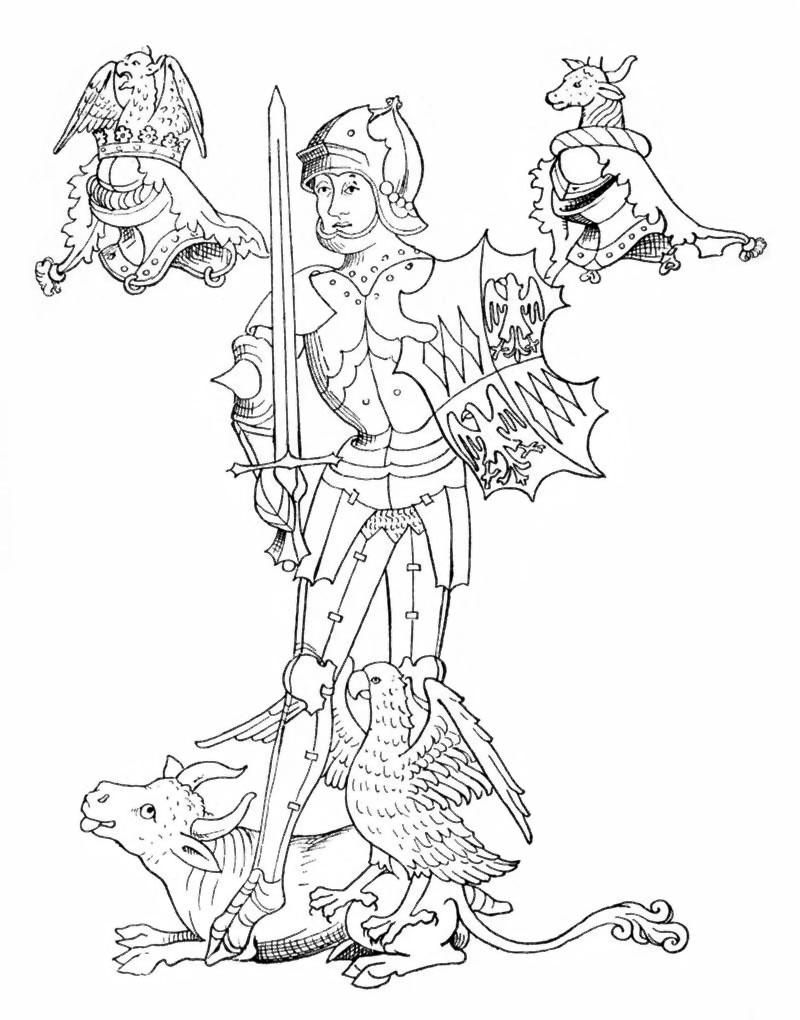
In 1446, Henry de Beauchamp, who had married Richard's sister Cecily, died, and when his baby daughter, Anne, the 15th Countess of Warwick, died in 1449, her aunt Anne Beauchamp became the 16th Countess. Richard became Earl of Warwick through his wife on July 23rd, 1449, and with the earldom came Warwick Castle and a share of the Beauchamp estates in the Midlands and Wales. A long dispute over those estates, especially with Edmund Beaufort, Duke of Somerset, pushed Warwick toward the party of Richard, Duke of York.
In 1449, the Beauchamp inheritance also brought him Glamorgan, with Cardiff and Caerphilly castles, but in June 1453, the king gave Somerset custody of Glamorgan, which Warwick had held, and open conflict followed. In 1452, Warwick and his father had rallied to Henry VI when York rose unsuccessfully, but on March 27th, 1454, York was appointed Protector of the realm during the king's illness, and Warwick became his main ally. At the First Battle of St Albans in May 1455, Somerset was killed and Henry VI was captured.
In February 1456, Warwick was appointed Captain of Calais, the only standing English army, and the post became his power base. In 1458, he carried out successful raids on Castilian and then Hanseatic shipping, in defiance of the crown, and they made him a popular hero. In autumn 1459, he marched from Calais to join York and his father at Ludlow, but at Ludford Bridge, the Calais troops under Andrew Trollope changed sides, and the Yorkist army scattered. Warwick, Salisbury, and York's son Edward, Earl of March, fled to Calais.

The Norman keep at Cardiff Castle, which came to Warwick with his wife's inheritance.
On June 26th, 1460, they landed at Sandwich, and on July 10th, they defeated the royal army at Northampton, killing Humphrey Stafford, Duke of Buckingham, and capturing Henry VI. In October, the Act of Accord made York heir to the throne, but on December 30th, 1460, York and Warwick's brother Thomas were killed at Wakefield, and Warwick's father, the 5th Earl of Salisbury, was beheaded the next day at Pontefract, after which Warwick succeeded to his father's extensive estates and retainers. In February 1461, Warwick was defeated at the Second Battle of St Albans, but he then joined Edward, who had won at Mortimer's Cross, and on March 4th, Edward was proclaimed king in London. At Towton, on March 29th, the Yorkists won a decisive victory, although Warwick had been wounded at Ferrybridge the day before and may have played only a minor part.
Edward IV confirmed Warwick as Captain of Calais and made him Lord High Admiral and Steward of the Duchy of Lancaster, and in 1462, when his mother, Alice Montagu, the 5th Countess of Salisbury in her own right, died, the earldom of Salisbury passed fully to him, and he was styled 6th Earl of Salisbury until his death in 1471. His father had held it only through his marriage to her. His lands in the north then included Penrith Castle and, through the Beauchamps, Barnard Castle, as well as Middleham. In October 1462, Margaret of Anjou invaded the north with French help and took Alnwick and Bamburgh, but Warwick recaptured them by January 1463, and in July, he relieved the siege of Norham Castle. He used Warkworth Castle as a base, and in the spring of 1464, he retook the Northumbrian castles, including Dunstanburgh, and about thirty rebel leaders were executed. Warwick's brother John was made Earl of Northumberland, and his brother George became Archbishop of York.
On May 1st, 1464, Edward secretly married Elizabeth Woodville, and when it was revealed in September, it embarrassed Warwick, who had been negotiating a marriage for the king with a French princess. Edward promoted the Woodvilles, and in 1466, he signed a treaty with Burgundy, against Warwick's pro-French policy, so Warwick's influence at court faded. In July 1465, Warwick had escorted the captured Henry VI to the Tower, and from late 1465 until about 1468, he looked after the king's younger brother, Richard, Duke of Gloucester, the future Richard III, at Middleham.

Middleham Castle, where Warwick held Edward IV in 1469.
In 1469, Warwick allied with the king's other brother, George, Duke of Clarence, who married Warwick's daughter Isabel at Calais in July. A northern rising led by a "Robin of Redesdale," a name used by Warwick's retainers, defeated the king's forces at Edgecote, and Edward was held at Warwick Castle and then at Middleham, but released in September. In March 1470, Lord Welles was routed at Losecoat Field and exposed the plot, and Warwick and Clarence fled to France. There, Louis XI arranged a reconciliation between Warwick and his old enemy Margaret of Anjou, and Warwick's younger daughter, Anne, was promised in marriage to Margaret's son, Prince Edward.
Warwick and Clarence landed at Dartmouth and Plymouth on September 13th, 1470, and on October 2nd, Edward IV fled to Flanders and Henry VI was restored, with Warwick as his lieutenant. Edward returned to Ravenspur on March 14th, 1471, while Warwick waited for Margaret and Prince Edward, who were delayed by bad weather, and Clarence went over to his brother.
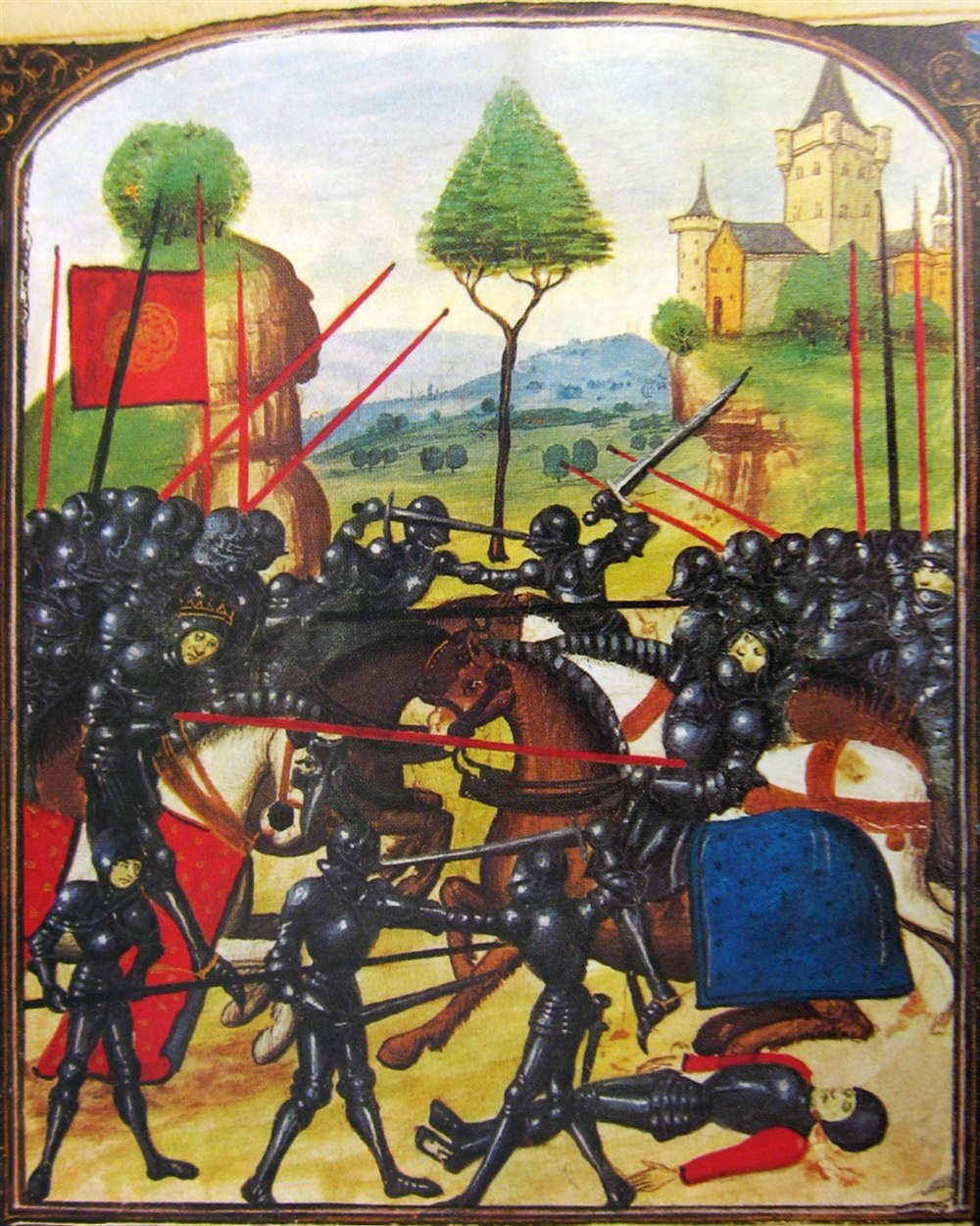
The two armies met at Barnet on April 14th, 1471, which was Easter Day. Warwick and his brother John Neville, Marquess of Montagu, agreed to fight on foot, and their horses were tied up to the rear, near Wrotham Wood. A thick fog hid the armies, and after the Earl of Oxford's men came back unexpectedly behind Montagu's men, Montagu's men mistook Oxford's star-with-rays badge for Edward's sun in splendour and shot at them. Oxford's men cried treachery, and the Lancastrian line broke. Montagu was killed, and Warwick, who ran for the horses, was knocked from his horse and killed, although Edward had ordered that he be taken alive. Edward displayed the naked bodies of the two brothers at St Paul's Cathedral for three days, and they were then buried at Bisham Priory in Berkshire, beside their father and brother. Nothing of the priory or the tombs survives, and an obelisk put up in 1740, the Hadley Highstone, marks the battlefield.
Warwick had no sons. His daughters Isabel, who married Clarence, and Anne, who married Prince Edward and, after his death, Richard of Gloucester, were his heirs, and his lands were forfeited, which led to a dispute between Clarence and Gloucester over the inheritance. He also had an illegitimate daughter, Margaret, who married Richard Huddleston in 1464. Warwick Castle passed to Clarence, and the story of the Kingmaker is told in the Kingmaker exhibit at the castle.
The name "Kingmaker" was first used in Latin by the Scottish historian John Mair in 1521, and in English by Samuel Daniel in 1609, and David Hume made it popular in the 18th century. Shakespeare shows Warwick as proud and egotistical in Henry VI, while modern historians such as Michael Hicks and A. J. Pollard judge him by the standards of his own time.