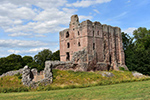
Warkworth Castle
History
Warkworth Castle is a 12th-century fortress constructed on a bend of the River Coquet in Northumberland, England. It served as the ancestral seat of the powerful Percy family.

Prince Henry of Scotland, son of King David I, probably built the original motte-and-bailey castle and first stone buildings after becoming the 3rd Earl of Northumbria in 1139. Warkworth Castle was first mentioned in a charter dated between 1157 and 1164. In it, King Henry II granted the castle to Roger FitzRichard.
In 1173, the Scots invaded Northumberland, finding Warkworth Castle undefended; its defenses were described as weak. The next year, Duncan II, Earl of Fife, invaded the area. However, there is no record of the castle's involvement; instead, the inhabitants took refuge in the church.
When Roger FitzRichard died in 1178, his son Robert FitzRoger was just a child, and a guardian oversaw his estates until Robert reached majority in 1191. In 1199, Robert paid the crown 300 marks for confirmation of his ownership of the castle. Robert, a favorite of King John, began building work at Warkworth Castle, where he hosted the king in 1213.
In 1292, King Edward I stayed at Warkworth for a night. He was asked to mediate a Scottish throne dispute, but instead made his own claim, setting off the Anglo-Scottish Wars. The castle belonged to Robert FitzRoger, who was captured at Stirling Bridge with his son John de Clavering in 1297.
In 1310, John de Clavering assumed control of the family estates, and a year later, he decided that on his death, the king would receive all his property.
In 1319, King Edward II funded a garrison at the castle, adding four men-at-arms and eight light cavalry to the twelve men-at-arms already stationed there. In 1322, Ralph Neville became castle keeper. He was married to John de Clavering's daughter, Euphemia, and may have expected to inherit the castle. However, he did not inherit it.
The castle's defenses were tested in 1327, when it was twice unsuccessfully besieged by the Scots. At this time, the Percy family had become powerful in Northumberland. Henry de Percy, 2nd Baron Percy, served Edward III and was paid 500 marks a year in perpetuity. In return, he led a company of men-at-arms in northern England. Instead of the annual payment, Percy was promised the rights to inherit the Clavering estates in 1328. In 1331, Parliament declared these contracts illegal. Percy was later granted special permission to inherit. John de Clavering died in 1332, and his widow in 1345. The family estates, including Warkworth Castle, then passed to the Percys.
The Percys already possessed Alnwick Castle, a more prestigious seat, yet they favored residing at Warkworth Castle. They established a nearby hunting park and added two residential wings. The 2nd Baron Percy died at Warkworth in 1352.
In 1377, Henry, 4th Baron Percy, was made the first Earl of Northumberland for his power and influence along the border of England and Scotland. He commissioned the distinctive Keep, possibly to compete with John of Gaunt, who rebuilt nearby Dunstanburgh Castle, or the House of Neville, who built other northern castles. Earl Henry is likely to have established the Hermitage at Warkworth.
Earl Henry helped Henry Bolingbroke depose King Richard II, making Bolingbroke King Henry IV. Earl Percy's son, Henry “Hotspur” Percy, fell out with the new King Henry IV and rebelled against him. Hotspur was killed in battle against the king at the Battle of Shrewsbury, and his father fled to Warkworth Castle before eventually traveling to York to submit to the king.
Henry IV arrested Earl Percy and tried to place his men at Percy's castles, including Alnwick, Langley, Prudhoe, and Warkworth. Another of the earl's sons, aged fourteen, claimed loyalty to the king and said he was not empowered to formally surrender the castle, which stayed under Percy control. Earl Henry was pardoned in 1404.
In 1405, Henry, Earl of Northumberland, rebelled again by joining the unsuccessful revolt with Richard Scrope, Archbishop of York. Henry fled north, and his castles resisted before surrendering to royal forces. Warkworth Castle was well provisioned and garrisoned, and it refused to surrender at first. However, after just seven cannon shots, it yielded, as described in a letter from Henry IV soon after its fall.
Warkworth Castle was forfeited to the crown and used by John, Duke of Bedford, one of the king's sons appointed to rule the area.
In 1416, King Henry V restored the castle to the Percy family and made Henry “Hotspur” Percy's son, also named Henry, 2nd Earl of Northumberland.
The Percy family supported the House of Lancaster during the Wars of the Roses, where the 2nd and 3rd Earls were killed at the battles of St Albans in 1455 and Towton in 1461, respectively.
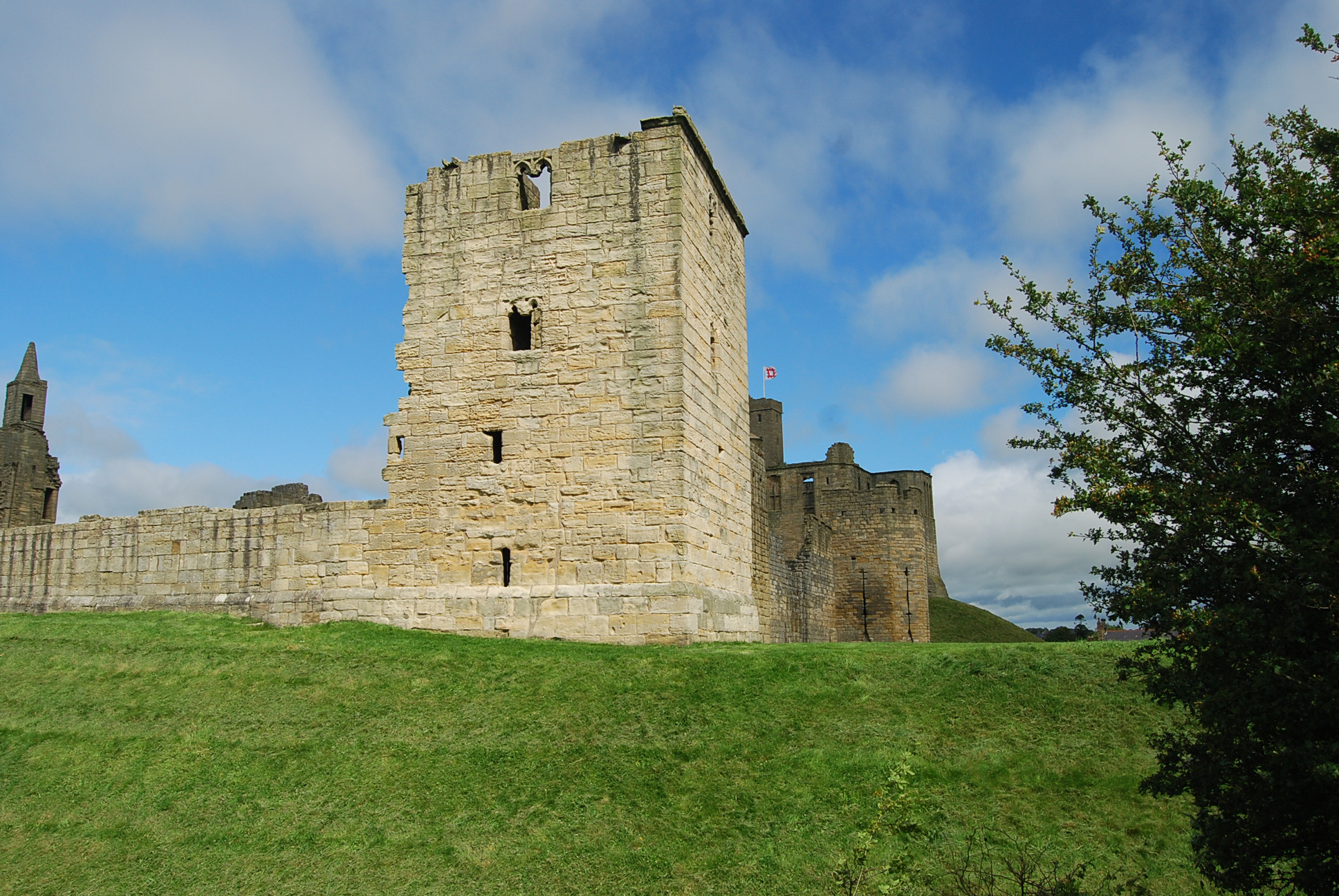
King Edward IV issued an attainder against the Percy family and confiscated their estate. On August 1st, 1464, the title of Earl of Northumberland was given to the 1st Marquess of Montagu, a Yorkist. He built the twenty-five-foot-tall corner tower, which is now known as Montagu's Tower.
His brother, Richard Neville, 16th Earl of Warwick, used Warkworth Castle as a base to attack and lay siege to the Lancastrian castles of Alnwick, Bamburgh, and Dunstanburgh.
In 1470, Edward IV returned the Percy estates to the eldest son of the 3rd Earl, also named Henry. A year later, he became the 4th Earl of Northumberland and began remodeling the bailey. The 4th Earl was murdered in 1489, and his son, Henry Algernon Percy, 5th Earl of Northumberland, inherited the castle.
In 1537, Thomas Percy, brother of the 6th Earl, was executed for his involvement in the Pilgrimage of Grace. When Henry Percy died the next year without an heir, the castle passed to the crown.
In 1543, William Parr, 1st Baron Parr of Horton, resided at Warkworth Castle as Warden of the Scottish marches. Although occupied by royal officials, it had deteriorated by 1550 due to a lack of maintenance.
In 1557, the Percy estates were restored to Thomas Percy's descendants, specifically his nephew, also named Thomas Percy. He became the 7th Earl of Northumberland. He began repairs on the castle and dismantled the hall and other offices. Before finishing, the 7th Earl joined the unsuccessful Rising of the North in 1569, which sought to restore Roman Catholicism. He was executed in York on August 22nd, 1572.
John Forster, Warden of the March, took advantage of the revolt and pillaged Alnwick Castle and Warkworth Castle, stripping Warkworth of timber and furnishings; however, the keep was spared.
Thomas Percy's son did not inherit the estate, but under the terms of the attainder, his brother was permitted to inherit. In 1574, Queen Elizabeth allowed Henry Percy to inherit the family property, making him the 8th Earl of Northumberland.
Another Henry Percy became the 9th Earl of Northumberland. James I imprisoned him in the Tower of London, suspecting him of involvement in the Gunpowder Plot. This suspicion arose from his connection to Thomas Percy, his second cousin once removed, who was one of the plotters.
Before sentencing, Henry leased Warkworth Castle to Ralph Gray of Chillingham Castle. Gray neglected the castle, stripping lead from the bailey's buildings to offset the earl's debts. In 1617, King James I, passing through to Scotland, was incensed by the castle's dilapidation.
With the English and Scottish Crowns now unified under James, the Earls of Northumberland had no need for two great castles near the border, so they maintained Alnwick Castle at the expense of Warkworth.
Warkworth Castle sustained further damage during the English Civil War, when Royalist troops occupied it in support of the king. Yet it remained defensible until 1644, when Scottish forces invaded and compelled its surrender.
Parliamentarian forces took over the castle in 1648, with Algernon Percy, 10th Earl of Northumberland, now supporting Parliament. When they withdrew, they removed the castle's doors and iron so it could not be reused by the enemy.
Josceline Percy, the 11th Earl of Northumberland and last of the Percy Earls, died in 1670. Two years later, his widow allowed materials from the keep to be used to build Chirton Hall. The castle passed to Algernon Seymour, 7th Duke of Somerset through marriage. In 1698, the owners decided not to restore Warkworth Castle due to the estimated expense.
In 1750, Lady Elizabeth Seymour inherited the castle from her father. Her husband, Hugh Smithson, changed his name to Hugh Percy, and the castle then descended through the Dukes of Northumberland, a dynasty founded by him.
Around 1752, demolition claimed part of the curtain wall east of the gatehouse. The town and ruins became a tourist attraction, inspired by Bishop Thomas Percy's poem, "The Hermit of Warkworth."
By the mid-19th century, the 3rd Duke of Northumberland began preservation work on the castle, and his successor, the 4th Duke, contracted Anthony Salvin to restore the keep. The restoration work on two chambers on the second floor became known as the Duke's Chambers. The Duke and Duchess used the chambers during stays when they picnicked at Warkworth while visiting from Alnwick Castle in the summer.
In 1922, the 8th Duke of Northumberland granted custodianship of the castle to the Office of Works, who excavated the moat in 1924 and removed the custodian from the gatehouse.
In 1984, the castle was transferred to English Heritage, which now manages the site. The castle remains officially owned by the Percy family.
Castle Highlights
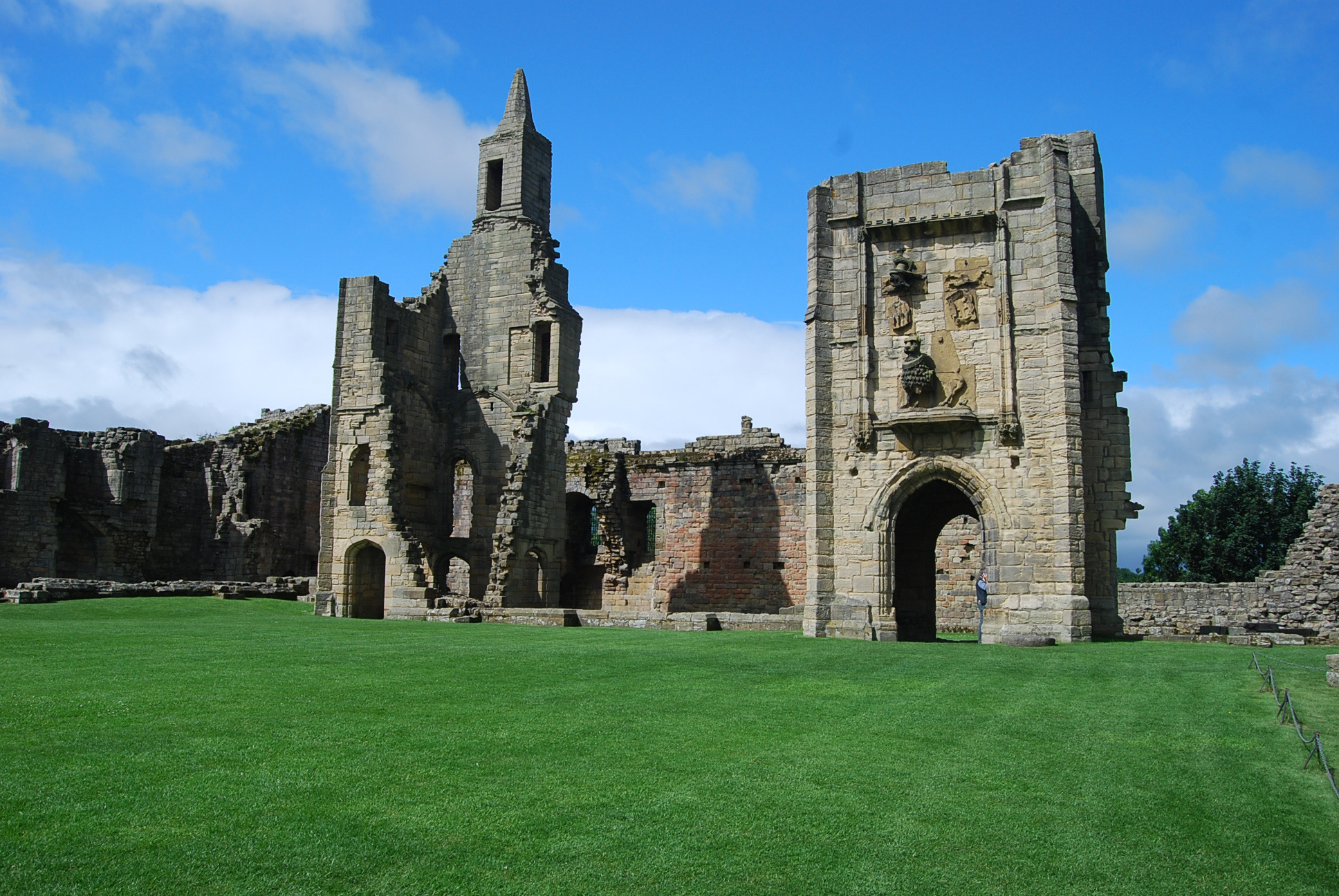
Though just a ruin today, Warkworth is an impressive castle to visit. The most dominating feature of the castle is the keep or Great Tower, built in the shape of a Greek cross with four polygonal wings extending from a central block, which includes a viewing tower.
Around the entrance hall on the ground floor are service and storage chambers that connect to first-floor rooms via narrow stairways. These storage chambers include the buttery, the main kitchen, the great hall, the great chamber, and the chapel. The chapel had an upper floor where the earl could perform his devotions in private.
The inner bailey contains a series of buildings, including the Lion Tower and Hall Range. The Lion Tower includes a fine display of heraldic sculptures, including the great lion of the Percy coat of arms. The Hall Range includes another great hall and withdrawing chambers for the head of the family.
The mighty gatehouse includes a pair of polygonal towers with buttresses at each corner. The gatehouse is flanked by the Carrickfergus Tower and Montagu Tower, and is entered by crossing a bridge that used to be a drawbridge.
Warkworth Castle will easily take at least half a day to explore. For a full day of visiting castles, Dunstanburgh Castle and Edlingham Castle are only around 10 miles away.
Warkworth Castle is also haunted.