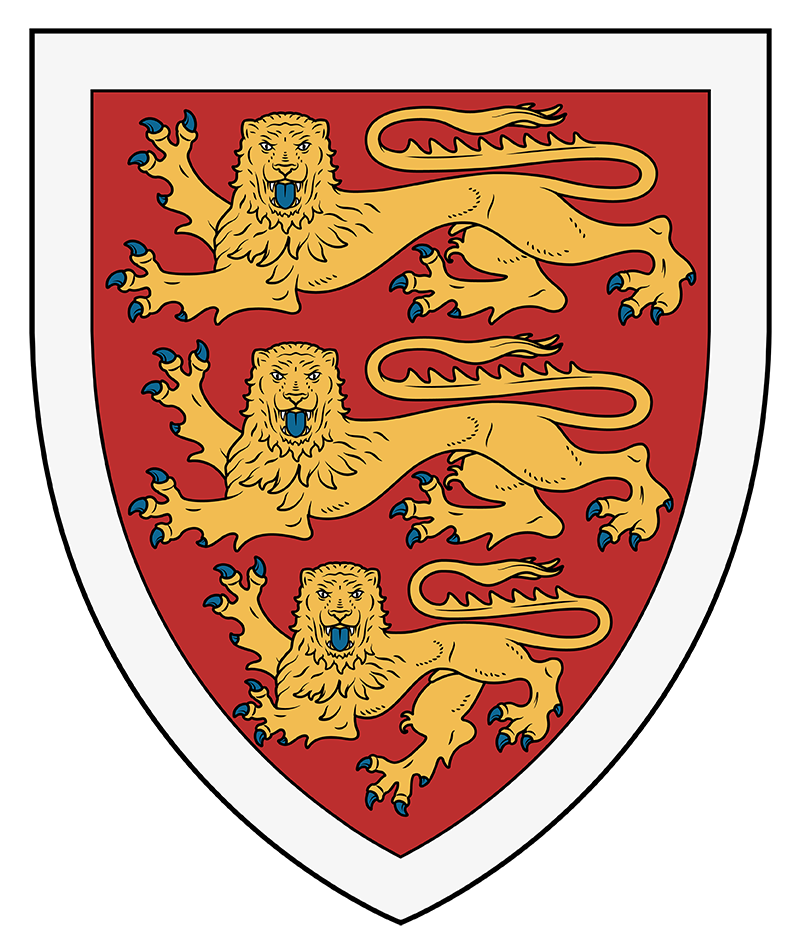
Edmund of Woodstock - 1st Earl of Kent
Edmund Plantagenet
Edmund of Woodstock was an English Nobleman and a member of the Plantagenet royal family, the youngest son of King Edward I. His steadfast loyalty to his half-brother Edward II ultimately led to his execution.

Edmund was born at Woodstock Palace in Oxfordshire on August 5th, 1301, as the youngest son of King Edward I and Queen Margaret of France, making him also the grandson of King Philip III of France.
On July 7th, 1307, King Edward I died when Edmund was still five years old. As a result, Edmund's half-brother Edward became King Edward II. Before his death, Edward I had signed a charter granting Edmund land worth 7000 marks a year and was likely intending to make Edmund the Earl of Cornwall, a title that became vacant in 1300.
When Edward II assumed the throne, he disregarded his father's intentions and awarded the Earldom of Cornwall to his favorite, Piers Gaveston, slighting his younger brothers.
Edward II's relationship with Piers Gaveston provoked resentment at court, and after rebellious barons executed Gaveston in 1312, England teetered on the edge of civil war. As Edmund matured, despite being bypassed for Gaveston, he remained loyal to Edward II and joined his inner circle.
In 1318, Edmund's first public act was witnessing the Treaty of Leake, aimed at reconciling Edward and the barons. Around 1319, he received Yorkshire grants, including Knaresborough Castle, and attended his first parliament in 1320.
Edward II granted Edmund 2,000 marks a year. In May 1321, Edmund received Gloucester Castle, and on July 28th, was made Earl of Kent.
In 1321, a full-scale rebellion began as the barons opposed Edward II's new favorites, the Despensers. Bartholomew Badlesmere, steward of the royal household, joined the barons against the king. Edmund Woodstock was made Lord Warden of the Cinque Ports on June 16th and became Constable of Dover Castle. That same year, he was also appointed Constable of Tonbridge Castle in Kent.
During the parliament of July 1321, Edmund sided with the barons in agreeing to exile the Despensers. Later, however, he claimed to have done so under duress and then sat on the council that annulled their exile in November, demonstrating the complexity of his position.
In October 1321, Edmund took part in a siege of Leeds Castle, which was held by Badlesmere, who surrendered the castle. Attention now turned to the leader of the rebel barons, Thomas of Lancaster. Edmund, along with John de Warenne, 7th Earl of Surrey, was ordered to take Lancaster's castle of Pontefract. On March 16th, 1322, Lancaster was taken prisoner after his defeat at the Battle of Boroughbridge and was brought to Pontefract Castle. He was condemned for treason by a jury of which Edmund was a part and beheaded outside the walls of Pontefract Castle.
In January 1323, Edmund took Wallingford Castle, held by Maurice de Berkeley, 2nd Baron Berkeley. He was rewarded with land in Wales, forfeited by Roger Mortimer, though the Despensers received the lion's share of spoils.
With the barons' rebellion over, Edward II turned to Scotland but was defeated at Old Byland by Robert the Bruce. Edward and Edmund fled to York.
Andrew Harclay, after victory at Boroughbridge, signed an unauthorized peace with Robert the Bruce in January 1323 and was executed for treason. Edmund took charge of northern England and signed a 13-year truce with Scotland on May 30th, 1323.
In April 1324, Edmund's diplomatic mission to France failed. In July, he was appointed lieutenant in Aquitaine, where he was besieged at La Réole by the French. He surrendered on September 22, agreeing to a six-month truce.
Edward refused to pay homage to the French King and instead sent his wife, Isabella, to negotiate with her brother, King Charles. Isabella's negotiations succeeded, leading Charles to allow Prince Edward (the future Edward III) to pay homage in his father's stead in September 1325. Following these developments, Edmund of Woodstock joined the Queen and Prince Edward in Paris.
In late 1325, Edmund married Margaret Wake, daughter of John de Wake, 1st Baron Wake of Liddell. They had six children: Edmund, Robert, Margaret, Joan, John, and Thomas. Robert died young.
Opposition to Edward II and his favorites, the Despensers, grew around Queen Isabella, now joined by the exiled Roger Mortimer. Edmund aligned himself with their cause. Although he distrusted Mortimer, his dislike for the Despensers was greater. When Edward II ordered their return to England, and this was ignored, Edmund's lands were confiscated in March 1326, further aligning him with the opposition.
In September 1326, Queen Isabella, Mortimer, and an army of mercenary soldiers invaded England. Edmund was part of the invading forces. The invasion won the support of many English nobles, including Edmund's brother Thomas of Brotherton, and Henry, 3rd Earl of Lancaster, Thomas of Lancaster's brother.
Edmund took part in the Despensers' trials and was on the council that transferred power to Prince Edward, later King Edward III. He received Despenser lands and those of Edmund FitzAlan, executed on November 17th, 1326, including Arundel Castle, which became his main seat for the rest of his life, though he was not formally invested as Earl of Arundel.
Although Edward III became King, power effectively remained with Queen Isabella and Roger Mortimer, who served as regents. Edmund became increasingly disenchanted with this arrangement and, in the autumn of 1328, joined his brother Thomas and Henry of Lancaster in a conspiracy against Isabella and Mortimer. When it became clear that the plot would fail, Edmund and Thomas abandoned their efforts.
Edmund's standing at court declined after the failed rebellion; however, he still accompanied Edward III's wife, Philippa, to her coronation in February 1330. Later, convinced by Mortimer-fueled rumors that his brother Edward II was alive, Edmund became entangled in another plot against the queen and Mortimer to restore Edward II. When this plot was uncovered, Edmund was convicted of treason and sentenced to death in parliament in March 1330.
When the verdict was announced, Edmund pleaded with seventeen-year-old Edward III for mercy and offered to walk from Winchester to London with a rope around his neck as an act of penance. However, any decision in Edmund's favor was blocked by the queen and Roger Mortimer. No one dared to execute Edmund due to his royal blood until a convicted murderer agreed to behead him in exchange for a pardon.
Edmund of Woodstock was beheaded at Winchester Castle on March 19th, 1330. He was first buried in a Franciscan church in Winchester, then reinterred at Westminster Abbey in 1331. His lands and titles passed to his eldest son, Edmund, who died in December 1331. The earldom then passed to his younger son, John.
Edmund's execution was later seen as unjust after Edward III overthrew Mortimer later in 1330.