Siege of Helmsley Castle
Background
After winning Marston Moor and forcing York's surrender, Parliamentarian armies split. Lord Leven's Scottish army marched to besiege Newcastle. Edward Montagu, 2nd Earl of Manchester, withdrew his men south into South Yorkshire.
Thomas Fairfax, 3rd Lord Fairfax, targeted Yorkshire castles held by Royalist troops loyal to the King.
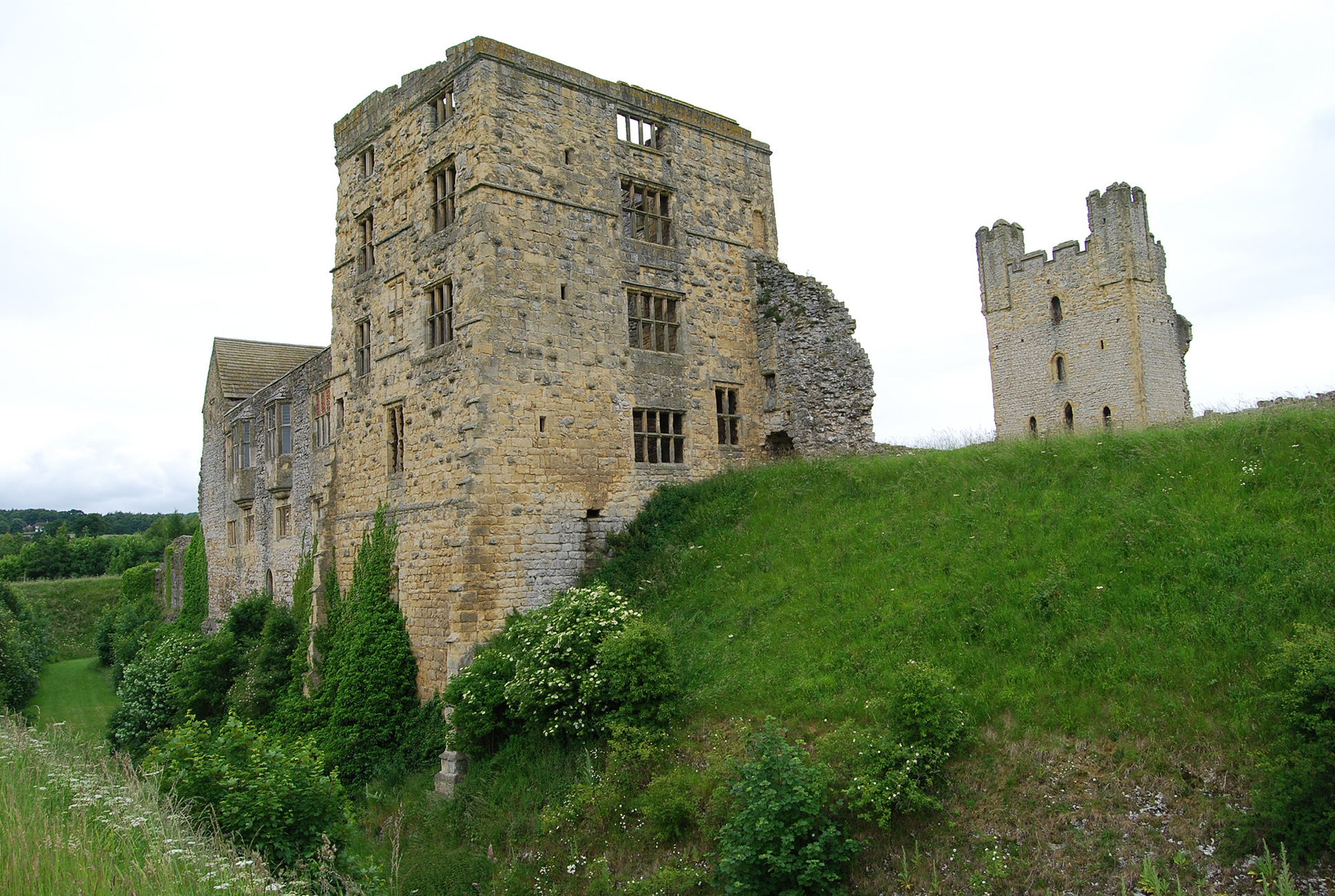
North of York, Helmsley Castle was his first target, defended by about 200 men-at-arms under Jordan Crossland, a staunch Royalist who later converted to Roman Catholicism.
Battle
In September of 1644, Fairfax's Parliamentarian forces besieged Helmsley Castle, aiming to surround and starve the garrison by cutting supply lines. They likely had artillery, as Knaresborough Castle's later siege awaited artillery arriving from Helmsley.
During the siege, Jordan Crossland and his garrison launched several counterattacks through sallies from the castle.
Thomas Fairfax was wounded in the siege. One account claims he was leading a counterattack against a Royalist sortie when shot twice, fracturing his shoulder and breaking his arm. Another says he was shot by a marksman in the East Tower while visiting besieger lines.
Fairfax's own account omits injury details, but emphasizes the severity:
"After Marston Moore and Yorke, I went to Helmsley to take in ye castle there but received a dangerous shott in my shoulder and was brought back to Yorke; All for some time being doubtful of my Recovery."
One of Fairfax's senior officers, Lieutenant-Colonel Forbes, was captured at some point during the siege.
The siege lasted two months. By November 6th, conditions inside the castle deteriorated, prompting Crossland to send Parliamentarian leader John Lambert the following terms for surrender:
1. That the Governor of the castle and all other officers march out with their arms, horses, and goods, and safely convoyed to the garrison at Scarborough Castle.
2. That the soldiers shall march out with their arms loaded, matches lighted, colors flying, and drums beating, and safely convoyed to Scarborough Castle.
3. That the gentlemen that came hither for protection, may have free liberty to depart with their goods, unto their dwellings, and have my Lord Fairfax's protection for their safeguard.
4. That the Lady Duchess of Buckingham's goods within the castle, her servants and their goods, may remain safe within the castle, or the town of Helmsley, under Lord Fairfax's protection.
5. That any good within the castle belonging to any gentlemen in the country, or to any other whatsoever, may have three days' time after surrender thereof for the disposing of them, and to have my Lord Fairfax's protection for their convoy.
6. That there may be carriages procured for the conveying of two little drakes (light cannon), arms, and other baggage along with them, unto the garrison before mentioned.
7. That the Castle of Helmsley be absolutely demolished, and no garrison hereafter be kept there by either party.
8. That in performance of these articles, Lieutenant-Colonel Forbes, and all the rest of the prisoners, shall have their free liberty; and that Lieutenant Spright, and five soldiers belonging to me, now prisoners at York, shall likewise have their liberty.
9. And lastly, that there be time given until the 16th day of this month, for to consider of these articles, in case there might be relief had in that time from the Prince (Rupert), otherwise we shall perform these articles on our part.
Most castles were destroyed after sieges in the Civil War, typically by the victors. Crossland's request to demolish his own castle was unique, perhaps to prevent future Royalist occupation.
It's unclear if Crossland anticipated a relief attempt, but one occurred on November 12th, after John Mallory sent a troop from Skipton Castle to join a Knaresborough force relieving Helmsley.
The relief force at first surprised and scattered the besiegers, but Parliamentarians soon rallied and repelled them.
Aftermath
With relief failed, Crossland and the garrison surrendered Helmsley Castle to the Parliamentarians.
Colonel Francis Lascelles accepted Crossland's terms for Lord Fairfax. As a result, on November 22, 1644, Crossland and the garrison, reduced by the siege to about 100 men, surrendered and marched to Scarborough Castle to join Hugh Cholmley's Royalist forces.
Parliamentarians gained nine artillery pieces, 300 muskets and pikes, and six barrels of gunpowder upon occupying Helmsley Castle.
Demolishing sections of the curtain wall and blowing down the East Tower's eastern wall, they rendered Helmsley Castle indefensible. The eastern wall still lies in the ditch beside the tower.