Siege of Knaresborough Castle
Background
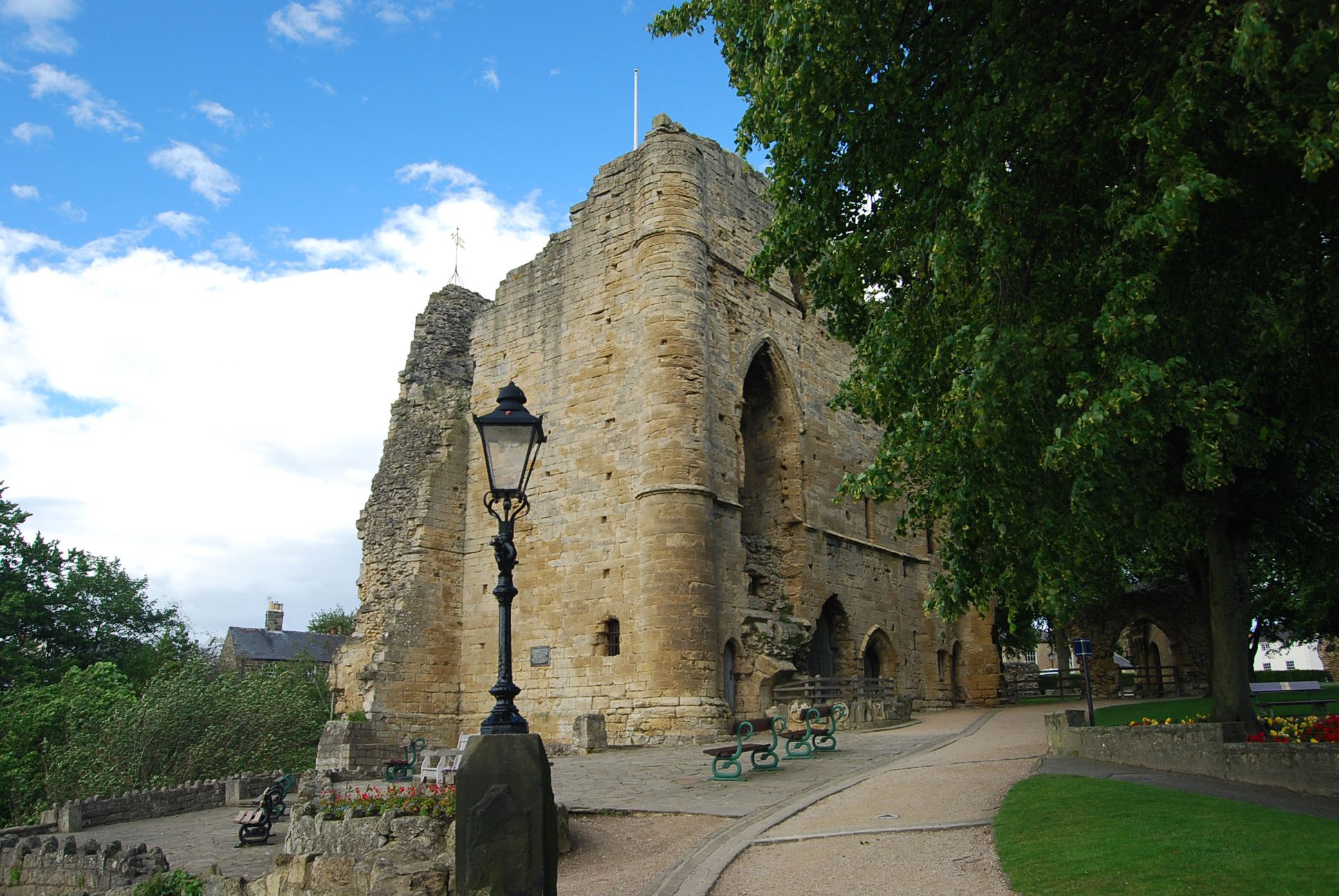
Knaresborough Castle, overlooking the River Nidd, had royal ties and was held by Royalists for King Charles I. In the autumn of 1642, Patrick Ruthven, 1st Earl of Forth and Lord General of the Royalist army, passed through Knaresborough on his way to join King Charles I. He advised Henry Slingsby, a local MP, to garrison the castle before Parliamentarians could arrive. Slingsby acted quickly, but local support was so lacking that only one man joined the garrison.
Soon, the Yorkshire County militia, led by Richard Hutton, with a commission from the Earl of Cumberland, arrived to support Slingsby.
In December 1642, a Parliamentarian force under Christopher Wray camped in the town overnight. The two sides exchanged fire, forcing residents to shelter in nearby fields. By morning, Wray and his men moved on, leaving town behind them.
After the Battle of Marston Moor on July 2, 1644, news of the Royalist defeat reached Knaresborough. Two weeks later, remnants of the York garrison, escorted by Parliamentarian cavalry, marched through town. No assistance to the York garrison was given from the castle garrison.
Hearing Lord Fairfax aimed to take Knaresborough, townsfolk formed a militia under John Warner and joined the garrison.
The siege of Helmsley Castle continued to the north. The relief effort in mid-November failed. With that effort over, Fairfax turned his attention to Knaresborough. He sent Lieutenant-Colonel Robert Lilburn with a detachment of 500-600 men.
Battle
Lilburn set up a blockade at Knaresborough and placed a small battery on Gallow Hill, across the River Nidd. He soon saw this was ineffective. Even if the castle walls were breached, his troops would still need to climb a 150-foot cliff to reach the castle above the river.
The stronghold's defenses were solid, but insufficient for a long siege without outside help.
The castle garrison included regular soldiers and townsfolk. One day, a local boy crossed the dry moat to sneak supplies to his father in the castle through a small opening. He went unseen for several days before the besiegers caught him. They sentenced him to be hanged in full view of the castle and his father. Local women pleaded with Colonel Lilburn to spare the boy's life. Lilburn agreed and freed the boy.
On November 12th, 1644, Lilburn attacked the town. Most defenders retreated to the castle, but both sides suffered casualties.
After taking the town, heavy artillery arrived from the Siege of Helmsley. Lilburn started a full siege. He first set the big guns near the tollbooth, facing the castle's strongest part, the King's Tower. From November 28 to December 18, they fired but caused almost no damage.
He moved the guns to a garden at the upper end of Briggate, aiming at a weaker part of the curtain wall. Seeing this, some in the garrison exited through a sallyport on the night of the 18th to try to damage the artillery. The Parliamentarians left their guns after forty-two were killed or wounded, and another twenty-six were captured. The besiegers soon rallied more men and counterattacked. The garrison retreated into the castle.
The next night, December 19th, the castle garrison attempted another sortie from the northern sallyport. This time, however, the Parliamentarians were prepared for the maneuver and repelled the defenders, forcing them back to the castle.
On December 20, Lilburn fired his cannon battery, swiftly breaking a breach in the curtain wall near the southern sallyport. As his men prepared to advance through the opening, the castle garrison requested a parley. To spare further losses, Lilburn accepted their surrender, and the 120 men within the castle were permitted to leave.
Aftermath
Lilburn and his men took over Knaresborough Castle. They recovered four cannons and a large store of gunpowder, but almost no food or supplies. The castle likely could not have held out much longer, even before the breach.
Taking Knaresborough Castle allowed the Parliamentarians to secure a key position in Yorkshire. They could now launch more operations to the north. After Knaresborough fell, Fairfax turned to Pontefract Castle.
Lilburn's men demolished most of the buildings in the inner bailey. Many town center buildings used this castle stone.
In 1646, Parliament issued orders to demolish the castles used to defend the king. In 1648, it was Knaresborough Castle's turn to be slighted, although the King's Tower was kept as a prison and the courthouse was spared to continue in use.
 Robert Lilburn