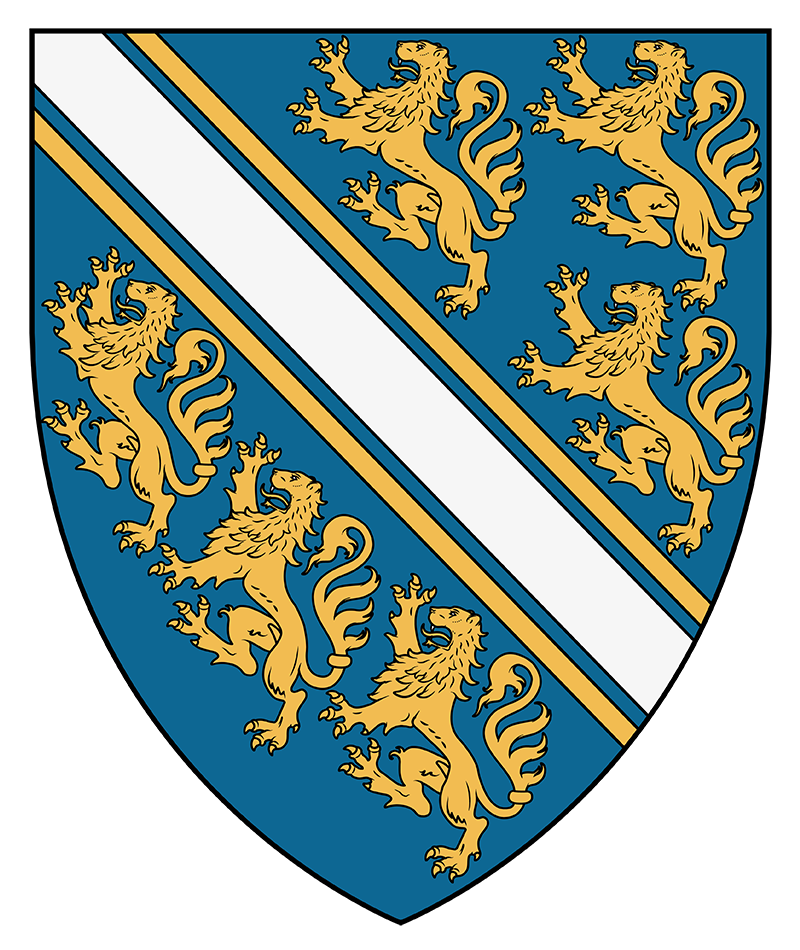
Humphrey de Bohun - 4th Earl of Hereford
Humphrey de Bohun was an Anglo-Norman Nobleman of the Welsh Marches, Lord High Constable of England, and a key opponent of King Edward II's excesses, as one of the Ordainers.
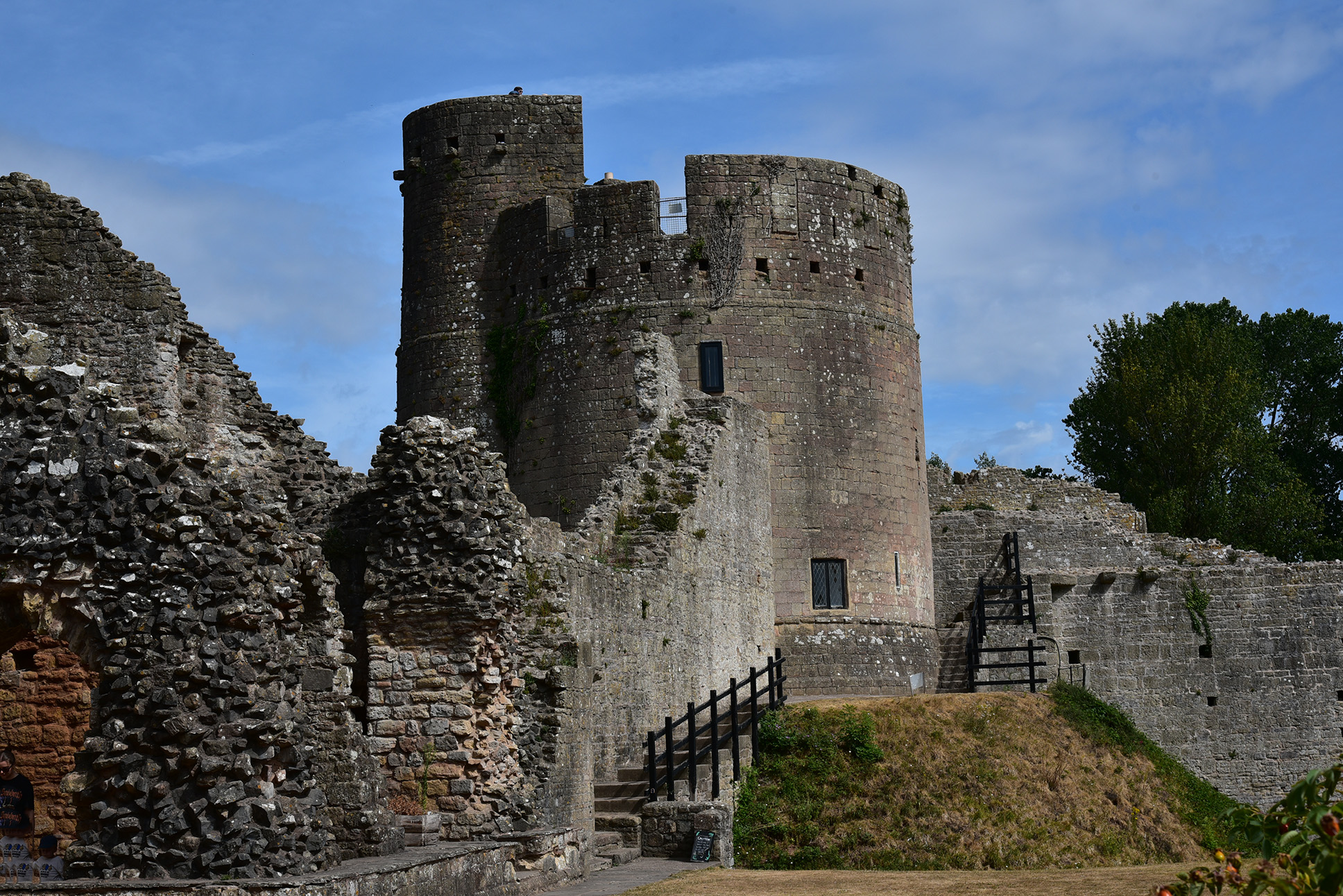
Humphrey was born around 1276, likely at Pleshey Castle in Essex, the Bohun family seat of power. He was the son of Humphrey de Bohun, 3rd Earl of Hereford, and Maud de Fiennes.
The 3rd Earl died on December 31st, 1298, at Pleshey Castle. Humphrey was given possession of his father's lands and titles on February 16th, 1299, making him the 4th Earl of Hereford, 3rd Earl of Essex, and Constable of England.
Humphrey inherited several castles along the Welsh Marches through his grandmother, Eleanor de Braose, including Huntington Castle, Hay Castle, Brecon Castle, and Caldicot Castle.
In 1300, Humphrey de Bohun served with the English forces under Edward I at the Siege of Caerlaverock Castle in Scotland.
Humphrey was known for participating in tournaments often alongside Piers Gaveston and other young nobles. He gained a reputation as an "elegant fop" for his martial and courtly skills. During one Scottish campaign, Humphrey grew bored and departed for England to take part in a tournament along with Gaveston. When they returned, they fell under King Edward I's wrath for desertion but were forgiven. Prince Edward, the future Edward II, likely permitted them to depart.
On November 14th, 1302, Humphrey de Bohun married Elizabeth of Rhuddlan, daughter of King Edward I, at Westminster. The marriage gained him the lands of Berkshire. Humphrey and Elizabeth had at least 9 children, but likely eleven, as some died as infants. The children included Eleanor, John, Humphrey, Margaret, William, Edward, another Humphrey, Eneas, and Isabel.
He received some of Robert the Bruce's forfeited lands in Scotland, including Annandale and Lochmaben Castle, after the Bruce's failed rebellion.
When Edward II became King, Humphrey continued to support him, but he opposed the king's favorite, Piers Gaveston. In 1310, Humphrey was one of the 21 Ordainers appointed to reform the royal household and government, resulting in the Ordinances of 1311. He helped besiege and capture Piers Gaveston in 1312, after which the barons executed Gaveston.
In June 1314, he fought at the Battle of Bannockburn with Edward II and should have commanded the army as Constable of England, but Edward placed Gilbert de Clare, Earl of Gloucester, in charge.
On the first day of battle, Humphrey's young cousin, Henry de Bohun, charged out alone against Robert the Bruce, who cleaved him in the head with his axe, killing young Henry. On the second day of Bannockburn, Gilbert de Clare was killed at the start of the battle. Humphrey de Bohun fought throughout the day, leading a company of Welsh and English knights and archers. When the battle was lost, Humphrey retreated with the Earl of Angus and other barons to Bothwell Castle, seeking refuge. But they were taken prisoner by the castle governor, Walter FitzGilbert.
The Scots ransomed Humphrey de Bohun and exchanged him for Robert the Bruce's Queen, Elizabeth de Burgh, and his daughter Marjorie Bruce, whom the English held.
He later opposed the rise of King Edward II's new favorites, the Despensers, who had seized Marcher lands after the execution of Llywelyn Bren, whom Bohun had captured and tried to protect.
In 1321, he joined other Marcher lords and Thomas of Lancaster in rebellion against the Despensers, which culminated at the Battle of Boroughbridge in March of 1322.
Humphrey de Bohun was killed at the Battle of Boroughbridge. While attempting to cross the bridge, a pikeman thrust his pike up through the gaps in the bridge, killing Bohun.
Ian Mortimer recounted the event:
"The 4th Earl of Hereford led the fight on the bridge, but he and his men were caught in the arrow fire. Then one of Andrew Harclay's pikemen, concealed beneath the bridge, thrust upwards between the planks and skewered the Earl of Hereford … twisting the head of the iron pike into his intestines. His dying screams turned the advance into panic."
Humphrey de Bohun was laid to rest at the church of the Friars Preachers in York. His son, John, succeeded him as the 5th Earl of Hereford.