Battle of Bannockburn
He who holds Stirling, holds Scotland
Background
Following the Siege of Roxburgh Castle and by the summer of 1314, all the castles in Scotland under English control had been retaken, except Stirling Castle, which commanded the route to the north into the Scottish Highlands and was under siege by the Scots. The English occupying the castle had promised to surrender the castle if they had not been relieved by mid-summer.

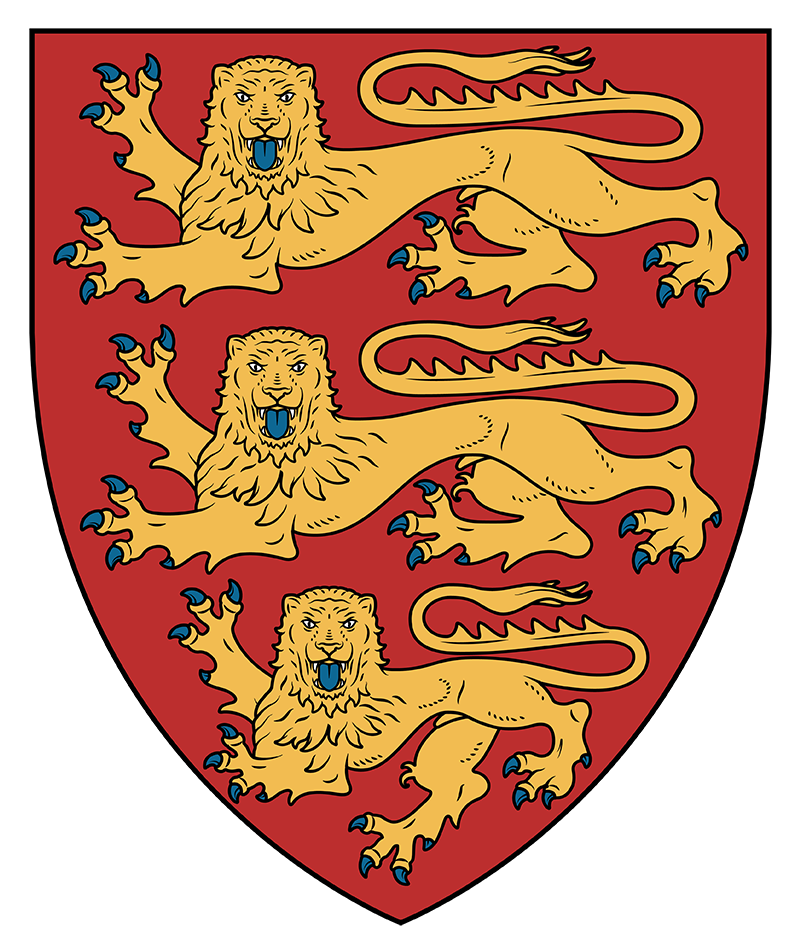
King Edward II of England assembled an army of 15,000 to 20,000 infantry, Welsh archers, and about 3,000 mounted knights on heavy horse to raise the siege at Stirling Castle. In haste, Edward II pushed his troops, who marched 70 miles in a single week, leaving his army severely worn out.
To counter Edward's English army, Robert the Bruce gathered a smaller army of 5,000 to 8,000 infantry, mostly pikemen and no more than 500 light horse, at New Park, a hunting preserve a mile or two south of Stirling.
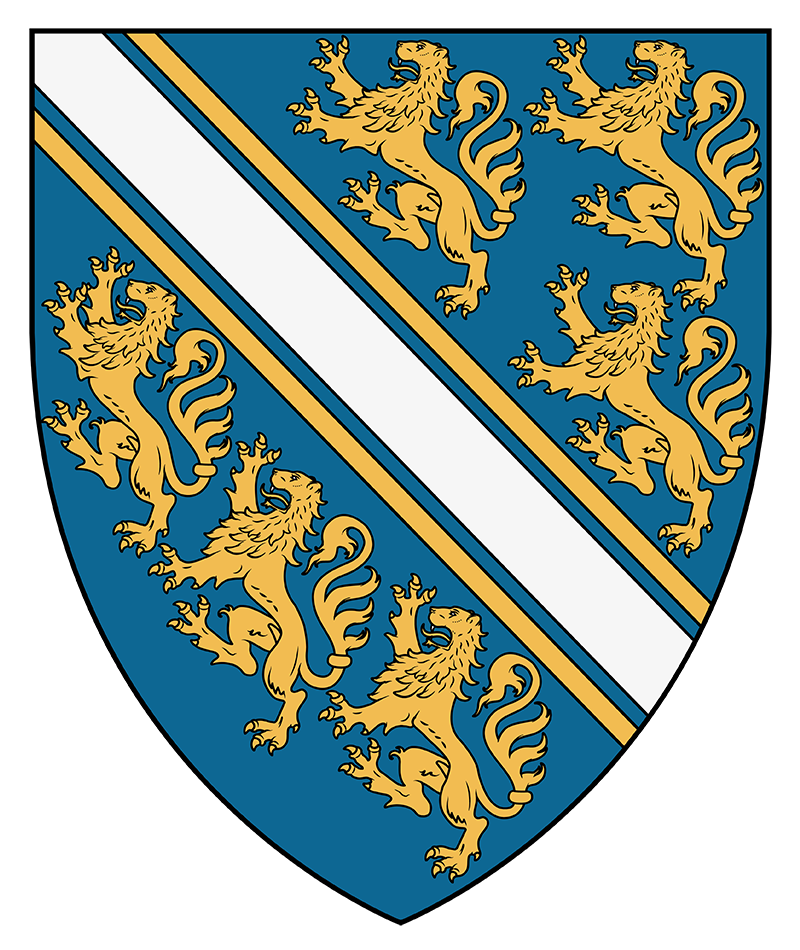
On the morning of June 23rd, 1314, it was still not clear if a battle would occur as the two armies were still about 8 miles apart, giving the Bruce time to decide whether to move his forces north beyond the Firth of Forth or westwards up the river. Robert planned to use the tree lines to funnel any attack into his infantry and anti-cavalry ditches. The Scottish Army aligned in schiltrons, a compact formation of around 3,000 pikemen designed to defend against heavy horse. The vanguard was led by Thomas Randolph, 1st Earl of Moray, near the church of St Ninian. King Robert commanded the rearguard at the entrance to New Park. Robert's brother Edward Brus led the third division, and the fourth division was under Walter the Stewart, High Stewart of Scotland, but in reality, under the command of the more experienced James Douglas.
Once Edward's army neared Stirling, he and his advisors began to plan for the upcoming battle. They knew the likely spots where the Bruce would challenge them and sent orders to their troops to prepare for an army established in boggy ground near the River Forth. The English advanced in four divisions.
Battle
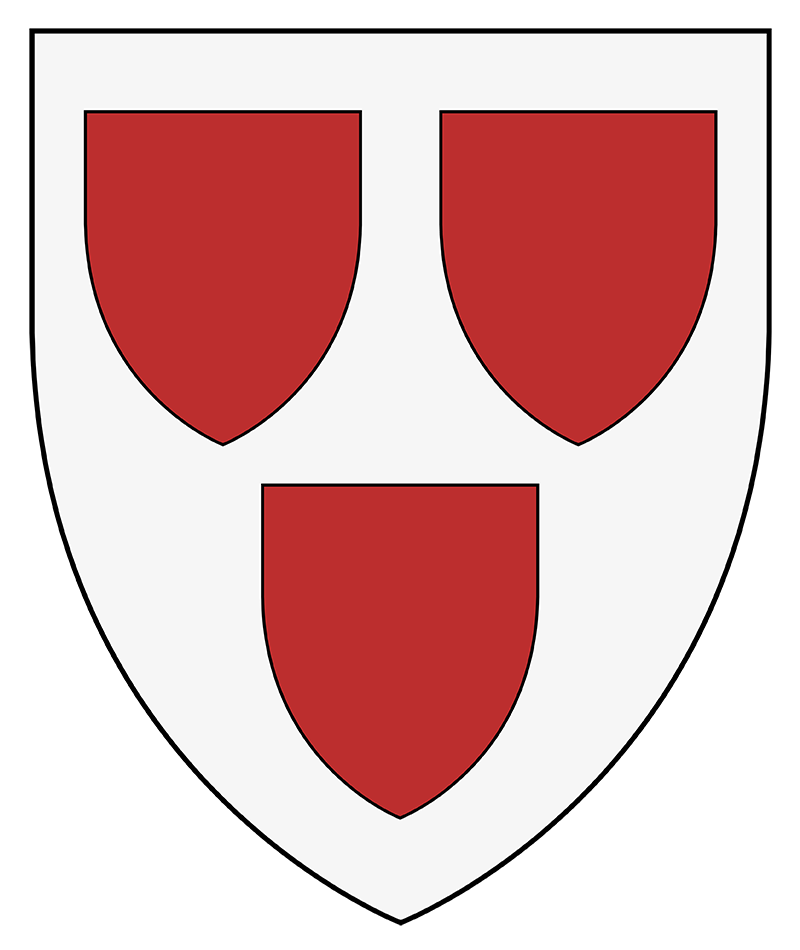
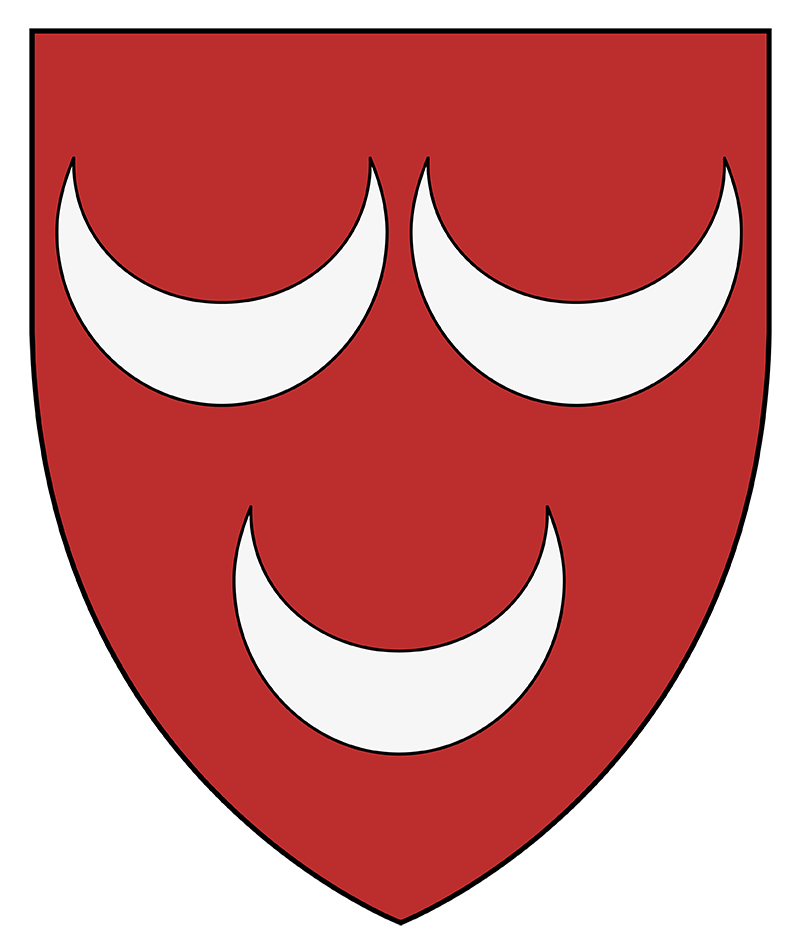
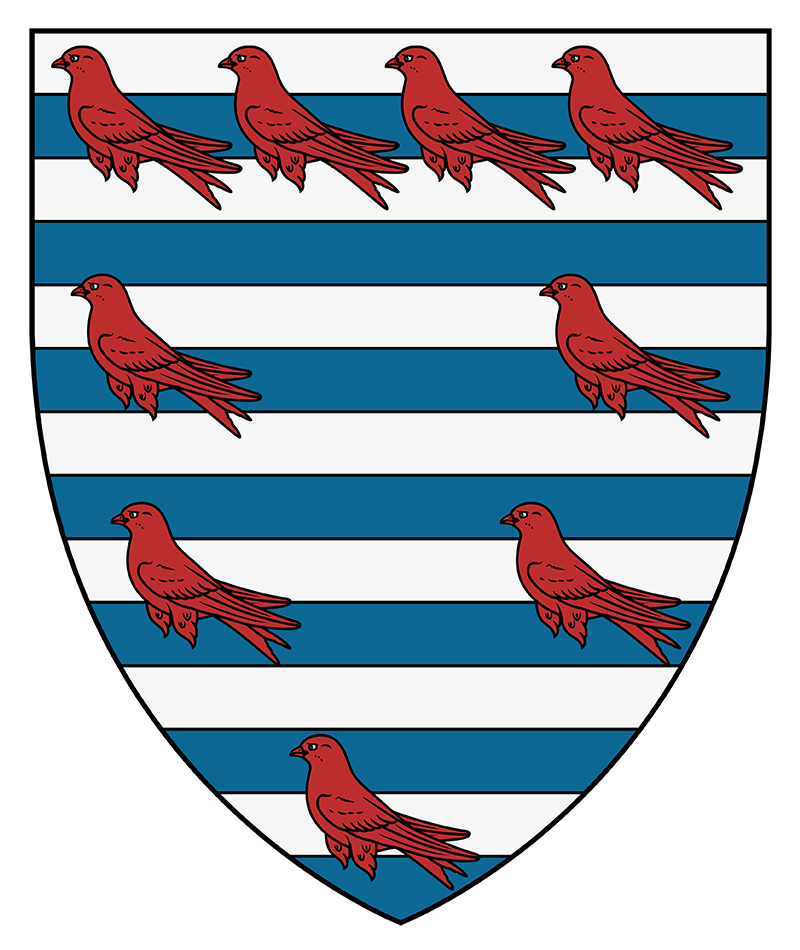
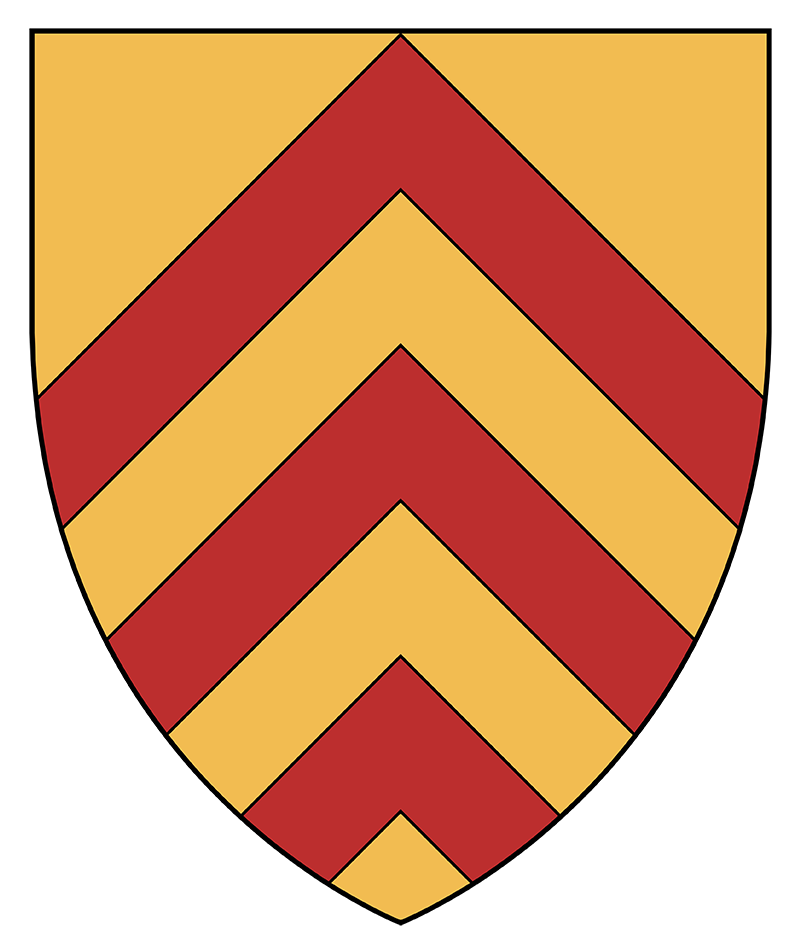
On June 23rd, 1314, two English cavalry formations advanced, led by Gilbert de Clare, 8th Earl of Gloucester, and Humphrey (VIII) de Bohun, 4th Earl of Hereford. They followed a smaller detachment led by Robert de Clifford, 1st Baron de Clifford, and Henry de Beaumont, 4th Earl of Buchan, who marched closer to the River Forth. These detachments were tasked with lifting the Siege of Stirling Castle.
Gilbert de Clare and Humphrey de Bohun and their men crossed over the Bannockburn and marched towards the woodland where the Scots were waiting. They were unaware that Robert the Bruce had wandered away from his men and was not armed for combat, but for reconnaissance, with a small horse, light armor, and a battle axe.

Humphrey de Bohun's nephew, Henry de Bohun, spotted the Bruce so poorly armed and decided to act. Bohun charged the Bruce, couching his lance, and when the two were side by side, the Bruce stood in his stirrups and cleaved Bohun's head with a single blow, breaking his battle axe. The Scottish army then rushed the English, forcing them to retreat over the Bannockburn.
Meanwhile, Robert de Clifford and Henry de Beaumont, with 300 men-at-arms, made a circuit on the other side of the woodland towards Stirling Castle. Thomas Randolph and the Scottish Vanguard marched across the open ground towards Clifford and Beaumont.
Beaumont called to his men: "Let us wait a little; let them come on; give them room."
"Sir," said Thomas de Grey, "I doubt that whatever you give them now, they will have all too soon".
"Very well", said Beaumont, "if you are afraid, be off".
"Sir," answered Grey, "It is not from fear that I shall fly this day."
With that, Grey spurred in between Beaumont and Sir William Deyncourt and charged into the thick of the Scottish army. William Deyncourt was killed, and Thomas de Grey was taken prisoner after his horse was killed on the pikes of the Schiltrons formation and carried off with the Scots after the English were routed. Some fled to Stirling Castle, and others returned to the main English Army under Edward II, which was encamped across the Bannockburn in a wet, marshy area for the night.
During the night, the English moved across the stream known as the Bannockburn, establishing a position on a plain below the Scottish army. Alexander de Seaton, Governor of Berwick, was a Scottish knight fighting in the service of Edward II, but deserted the English camp and made his way to the Scottish camp, where he told Robert the Bruce that morale was low in the English army and encouraged him to attack.
At daybreak on the 24th of June, the Scottish army advanced from New Park. Edward II was surprised to see the Scots emerge from the woods and advance towards him. The Scots paused and knelt in prayer.
Robert the Bruce then spoke to his men:
"My Lords, my people, who lay great weight on freedom, for which the Kings of Scotland have suffered many trials, dying for the Lord, now all of you take note of the many hardships we have undergone while struggling now certainly for eight years for our right to the kingdom, for honor and liberty. We have lost brothers, friends, and kinsmen. Your relatives and friends are captives ... the name of the Lord and victory in war is our hope. Happy is this day!"
Having seen this, Edward II supposedly said, "They pray for mercy!" to which one of his attendants said, "For mercy, yes, but from God, not you. These men will conquer or die."
Edward initially delayed engaging the Scots as he was confused by the Scottish infantrymen wielding long spears, but eventually ordered the attack with his heavy horse. Gilbert de Clare argued with Humphrey de Bohun over who should lead the English Vanguard and tried to persuade Edward to delay the battle further. This led the King to accuse him of cowardice, prompting de Clare to advance to meet the Scots. When he reached the Scottish lines, he and his standard bearer were surrounded and killed. The cavalry then advanced, avoiding the anti-cavalry ditches but unable to penetrate the Scottish Schiltrons formation. After several failed English advances, Robert the Bruce began to move his men forward. As the English began to retreat, some of their knights fell into the ditches and could not escape.
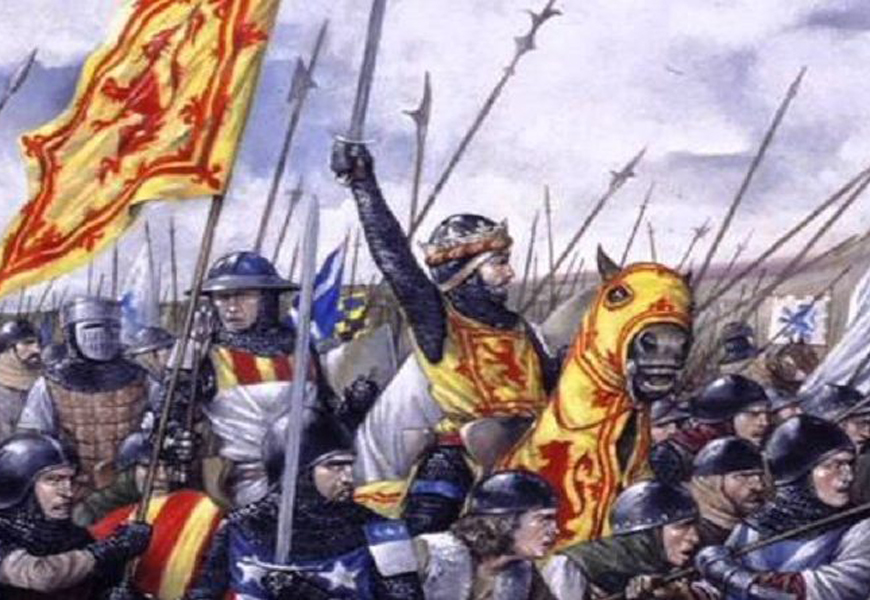
The English longbowmen were ordered to stop shooting to avoid friendly fire and were told to flank the advancing Scots, but were quickly dispersed by 500 Scottish cavalry, led by the Earl Marischal, Robert Keith.
It soon became clear to Aymer de Valence and Giles d'Argentan that the battle was lost and that Edward II needed to escape. The battlefield transformed into a rout, with many English being slaughtered or taken prisoner, with Edward II barely escaping. Once cleared of the battle, d'Argentan turned to King Edward and said, "Sire, your protection was committed to me, but since you are safely on your way, I will bid you farewell for never have I fled from a battle, nor will I now". With that, he turned his horse and rode back into battle, where he was overtaken and slain.
The English knight, Marmaduke Thweng did not flee. Instead, he sought out Robert the Bruce and surrendered to him. The Bruce recognized him and, in a display of respect, entertained Thweng and another captive, Ralph de Monthermer, at his table. He then released both men without ransom.
Aftermath
The English lost 22 Earls, 68 barons and knights, as well as thousands of men-at-arms, who were killed or captured fleeing from the battle. The Scots lost only two knights and a few hundred infantrymen.
King Edward II escaped to Stirling Castle, where Philip de Mowbray turned him away, as the castle would soon be overtaken by the Scots. Edward then fled east to Dunbar Castle, and from there boarded a ship to Berwick.
The Scots took back Stirling Castle from Mowbray, and Robert the Bruce ordered it to be slighted to prevent it from being retaken by the English in the future.
In exchange for some captured English nobles, Edward II released Robert the Bruce's wife, Elizabeth de Burgh, Robert's daughter Marjorie, and his sisters Christina and Mary Bruce from their imprisonment in England.
The Battle of Bannockburn was a decisive victory for Scotland and is traditionally viewed as the culmination of the First War of Scottish Independence. However, independence would not be officially recognized for another 14 years, with the signing of the Treaty of Northampton in 1328.