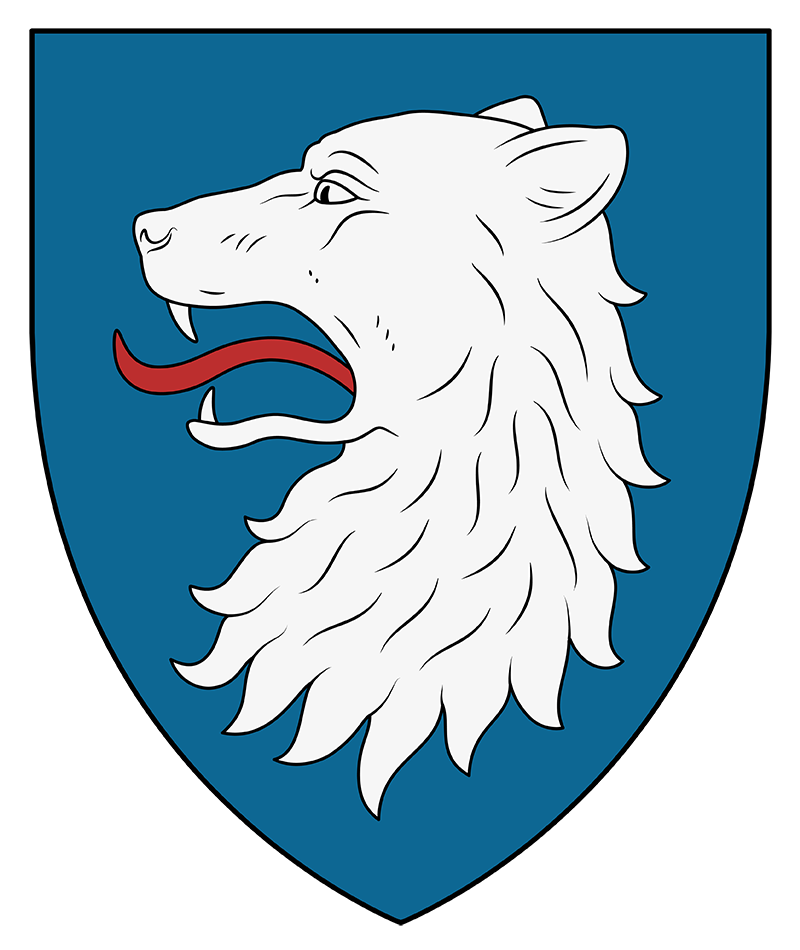
Hugh d'Avranches - Earl of Chester
"The Wolf"
Hugh d'Avranches, a Norman nobleman, likely accompanied William, Duke of Normandy, to England in 1066. He became a powerful Marcher Lord on the Welsh border, consolidating Norman control by establishing himself as a significant military leader.
Hugh was born around 1047 in Normandy and was the son of Richard le Goz, Viscount of Avranches. His mother is traditionally identified as Emma de Conteville, though the evidence for this is uncertain.
Hugh is believed to have come to England with William the Conqueror and possibly fought at the Battle of Hastings.
Following the conquest, in 1071, Gerbold the Fleming, 1st Earl of Chester, was captured at the Battle of Cassel in France. King William I declared the earldom vacant and appointed Hugh d'Avranches as First Earl of Chester, second creation. Hugh was granted near-regal powers in his earldom and acquired lands in about 20 English counties. He also received local manors previously held by Edwin, the last Saxon Earl of Mercia, who died in 1071.
Hugh's father, Richard le Goz, died around 1082, and Hugh succeeded him as Viscount of Avranches and inherited large estates in Avranchin as well as western Normandy.
Hugh was a good friend of Anselm of Aosta, Archbishop of Canterbury, a Benedictine monk and theologian. Hugh founded the Benedictine Abbeys of Sainte-Marie-et-Saint-Sever, Saint-Sever-Calvados, in Normandy, and St. Werburgh's Abbey in Chester, as well as giving land endowments to Whitby Abbey in North Yorkshire.
He remained loyal to King William II during the 1088 rebellion and later served as a principal counselor under King Henry I.
In military affairs, he was instrumental in the Norman consolidation of power, constructing castles, commanding expeditions into Wales, and campaigning in Normandy. His ferocity in Welsh campaigns earned him the nickname “Lupus” (the Wolf).
Sometime between the late 1080s and early 1090s, Hugh married Ermentrude of Claremont, daughter of Hugh I, Count of Clermont-en-Beauvaisis. Together, they had a son, Richard d'Avranches. Hugh also had several illegitimate children, including Robert, Otuer FitzCount, and, with less certainty, a daughter named Geva.
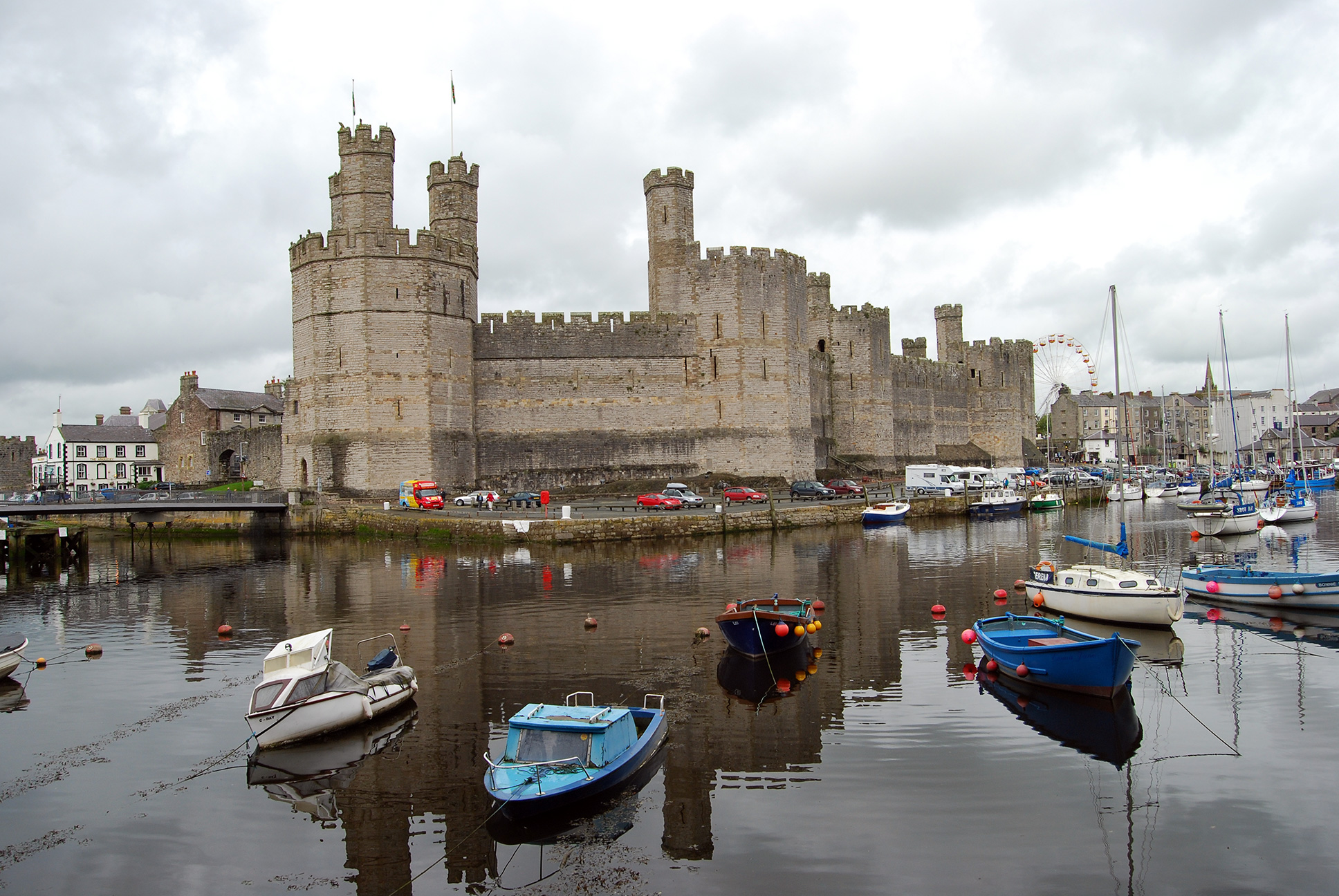
Among his significant military projects, Hugh built Caernarfon Castle around 1090 in the traditional Norman motte-and-bailey style, defended by a timber palisade on earthworks. He also built Aberlleiniog Castle and a castle somewhere in Meirionnydd.
Hugh spent most of his life fighting in Wales. With his cousin Robert of Rhuddlan, he subdued most of Northern Wales and established dominance in the region. In 1081, Hugh captured and imprisoned Gruffudd ap Cynan, King of Gwynedd, and held him at Chester Castle. After Robert's death in 1093 at the hands of a Welsh raiding party, Hugh took over his lands and became ruler of most of North Wales, solidifying his control.
In the summer of 1098, Hugh d'Avranches and Hugh of Montgomery, 2nd Earl of Shrewsbury, joined forces to relieve besieged castles and recover losses in Gwynedd. Gruffudd ap Cynan retreated to Anglesey, but fled to Ireland after the Danish fleet he hired switched sides. A Norwegian fleet under King Magnus III then attacked the Normans near the eastern Menai Straits, where the Earl of Shrewsbury was killed by an arrow reportedly shot by King Magnus. The Normans withdrew from Anglesey, and Gruffudd reclaimed it upon his return from Ireland the next year. Hugh d'Avranches made no further attempts to recover the lost lands.
Hugh d'Avranches fell ill and became a monk at St. Werburgh's Abbey, where he would die four days later, on July 27th, 1101. He was also buried at St. Werburgh's Abbey, which would later become Chester Cathedral.
After his death, he was succeeded by his son Richard, who became the 2nd Earl of Chester until Richard and his wife died in the sinking of the White Ship in 1120. The Earldom of Chester then passed to Hugh's nephew, Ranulph de Briquessart, Viscount of Bayeux.