Battle of Old Byland
The Great Raid & The Battle of Old Byland
Background
At the Battle of Myton, the Scots routed the English and returned to Scotland, raiding and plundering Cumberland and Westmoreland on the way home. A truce between Edward II and Robert the Bruce was made just before Christmas in 1319.
Tensions in England between Edward II and his barons continued to worsen, leading Thomas of Lancaster to form an alliance with Robert the Bruce.
As the truce between England and Scotland drew to a close in January 1322, James Douglas and Thomas Randolph, 1st Earl of Moray, crossed the border into England and began a large-scale attack on northern England. Thomas of Lancaster did nothing to stop the Scots.
This, and Edward II's constant favoritism toward his favorites over the barons, led to the Battle of Boroughbridge, where Andrew Harclay led an army for the king against Thomas of Lancaster and his rebel forces. The barons were soundly defeated, and Lancaster was briefly taken prisoner before being executed by beheading at his own castle in Pontefract after a show trial.
Edward II had defeated the baronial opposition in England and decided to launch an invasion of Scotland. Robert the Bruce was prepared for this, destroying crops and removing livestock in southern Scotland, and withdrew his army north of the River Forth. As the English moved across Lothian, Scotland, in early August 1322, it is said they found only one lame cow. The English campaign into Scotland was a disaster. In the Scalacronica, Sir Thomas Grey describes the campaign thus:
"The King marched upon Edinburgh, where at Leith there came such a sickness and famine upon the common soldiers of that great army, that they were forced to beat a retreat for want of food; at which time the King's light horse was defeated by James Douglas. None dared leave the main body to seek food by forage, so greatly were the English harassed and worn out by fighting that before they arrived in Newcastle, there was such a murrain in the army for want of food, that they were obliged of necessity to disband."
Battle
Robert the Bruce took advantage of the English army's disarray and moved back into England by crossing the Solway Firth in the west and moving southeast towards Yorkshire. The speed and boldness of the Scottish attack, known as the Great Raid of 1322, exposed Edward II to the dangers in his own lands.
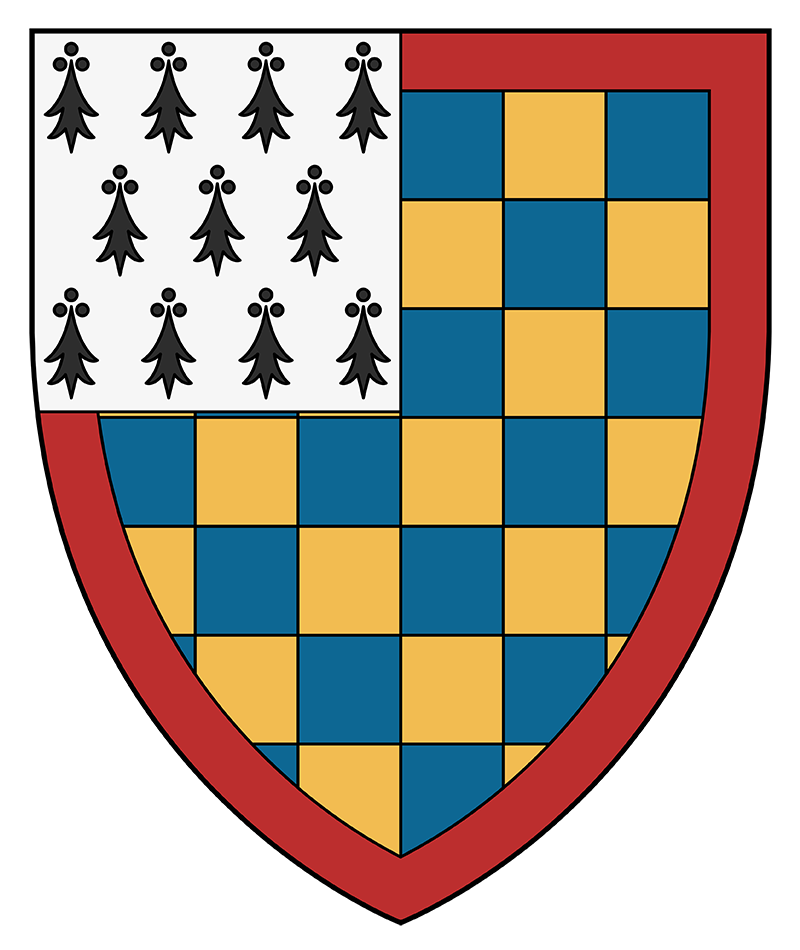
King Edward II and his wife, Queen Isabella, were staying at Rievaulx Abbey when their peace was interrupted by the Scots' sudden approach in mid-October. Between Edward and the approaching Scottish army stood the English forces under the command of John of Brittany, Earl of Richmond.
John of Brittany took up position on Scawton Moor, near Old Byland, between Rievaulx Abbey and Byland Abbey, thinking he had the high ground and tactical advantage on the approaching Scots.
But again, as he did at the Battle of the Pass of Brander, Robert the Bruce had an answer, he sent men from the Highlands, who were used to fighting on steep terrain, to maneuver onto terrain above the English that was thought to be impassable by the English.
As James Douglas and Thomas Randolph led a frontal uphill charge against the English, the Highlanders attacked downhill into Brittany's rear flank. The Scots' encirclement created panic, English resistance crumbled, and the Battle of Old Byland turned into a rout.
Aftermath
The Earl of Richmond was taken prisoner, as were Henri de Sully, Grand Butler of France, Sir Ralph Cobham, and Sir Thomas Ughtred. Thousands of other Englishmen were killed in the battle.
King Edward II made such a hasty retreat from Rievaulx Abbey that his personal belongings and the Great Seal of England were left behind.
Sir Thomas Grey stated that "After Byland the Scots were so fierce and their chiefs so daring, and the English so cowed, that it was no otherwise between them than as a hare before greyhounds."
Scotland was closing in on achieving its independence, with one final battle to go.