Battle of Bouvines (1214)
Background
By 1214, King John of England had spent ten years trying to win back the lands in France that he lost to Philip II in 1204. That summer the war was meant to reach its climax in two attacks at once. John would land in Poitou and pull Philip's army south, while an alliance of Philip's enemies marched on Paris from the north. The northern alliance had already won a victory of sorts in 1213, when an English fleet under the Earl of Salisbury destroyed much of the French fleet at Damme. John's half of the plan failed in the south. Prince Louis stopped him at Roche-au-Moine, and John fled on July 2nd, leaving his allies in the north to fight without him.
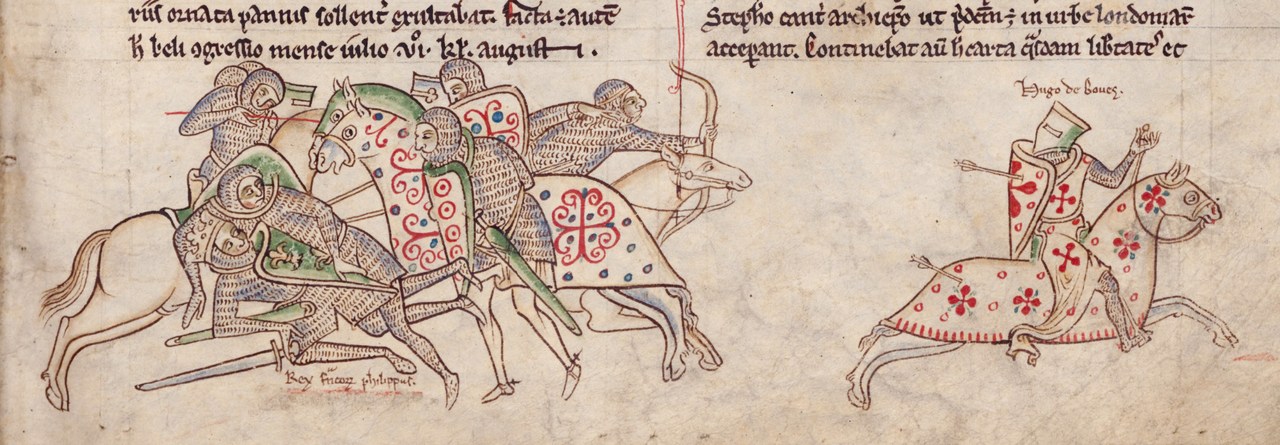
King Philip unhorsed at Bouvines (left) and Hugh of Boves fleeing the field (right). Drawing by Matthew Paris in the Chronica Majora, c. 1250, Corpus Christi College, Cambridge, fol. 37r. Wikimedia Commons, public domain.
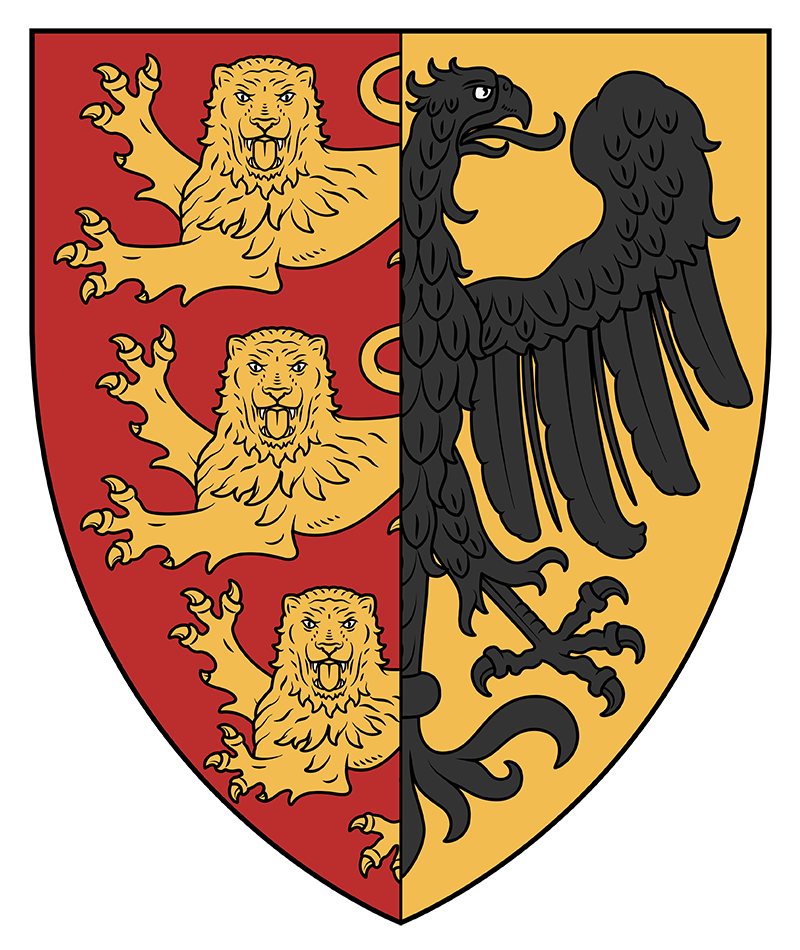
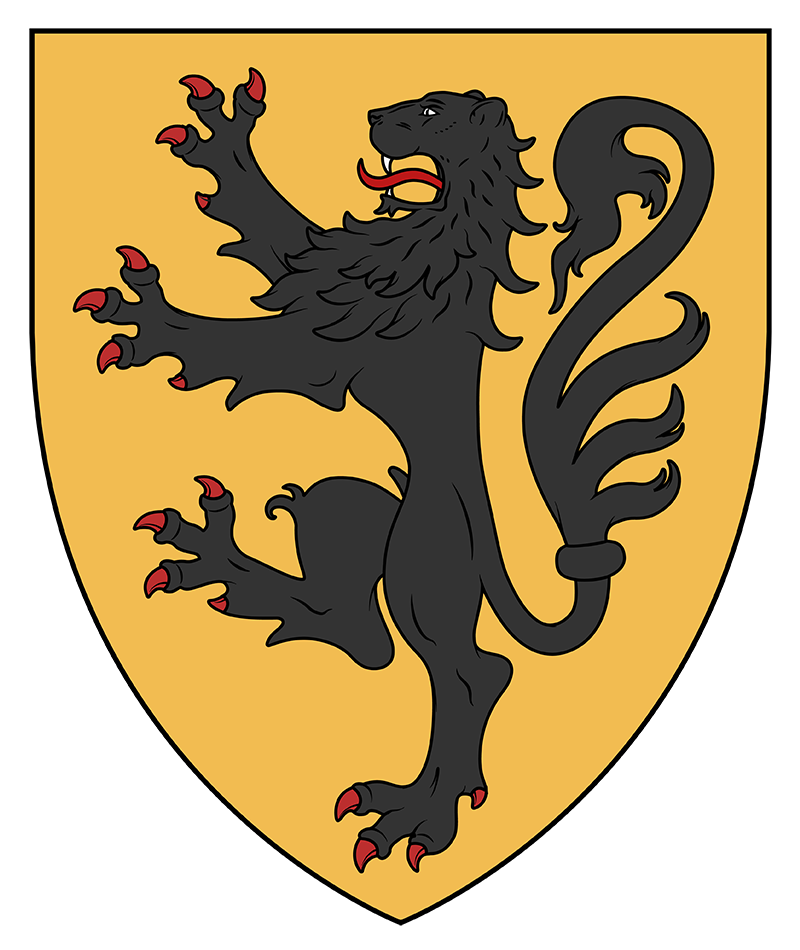
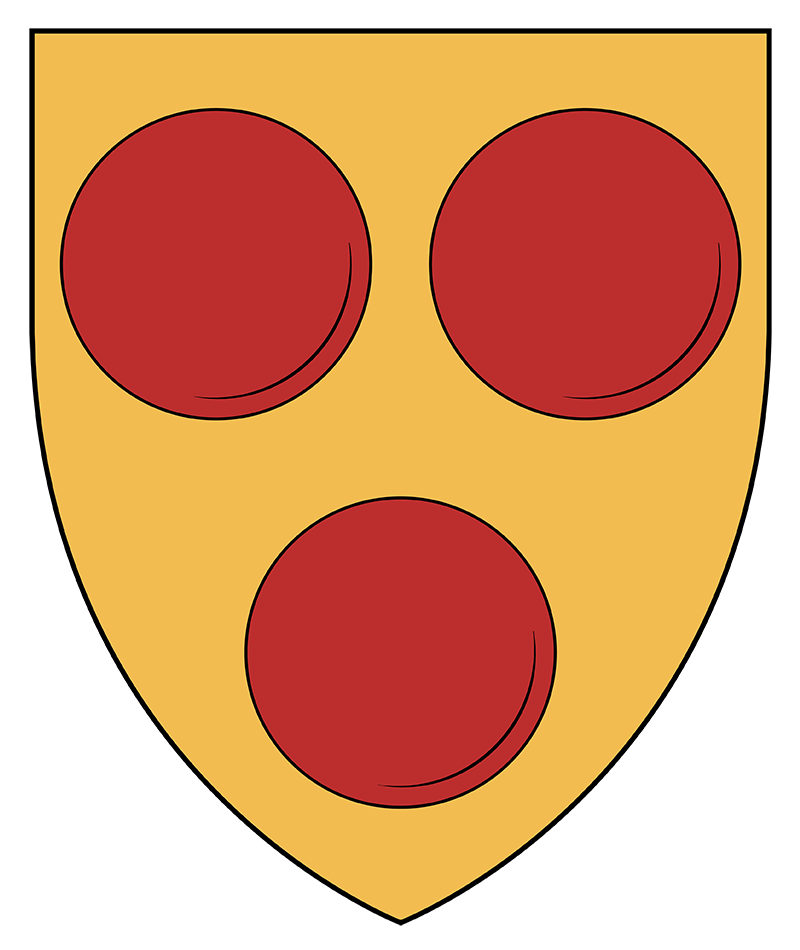
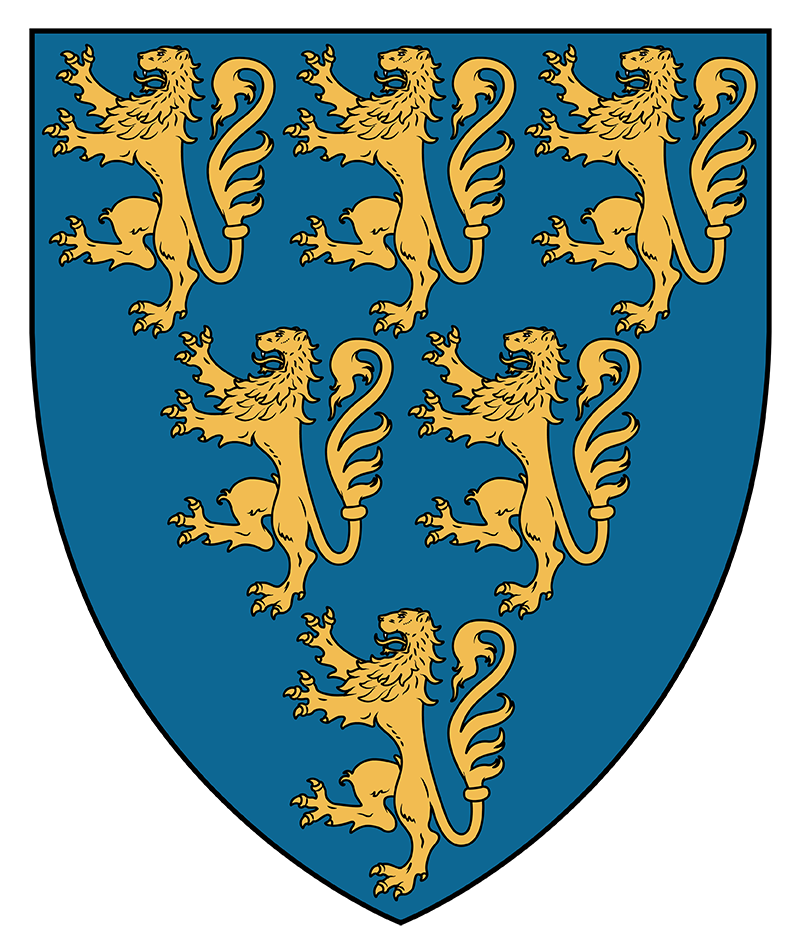
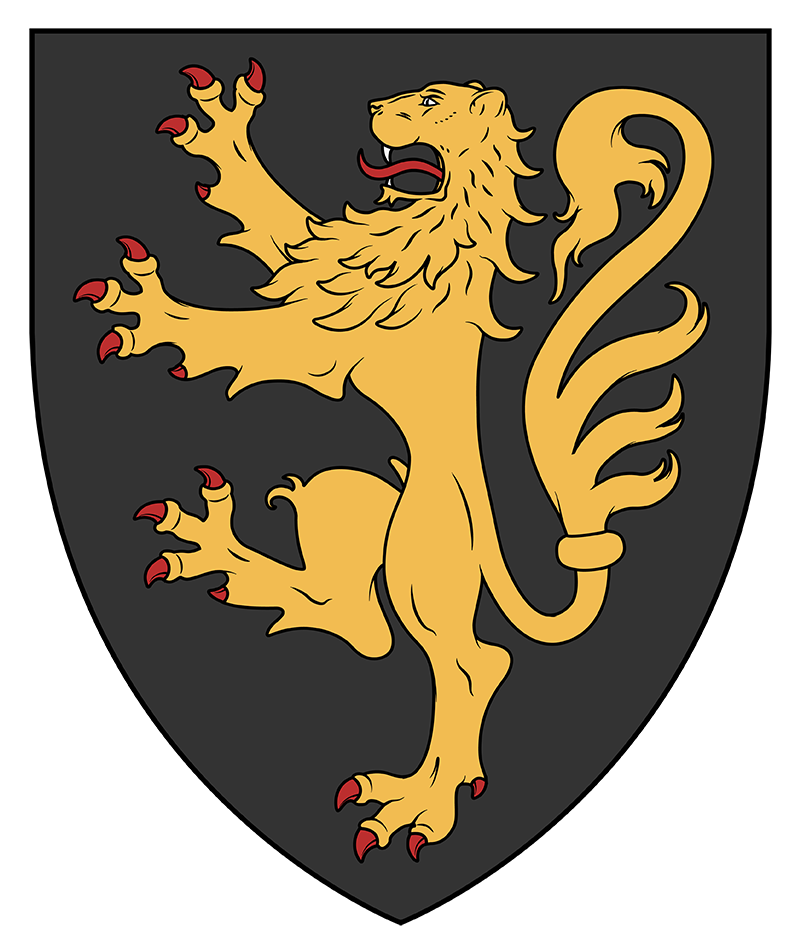
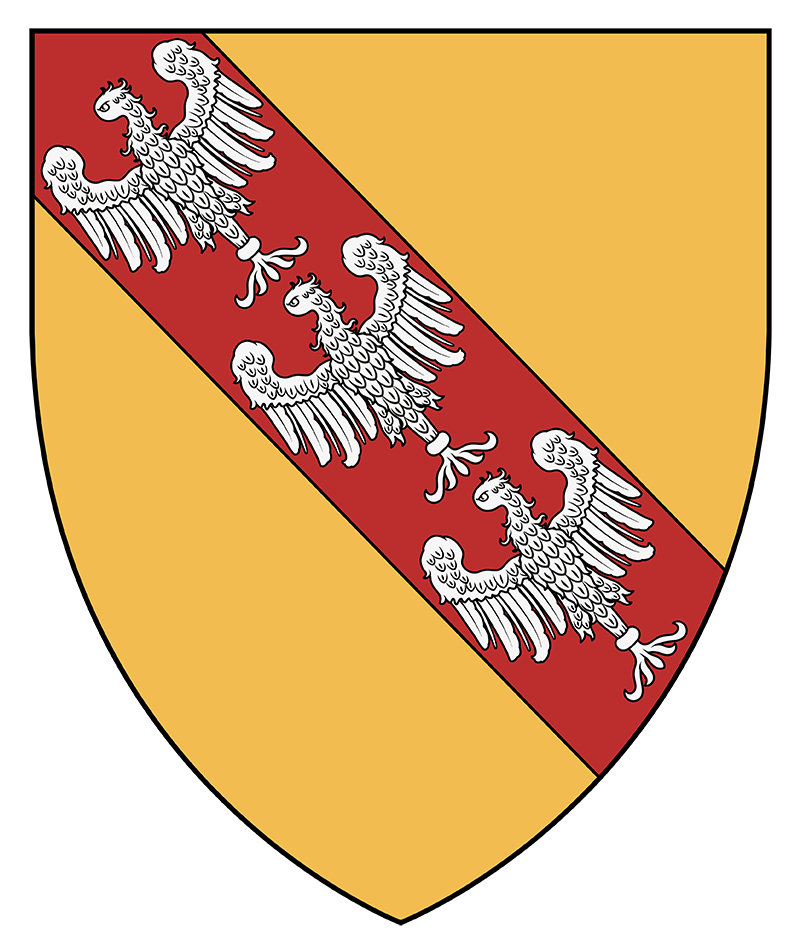
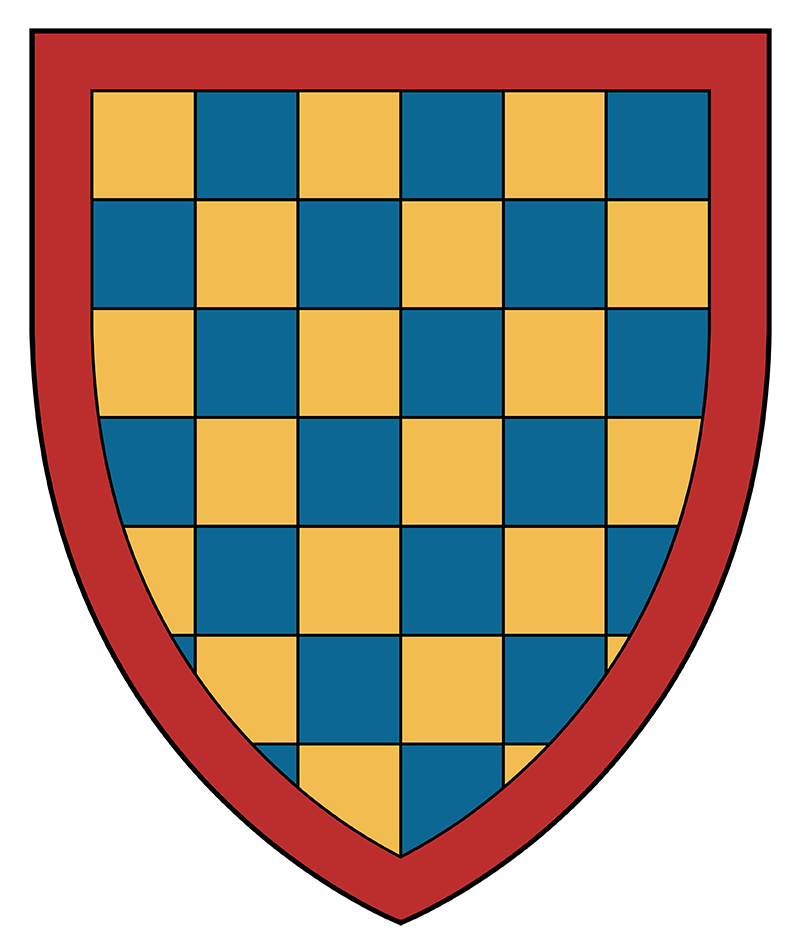
The northern alliance was held together by John's money. It was led by his nephew Otto IV, the Holy Roman Emperor, and included Ferdinand of Flanders, known as Ferrand, who wanted back Aire and Saint-Omer, the towns Philip had taken from Flanders in the Treaty of Pont-à-Vendin. Renaud of Dammartin, Count of Boulogne, was a former vassal of Philip who had turned against him. John's half-brother William Longespée, Earl of Salisbury, brought English knights and archers. Duke Henry I of Brabant, Duke Theobald I of Lorraine, Duke Henry III of Limburg and Count William I of Holland joined them, with the mercenary captain Hugh of Boves.
The March to Bouvines
Philip called out his vassals, and by July 23rd he had about 6,000 to 8,000 men. Otto gathered his forces at Valenciennes. Philip moved to Tournai, while Otto's army moved to Mortagne, only a few miles away: three miles according to the Anonymous of Béthune, six according to William the Breton. Philip held a council at Tournai. His barons advised against attacking through the narrow roads around Mortagne, and the king decided to withdraw toward Lille.
On Sunday, July 27th, the French army set off. Otto's army followed and fell on the rearguard, which was made up of the Burgundians and the knights of Champagne. The Anonymous of Béthune says they had to stop five times to drive off attackers, and at last they begged the king to ride more slowly. Some modern historians think Philip planned this and deliberately lured Otto into a trap, and that Otto was surprised by how fast the French moved.
The viscount of Melun and Brother Guérin, one of Philip's closest advisers, rode out to scout and saw the enemy only about three miles away. The barons advised riding on, but Guérin insisted that the army must stand and fight, and in the end the king decided to fight. The decision troubled men on both sides, because it was a Sunday. The Anonymous of Béthune says Philip would have preferred to put off the battle until the next day. Roger of Wendover claims that Renaud of Boulogne argued against a Sunday battle, that Hugh of Boves called him a traitor for it, and that Renaud replied that the day would show who was loyal.
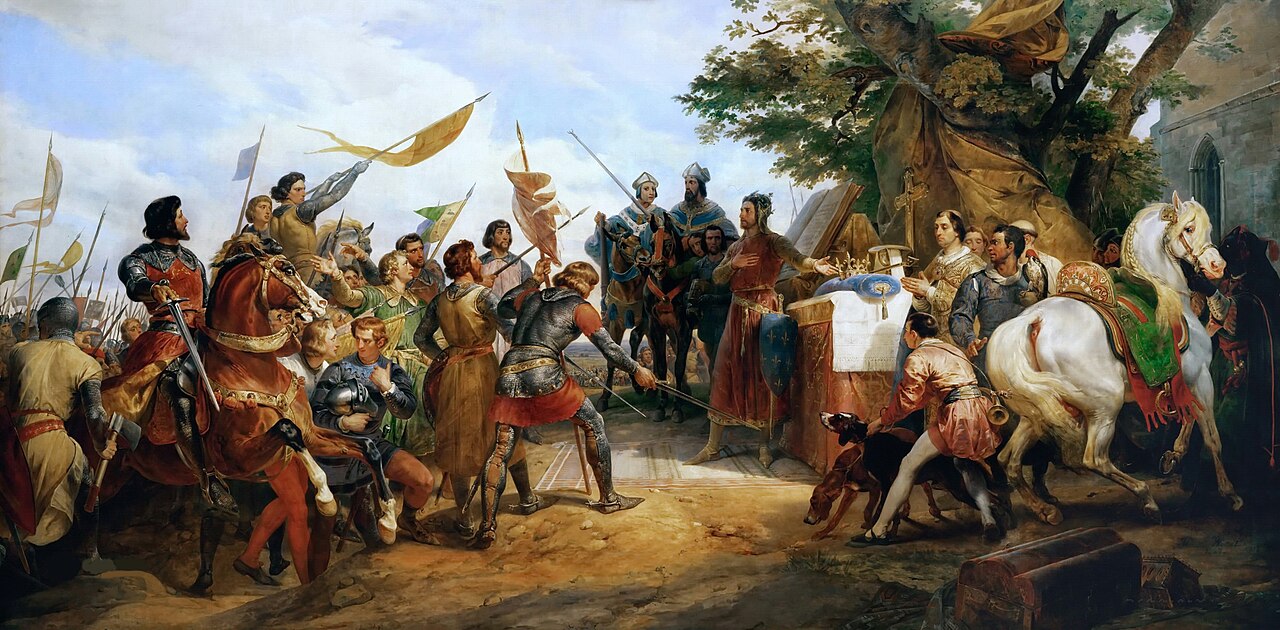
Philip with his crown on the altar before the battle, in Horace Vernet's painting of 1827, Versailles. The crown on the altar comes from later tradition. Wikimedia Commons, public domain.
The French had reached the bridge over the Marque at Bouvines, and most of the army had crossed, but the king had not. William the Breton, Philip's chaplain, says that Philip went into a chapel dedicated to Saint Peter and prayed, and then he spoke to his barons and told them to place their trust in God. His chaplain and a clerk sang psalms, among them "Blessed be the Lord my God" and "Let God arise." The same chronicler says that Otto, Ferrand and Renaud had sworn, before the battle, to attack the king's own division. The army was ordered to turn back and meet the enemy.
The Armies
The numbers are uncertain, and modern estimates vary a great deal. The French probably had 6,000 to 7,000 men, including 1,200 to 1,360 knights, about 300 mounted sergeants, and 5,000 to 6,000 infantry, many of them militia from the towns of northern France such as Amiens, Arras, Beauvais, Compiègne and Corbie. The allies had just under 9,000, with 1,300 to 1,500 knights and about 7,500 infantry. The two sides were thus fairly well matched in knights, but the allies had more foot soldiers.
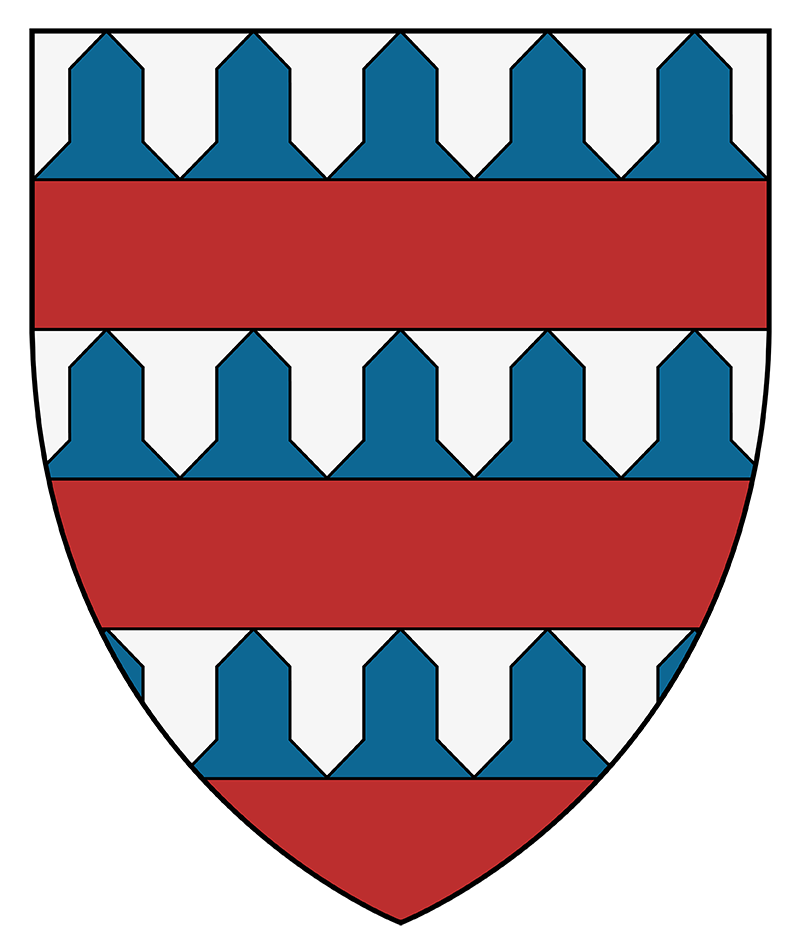
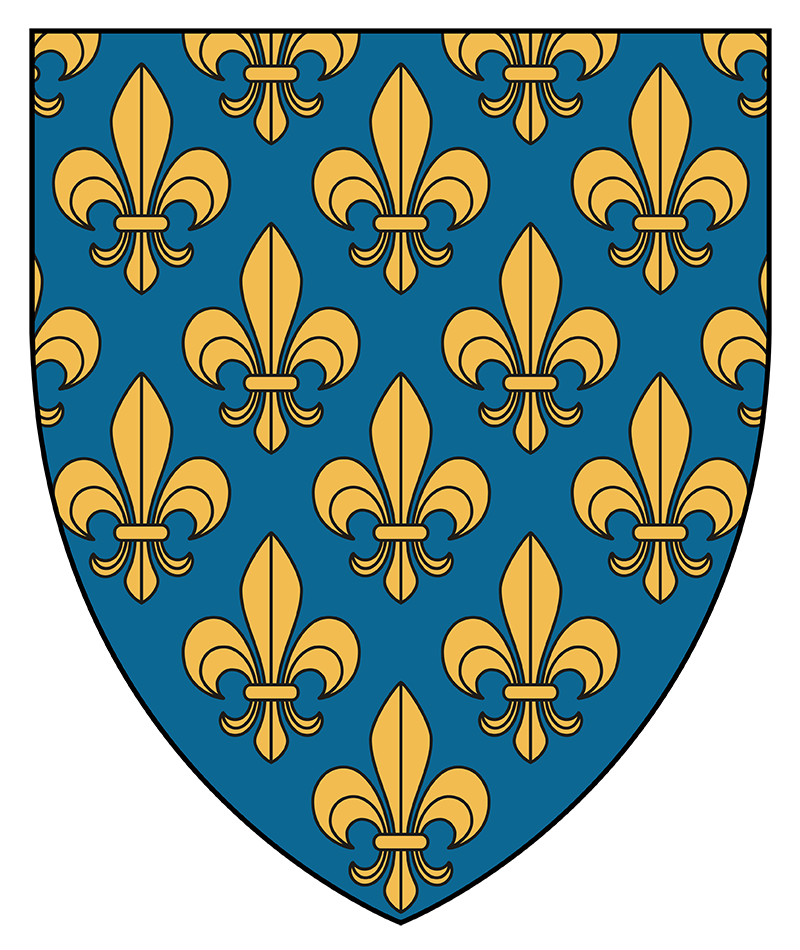
Both armies formed up facing each other across a small gap, with heavy cavalry on the wings and infantry in the middle. On the French right, the Duke of Burgundy commanded the knights of Burgundy and Champagne, with Gaucher of Châtillon, Count of Saint-Pol, Mathieu de Montmorency and the viscount of Melun. In the centre stood Philip himself, with the royal banner, the Oriflamme, and with William des Barres, Bartholomew of Roye, William of Garlande, Enguerrand of Coucy and Peter Mauvoisin around him. Robert of Dreux held the left, supported by his brother Philip of Dreux, the Bishop of Beauvais, and Count William of Ponthieu.
The allies faced them in a similar order. Ferrand and the Flemish knights held their left. Otto stood in the centre, with the Brabant, Lorraine and Limburg contingents, and a mass of German pikemen in front of his knights. Renaud of Boulogne held the right with the Brabant infantry, and next to him were Salisbury's English knights and archers.
The Battle
The fighting began on the French right. About 150 mounted sergeants from the abbey of Saint-Médard at Soissons charged the Flemish knights, and the Flemings pushed back, until Champagne knights killed or captured the most eager of them. Ferrand then led a counter-attack of some 600 knights that drove the French back. Gaucher of Châtillon came forward with a few knights, then more, and his repeated charges stopped the allied advance. The French were better ordered than the Flemings. They broke through the Flemish ranks, wheeled, and struck them from behind. The Duke of Burgundy was unhorsed, but his knights drove the Flemings off and found him a fresh horse. The Flemings fought on for about three hours, and then Ferrand himself was wounded, pulled from his horse and captured. William the Breton names his captors as Hugh of Mareuil and his brother John. When Ferrand fell, the spirit of his knights broke.
In the centre the clash was closer. The French militia, standing under the Oriflamme, were thrown back by Otto's knights and infantry, and the allies nearly reached the king. German foot soldiers pulled Philip from his horse with their hooked pikes, but his armour turned aside a lance. A knight named Galon de Montigny raised the royal banner and waved it as a signal, French knights rallied to the king, and Philip was given a fresh horse. Stephen of Longchamp, who fought beside him, was killed by a dagger through the eye-hole of his helmet. After more fighting the allies were thrown back.
Both kings' reserves then came together in a wild fight. Peter Mauvoisin got hold of Otto and tried to pull him from his saddle, but could not. A knight named Gerard la Truie tried to stab the emperor, but his dagger bounced off Otto's mail, so he struck the horse in the eye instead. Four German lords brought Otto away, and when more French knights came for him, he fled. His German knights fought to the end, and they were all killed or captured. The imperial standard, an eagle on a dragon, was taken and carried to the French king.
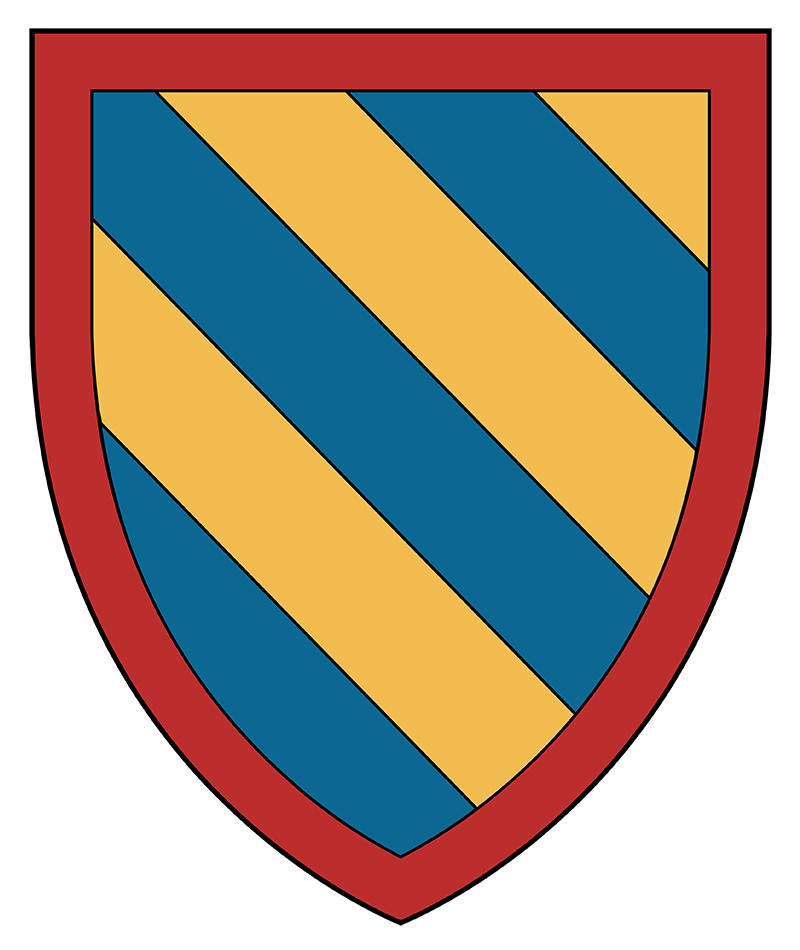
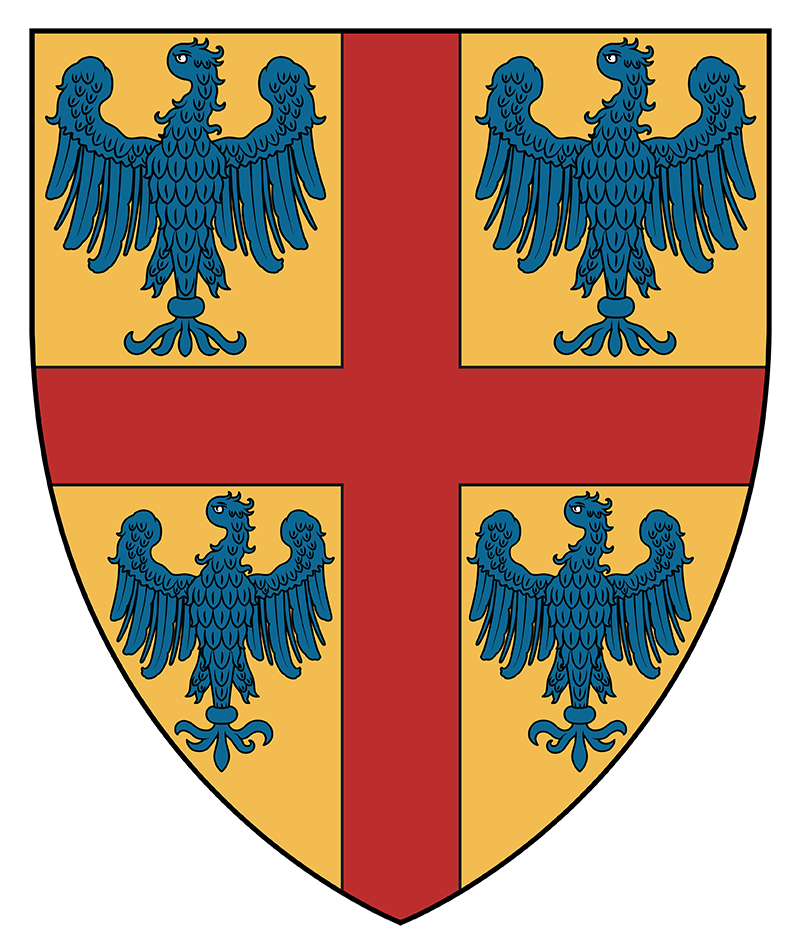
On the French left, Robert of Dreux's men were hard pressed by Salisbury's knights until Salisbury himself was unhorsed. Philip of Dreux, the Bishop of Beauvais, struck him down with a mace and took him prisoner. The English soldiers are said to have fled. Mathieu de Montmorency is said to have captured twelve imperial banners, and tradition says that twelve more eagles were added to the four already on the Montmorency arms as a result.
By then the French wings were closing in on the imperial centre. The last to hold out was Renaud of Boulogne, who had once been Philip's vassal. He gathered a ring of between 400 and 700 Brabant pikemen and defied the French cavalry, riding out with sorties and then retiring into the ring. In the end Thomas de Saint-Valery attacked it with 50 knights and 1,000 to 2,000 infantry, the ring was overrun, and Renaud's horse was stabbed from under him. He was knocked down and made prisoner, and he surrendered to Guérin. No pursuit followed, because night was coming and the French feared that their prisoners would escape, and trumpets called the army back.
Aftermath
The victory was complete. The allies lost at least 169 knights killed, according to one count, and many more infantry, among them 400 to 700 Brabant sergeants. William the Breton counts about thirty prisoners of rank, including five counts and twenty-five bannerets. Among the prisoners were Ferrand, Renaud and Salisbury. The French lost a number of knights, but their infantry losses were not recorded. Philip returned to Paris in triumph with his prisoners, and the celebrations are said to have lasted seven days and nights.
Ferrand was taken to the Louvre in Paris, and he was not released until 1227. Renaud was held in heavy chains at Péronne, and he died in prison in 1227, said to have taken his own life. Salisbury was held until March 1215, when he was exchanged at Dover for Robert of Dreux, whom John had captured near Nantes the previous June. Otto fled to Valenciennes and spent the night in the abbey of Saint-Sage. His power collapsed, and Frederick II displaced him as emperor, and Otto died in 1218.
John was at Bouteville in western France, more than 600 kilometres away, on the day of the battle, and he probably did not hear the full news for over a week. He then rested at Le Blanc from August 6th to at least the 11th. On August 31st he agreed to a truce of fifteen days, and on September 18th Philip sealed a five-year truce at Chinon, to run until Easter 1220. Under its terms the prisoners stayed with their captors, and the Angevin and Breton supporters of John could return home if they gave security to Philip's seneschals. John landed at Dartmouth, most probably on October 13th, 1214.

Bouvines ended any hope of restoring the Angevin empire. John returned to England beaten, with nothing gained in France. The barons who had refused to follow him abroad now pressed their demands, and the result was Magna Carta in 1215. For Philip, it was the high point of his reign. It ended the threat from both John and Otto, and it left the French monarchy stronger.
Legacy
The French have long remembered Bouvines. The historian Jean Favier called it "one of the most decisive and symbolic battles in the history of France," and Ferdinand Lot called it the "medieval Austerlitz." Philip founded the abbey of Notre-Dame de la Victoire near Senlis to mark the win. Horace Vernet painted the battle in 1827, and the church at Bouvines was rebuilt for the 700th anniversary in 1914, with stained-glass windows showing the battle. The 800th anniversary in 2014 was marked with a large show about the battle.