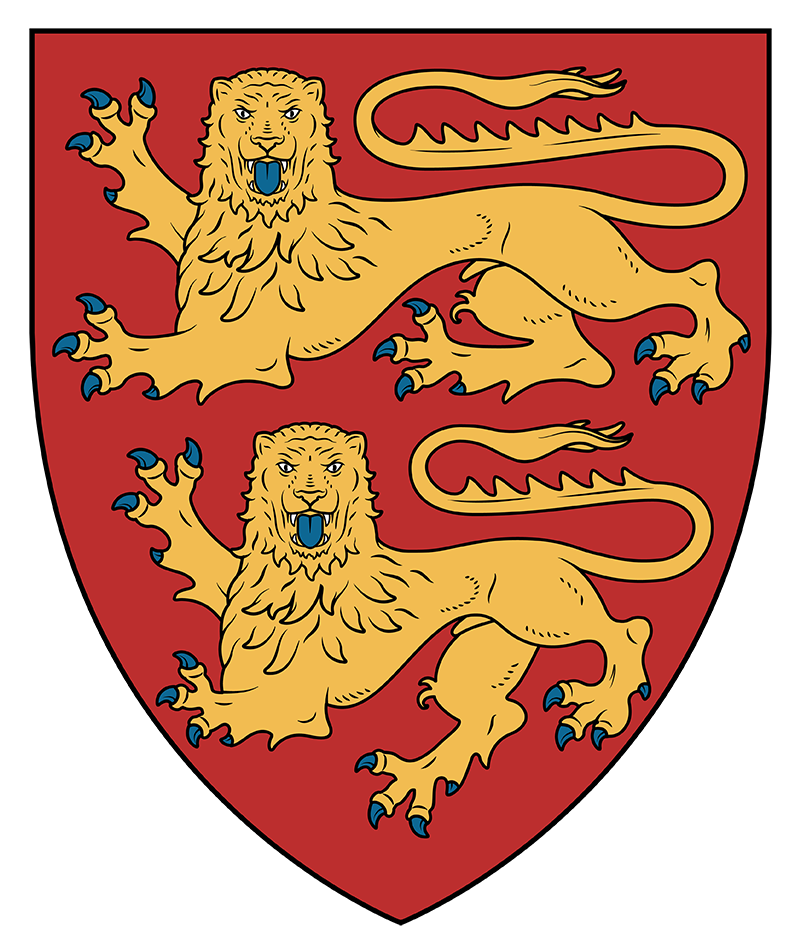
William II - King of England (1087-1100)
William Rufus
William Rufus, King William II, ruled England from 1087 to 1100. He consolidated Norman rule, but became infamous for tyranny and greed, repeatedly clashing with the church.
William was born around 1056 in Normandy. He was the third of four sons of William the Conqueror and Matilda of Flanders. He was brought up in the household of Lanfranc, Archbishop of Canterbury.
In 1075, William campaigned in Wales, defeating the Welsh King Caradog ap Gruffudd. This emboldened him to pursue the conquest of Wales later.
During his brother Robert Curthose's rebellion in 1078, William remained loyal to his father.
After King William I died in 1087, his eldest son, Robert Curthose, received Normandy, while William Rufus inherited England and was crowned King William II at Westminster Abbey on September 26th, 1087.
William's reign began with him funding masses for his father's soul, though he ignored his father's wish to release prisoners. He appointed several nobles, including William de Warenne, Henry de Beaumont, and Robert FitzHamo, and restored Odo of Bayeux to court. Odo soon supported William's brother Robert Curthose, and by 1088, tensions with Robert erupted into rebellion.
Odo of Bayeux and his brother, Robert of Mortain, decided to stand against William and try to dispose of him and reunite Normandy and England under one ruler, Robert Curthose.
In the summer of 1088, the rebels attempted to devastate William's territories and those of his supporters while fortifying their own strongholds. William countered by offering financial incentives to those who allied with him and promised the English people "the best law that they ever had ever been in this land." This encouraged regional garrisons to oppose the rebels.
He also attacked the rebels personally. William besieged Rochester Castle but received word that Odo had already fled to Pevensey Castle, which was held by his brother Robert of Mortain. William then besieged Pevensey Castle for six weeks, which eventually fell, and he captured Odo and forced him to help secure the surrender of Rochester Castle, which was still under siege and still held out. It eventually surrendered after disease and hardship set in. Many of the rebels fled to Normandy, and Odo was stripped of his belongings and banished to Normandy for life.
In 1089, Lanfranc, Archbishop of Canterbury, died. William postponed naming a successor for years while seizing church revenues.
In 1090, William Rufus started buying the allegiance of Norman barons in Upper Normandy, but failed in his attempt to take Rouen in November of that year. He invaded Normandy again in 1091, crushing Robert Curthose's forces and taking a portion of his lands. The two reconciled their differences, and William even agreed to help Robert recover lands in Maine that had been lost to France.
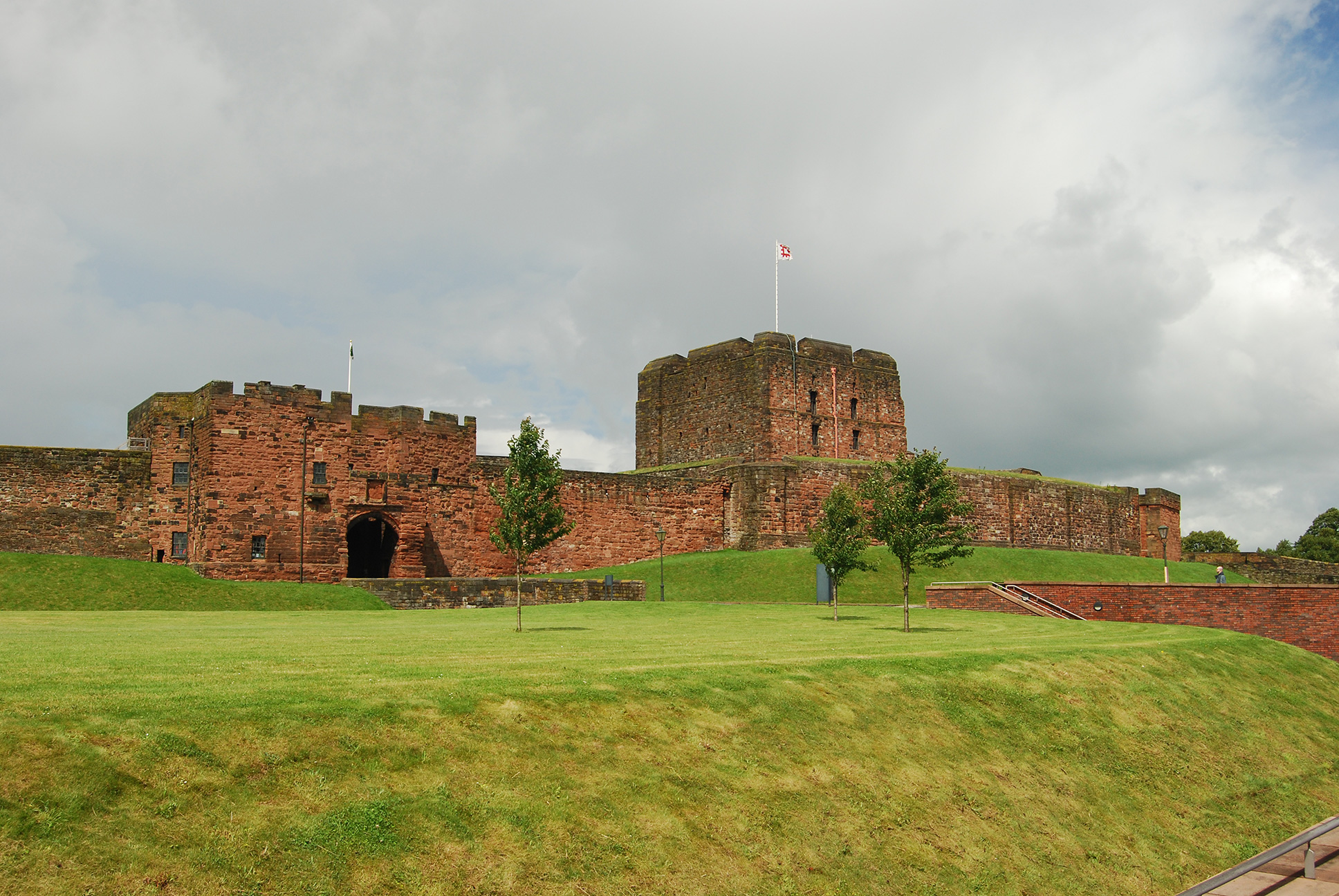
In 1092, William Rufus constructed Carlisle Castle to secure the northwest border with Scotland, reclaiming Cumberland and Westmorland from Scottish control.
In 1093, William nominated Anselm, another Norman-Italian, as the new Archbishop of Canterbury. This appointment sparked ongoing conflict, as William insisted on his right to invest bishops and control church income, while Anselm resisted royal interference in church affairs.
In 1095, William led an army into northern Wales to try to gain control of lands held by Gruffydd ap Cynan of Gwynedd. The Welsh guerrilla tactics frustrated the English, and William eventually withdrew without engaging in a major battle.
Also in 1095, William held a council at Rockingham to pressure Anselm into accepting royal authority over the church, but Anselm refused to yield. In October 1097, Anselm went into exile and appealed to Pope Urban II. Though the pope nominally supported Anselm, he reached a pragmatic agreement with William, who recognized Urban as Pope in exchange for being allowed to manage English church affairs and revenue as he wished. Anselm remained in exile while William continued collecting the income of the Archbishopric.
In 1096, Robert Curthose pawned Normandy to William for 10,000 marks to raise money to join the First Crusade. William became the de facto ruler of Normandy until 1100. William raised the money by levying a heavy tax on the whole of England.
In 1097, William turned his attention back to Wales and launched a new expedition into southern Wales, marching through Pembroke. They secured some control in the south, but the north remained under the control of Gruffyd ap Cynan. William was able to build or support many castles along the Welsh marches as a defensive barrier between Wales and England.
On August 2nd, 1100, William went hunting in the New Forest, where he was killed by an arrow through the lung, from one of his own men, Walter Tirel, who was aiming at a stag. Accounts at the time say it was an accident, but suspicion fell on his younger brother Henry, who was present and quick to claim the throne, and was crowned just days after William's death as King Henry I. Walter Tirel fled to France, which heightened suspicion.
William died quickly and was buried at Winchester Cathedral, leaving behind a legacy of consolidation, conflict, and controversy that shaped the course of English history.
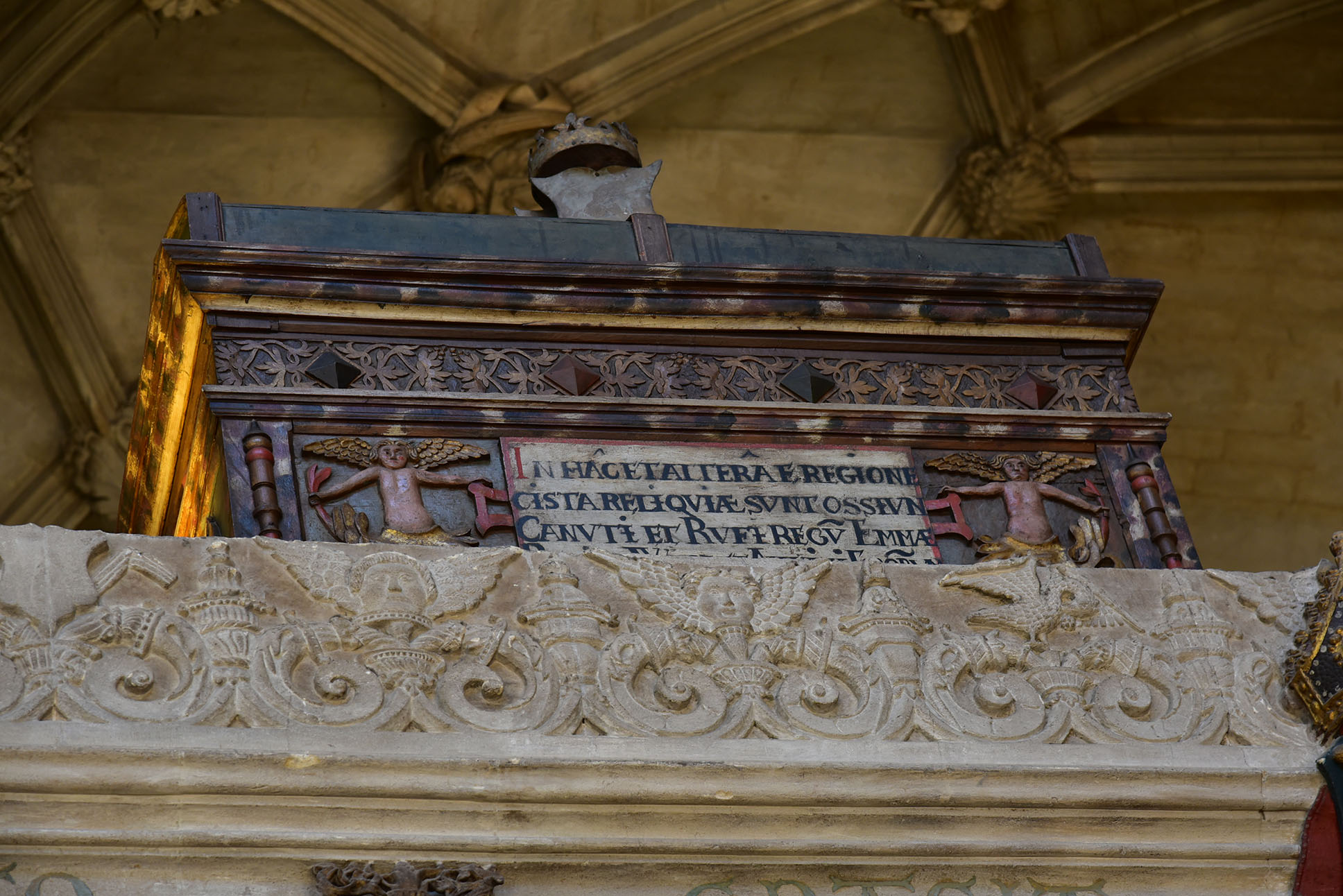
William's bones are believed to rest in one of the mortuary chests above the choir screens at Winchester Cathedral, the one he shares with King Cnut, whose name is written on the front. According to a cathedral guide, Cromwell's soldiers scattered the bones of the kings and bishops when they took Winchester during the Civil War, and the remains were later gathered back into the chests. Nobody knows for certain whose bones are where, but the cathedral hopes to use DNA testing to identify William Rufus in the future.