Reginald FitzUrse
Reginald FitzUrse was an Anglo-Norman Knight, best known for being one of the four knights who murdered Thomas Becket, Archbishop of Canterbury.
Reginald was born in England around 1145. He was the eldest son of Richard FitzUrse, a Norman landowner with estates in England, and Maud de Boulers. His name, Anglo-Norman FitzUrse, means "son of Bear," likely from an ancestor's nickname.
When his father, Richard, died in 1168, Reginald inherited the manor of Williton in Somerset as well as landholdings in Leicestershire, Northampton, and at Barnham in Kent.
Reginald held land of the king in chief and served as a knight in King Henry II's household. His role in Henry's court gave him military and advisory duties amid Henry II's efforts to consolidate power against rebelling barons and the Church.
He also had connections to Thomas Becket when Becket was chancellor. He held lands as one of Becket's tenants, owing feudal obligations that likely involved him in manorial matters under the chancellor's oversight. This placed him within Becket's sphere of influence before their paths split amid growing church-state tensions after Becket became Archbishop of Canterbury in 1162.
Reginald FitzUrse married Beatrice de Limesi, daughter of Geoffrey de Limesi. They had one child together, Matilda, also called Maude.
At Christmas in 1170, Reginald was at Henry II's court at Bures, Normandy, when the king angrily denounced Thomas Becket during their dispute over church and royal authority. A contemporary biographer, Edward Grim, stated that Henry exclaimed: "What miserable drones and traitors have I nourished and promoted in my household, who let their lord be treated with such shameful contempt by a low-born cleric!"
Reginald FitzUrse and three other knights, Hugh de Morville, William de Tracy, and Richard le Breton, took Henry's outburst as a call to act against Thomas Becket. The four knights left Normandy, returned to England separately, and met at Saltwood Castle in Kent.
On December 29th, 1170, the four men, dressed in armor, entered Canterbury Cathedral and sought out Thomas Becket. They demanded that Becket absolve the bishops he had excommunicated for their roles in Henry the Young King's coronation. Becket refused and walked toward the altar, where his clerks, including the eyewitness Edward Grim, joined him.

FitzUrse was described as the ringleader and aggressively approached Becket, who repelled him and exclaimed: "Touch me not, Reginald; you owe me fealty and obedience." Reginald then delivered the first blow to the archbishop's head with his sword, breaking it with the force, after which the others finished the murder of Thomas Becket.
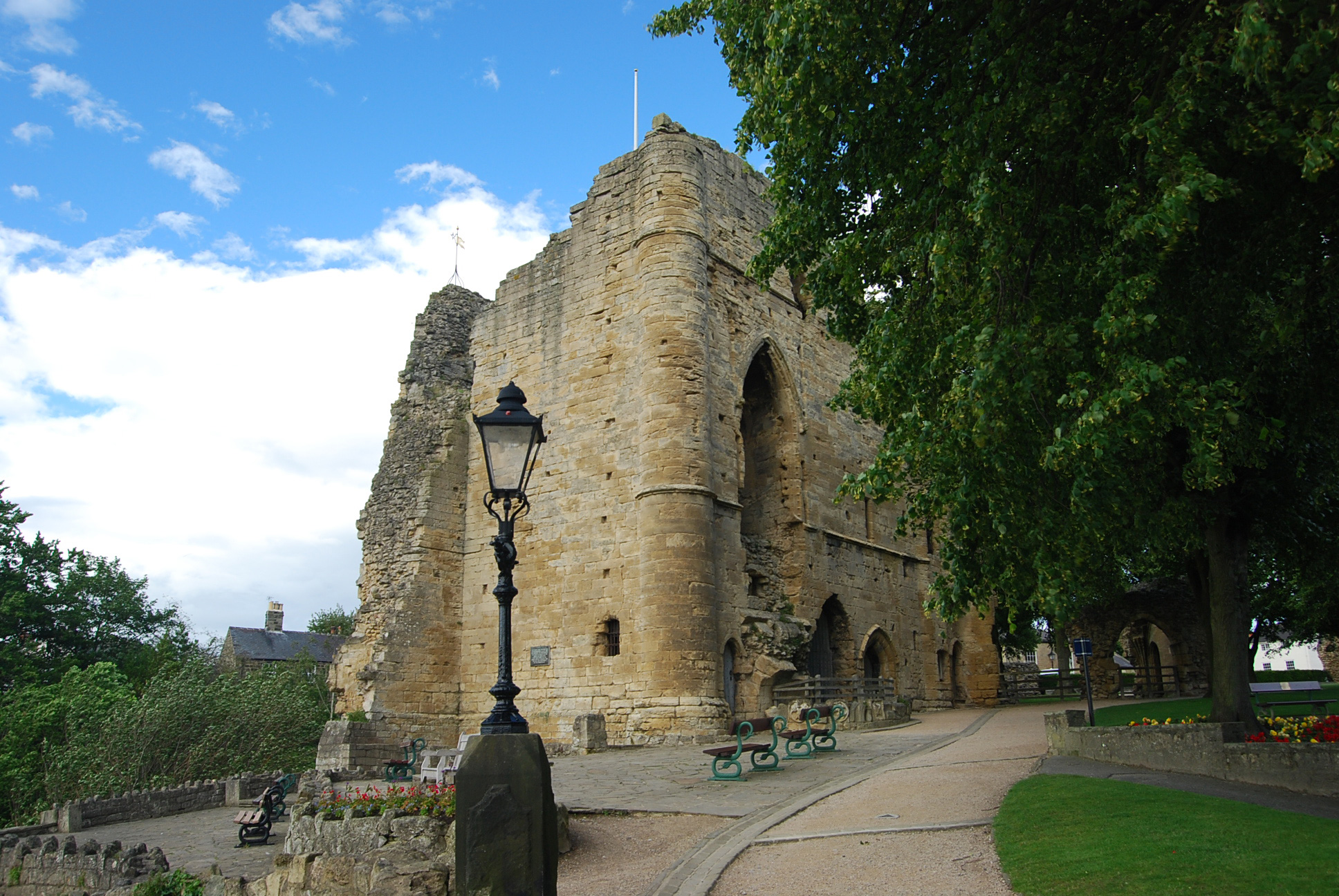
After the murder, the four knights fled the cathedral. They returned to Saltwood Castle in Kent before traveling north to Hugh de Morville's stronghold at Knaresborough Castle in Yorkshire, where they remained for almost a year while sending justifications for their actions to King Henry II. In March 1171, Henry publicly condemned them. In late 1171 or early 1172, the four knights left England and traveled to Rome, where Pope Alexander III excommunicated them and sentenced them to 14 years of penitential service in the Holy Land, from which none would return.
Before his exile, Reginald disposed of his Somerset holdings by granting half the manor of Williton to his brother and the other half to the Knights Templar and Knights Hospitaller.
Accounts place Reginald FitzUrse's death around 1173, and some say they buried him before the door of the Templar church in Jerusalem.
