First Phase of the Despenser War
Raids on Despenser Lands in South Wales
Background
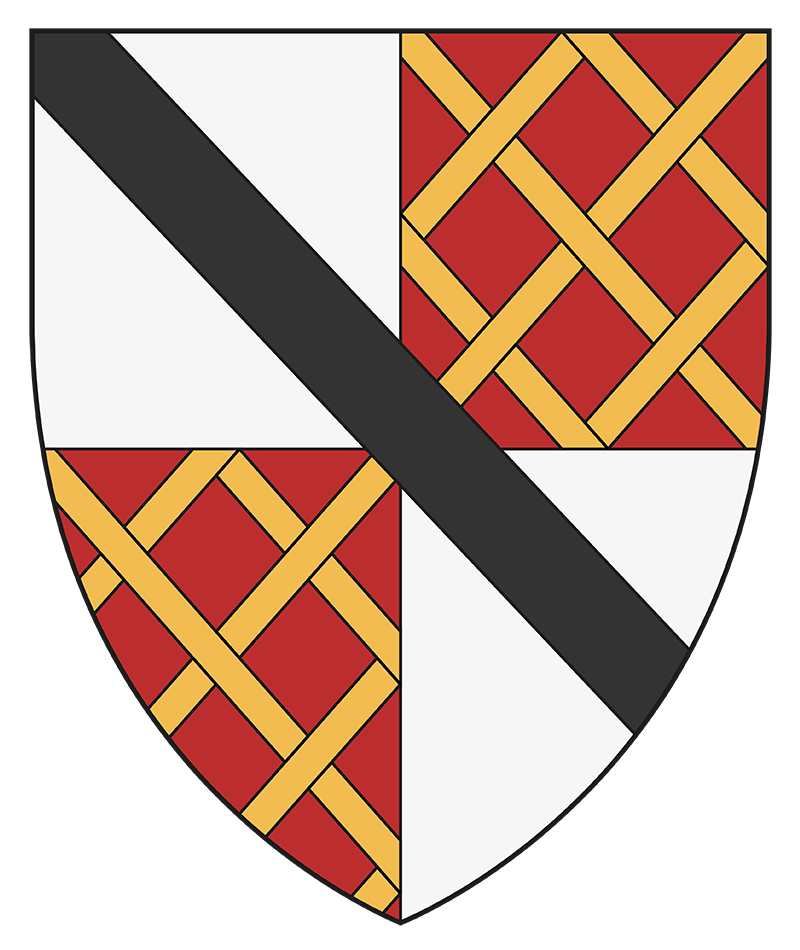
Gilbert de Clare, 8th Earl of Gloucester, was a powerful English Nobleman and Marcher lord. At the Battle of Bannockburn, he died after entering combat without his coat of arms. Exposed, he was killed by Scottish soldiers who would have otherwise taken de Clare, a high-ranking English Nobleman, for ransom.

As a result of de Clare's death, his largest lordship of Glamorgan passed to his brother-in-law, Hugh Despenser the Younger. Hugh, who was married to the late Earl's eldest sister Eleanor, thus inherited the estate.
Marcher lords and English barons were wary of Edward II's favorites gaining titles. After removing his earlier favorite, Piers Gaveston, in 1312, they saw Hugh Despenser the Younger and his father quickly gain power and obtain Glamorgan in Wales.
The Lords Ordainers, who drafted the Ordinances of 1311 to limit Edward II's power, despised the younger Despenser and, to a degree, his father, due to their influence over the King. The barons felt pushed aside and sought to regain influence.
Roger Mortimer and Humphrey de Bohun, 4th Earl of Hereford, were determined enemies of Hugh Despenser the Younger and his father, Hugh Despenser the Elder. As a result, tensions rose when Hugh Despenser the Younger called himself “Lord of Glamorgan” and “Earl of Gloucester.”
Battle
In February of 1321, Roger Mortimer, Bohun, and Thomas of Lancaster agreed to attack the Despensers' Welsh lands. Edward II mobilized in March, declaring assaults on the Despensers as treason. He called Marcher lords to Gloucester and Bristol, but Mortimer and Bohun refused each time.
On May 4th, 1321, Mortimer and Hereford began attacking Despenser's lands. During their eight-day campaign, Mortimer was joined by Hugh Audley, Roger Damory, and Roger Clifford. These allies seized Newport on the first day and granted it to Audley as compensation. Cardiff and Swansea fell soon after, along with Neath Castle, where the constable was beheaded.
Although Caerphilly Castle, the principal stronghold of Hugh Despenser the Younger, was besieged by Mortimer's forces in May, its garrison, led by John Felton, successfully resisted capture. The stronghold remained unconquered until 1327.
After pillaging Glamorgan and Gloucestershire, Mortimer and Hereford marched north to join Thomas of Lancaster at Pontefract Castle. In June, the barons united at Sherburn-in-Elmet, calling themselves the “Contrariants” and vowing to remove the Despensers.
By now, Edward II had returned to London and held parliament to plan the next steps. Mortimer led his army towards London, reaching St Albans by late July. London refused them entry, so Mortimer besieged the city.
By August, Mortimer was joined by Lancaster, creating a tense stand-off. Hugh Despenser the Younger threatened the barons from a River Thames boat, while the barons threatened royal properties outside the city unless he yielded.
Aymer de Valence, 2nd Earl of Pembroke, intervened to defuse the crisis. Edward refused to negotiate or exile the Despensers. Pembroke arranged for Queen Isabella to publicly appeal to Edward, giving him an excuse to exile the Despensers and resolve the situation.
Aftermath
The Marcher lords' raids ended around August 14th, 1321. Edward II faced pressure to restore order. A temporary truce arose when the King agreed to parliamentary demands against the Despensers, condemning them for "evil covetousness" and usurping authority, and ordered their exile.
The Despensers—Hugh Despenser the Elder and his son, Hugh Despenser the Younger—were exiled on August 29th, 1321, and their lands went to the crown. The elder Despenser fled to Bordeaux. Hugh the Younger became a pirate, raiding English Channel shipping to hurt the barons.
Edward II issued over 400 pardons to those involved in the destruction of Despenser's property. These pardons effectively disbanded the baronial forces, though tensions remained between the King and the barons as Thomas of Lancaster and the Marcher lords kept their gains in Gwent and Glamorgan.