The White Lady of Oystermouth
Oystermouth Castle stands on a hill above the village of Oystermouth, at the edge of Mumbles on the Gower Peninsula, with views across Swansea Bay. It was founded in the early 12th century by William de Londres, and in the 13th century the de Braose lords of Gower rebuilt it in stone as one of their principal residences. It is a well-preserved ruin today, and it has one resident ghost, a weeping woman known as the White Lady.

Oystermouth Castle, with the gatehouse at left.
The White Lady
The tales say that she is a young woman in a long white robe, who is usually seen crying, and who has a series of terrible wounds across her back. She is most often seen outside, in the grounds and around the castle walls, sobbing silently in a ripped white dress. Visitors, dog walkers and picnicking families have all met her, and the story is always much the same: she turns away from the witnesses to show her back, and she vanishes when anyone gets close.
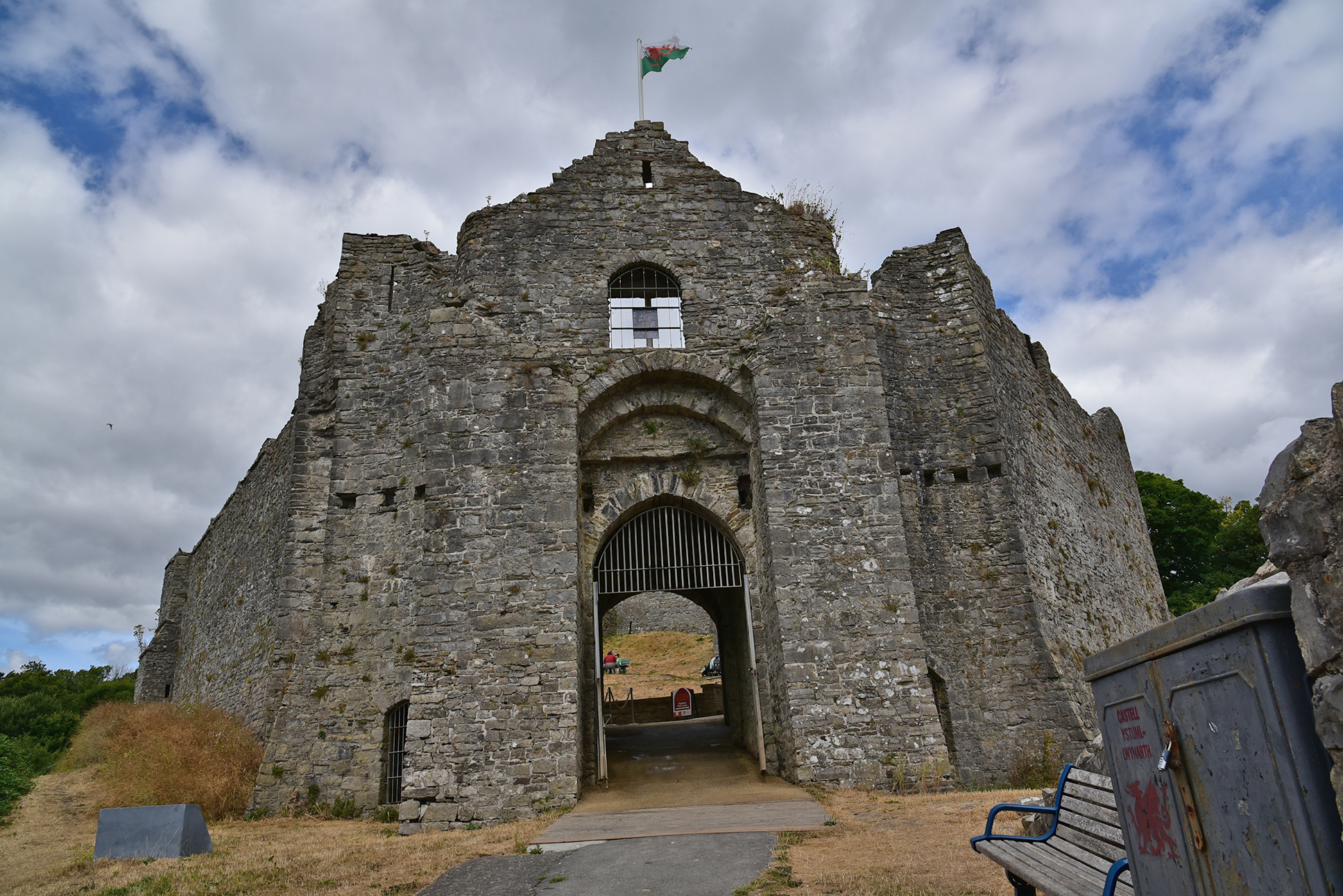
The gatehouse of Oystermouth Castle.
Two stories are told more often than any others, and both are undated. In the first, a local man was walking his dog near the castle when the dog ran to a tree and hid behind it, whimpering. A white shape rose out of the ground behind the tree and took the form of a woman in a white robe, and then she seemed to melt into the castle wall. In the second, a family was having a picnic in the grounds when the children came running back and said that they had seen a crying lady behind a tree. Their father looked and saw her too, in a long white robe with a cord tied at the waist. She turned toward him, and her back was ripped and bleeding, and then she was gone.
The story that most tellers attach to her is a grim one. She is said to have been a prisoner in the castle who was whipped to death, and visitors are often pointed to a whipping post in the dungeon as a hint of how she died. There is no record of who she was, or if there was ever a prisoner with a story like this at all.
Who was she?
The name most often given to her is Alina de Braose. She was a daughter of William de Braose, lord of Gower, and in 1298, when she was a small child, she was married at Swansea to John de Mowbray, who was himself only about twelve. Her husband's family and her father's lordship were closely tied to Gower, and Oystermouth was one of the de Braose castles there.
Her husband's life ended badly. A bitter dispute over who should inherit Gower, in which Hugh Despenser the Younger also claimed a stake, was one of the things that pushed the Marcher lords into rebellion against Edward II in 1321 (see Hugh Despenser the Younger). John de Mowbray joined the rebel cause under Thomas of Lancaster, and after the defeat at the Battle of Boroughbridge in 1322, he was captured and executed. Alina outlived him by nine years and died in 1331.
Nothing in the record says that she was whipped to death, and the sources that connect her with the ghost admit that they cannot be sure. Visit Swansea Bay calls her "the lady most identified with the castle" and adds "whilst we cannot be sure." It is the sort of link that folklore makes when a castle has a well-known owner and a nameless ghost. Some tellers also credit her with building the castle's chapel, but that is not firmly established either. You may also see her called Alina de Mowbray, which is the same woman under her married name.
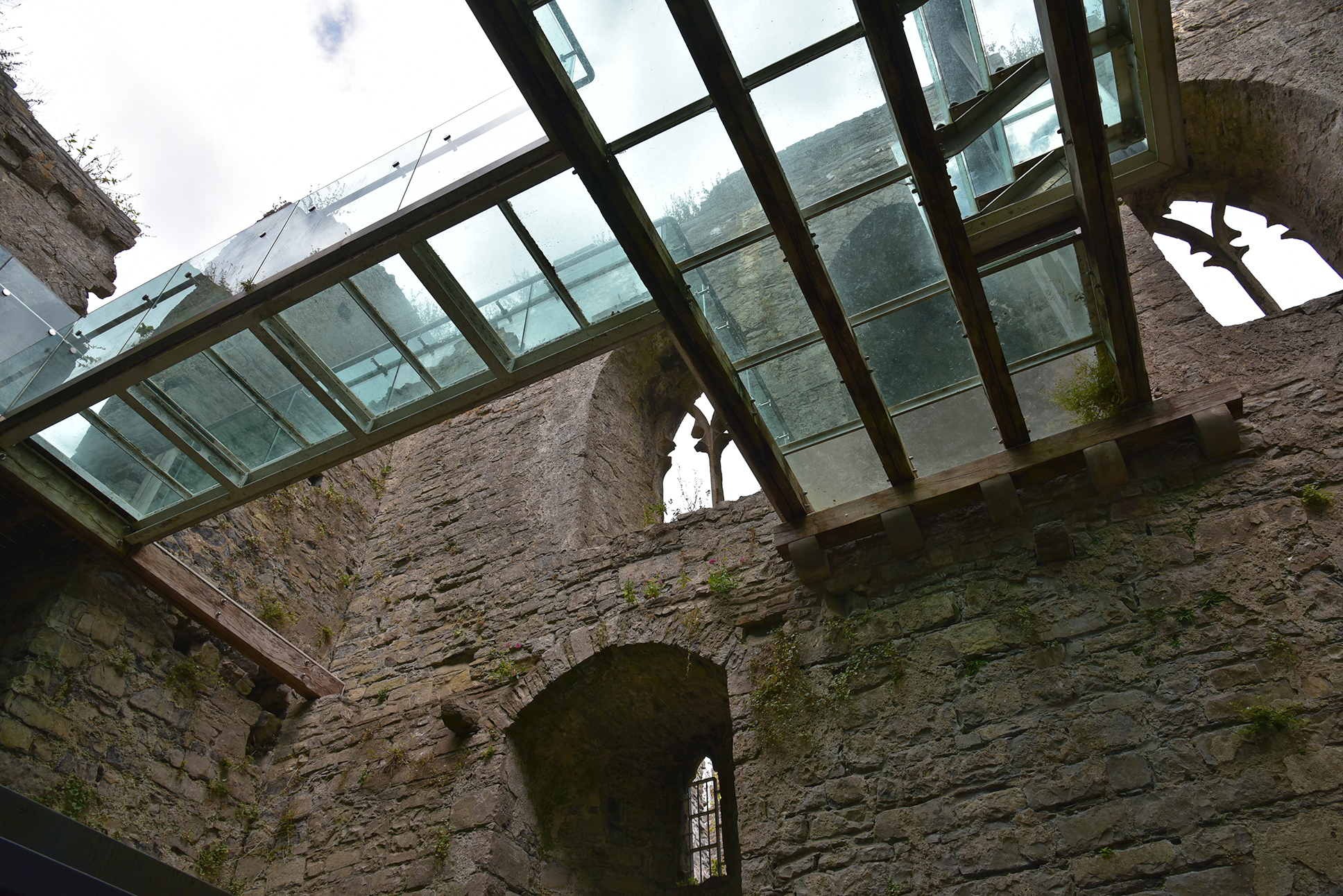
The chapel at Oystermouth Castle, now covered by a glass roof.
At Swansea Museum there is a worn carved stone head about 700 years old, dating to around 1330, which is said to represent the White Lady, Lady Alina de Braose. It was found on the site of the old Rectory House in Fisher Street in Swansea, and it is thought to have come from St Mary's Church. That it represents her is a belief, not a proven fact.
A different tale has the White Lady as a noblewoman whose lover was lost at sea. She walked the battlements looking for his ship, and her grief kept her there after her death. Other tellers say that she is simply a prisoner, or a servant. As with many legends, the details change with the person telling them.
More recent reports
The castle has a group of volunteers, the Friends of Oystermouth Castle, and some of the more recent stories come from them. One of them, Roger Parmiter, reports that when he was on duty at the ticket office in August 2014, a column of grey smoke rose in the Portcullis Room in the gatehouse, and a woman's head seemed to form in it before it disappeared. He and others have also described a figure crossing the courtyard, and two contractors heard footsteps climbing the gateway passage at 8:30 one morning, when the gate was still locked and no one else had arrived. Cups of water have been knocked from hands, and a sheet of kitchen paper was once snatched away.
Several teams have held ghost vigils at the castle over the years. In November 2013, Parmiter and Geraint Hopkins, a paranormal investigator who calls himself "the Snakeman," held a vigil at 2am in the South Keep, where a camera on a tripod lost power and had moved when they went to check it. In May 2011, a construction worker who was trying to reopen one of the castle's murder holes told a local newspaper that he felt a tap on his shoulder when no one was there. None of this proves anything, but it is how the story keeps going.