Battle of Myton
The White Battle or Chapter of Myton
Background
In 1318, the Scots laid siege to Berwick-upon-Tweed and took back the town and castle. King Edward II of England attempted to take back Berwick in 1319 and laid siege to the town. The castle was defended by Walter Stewart, the High Stewart of Scotland.
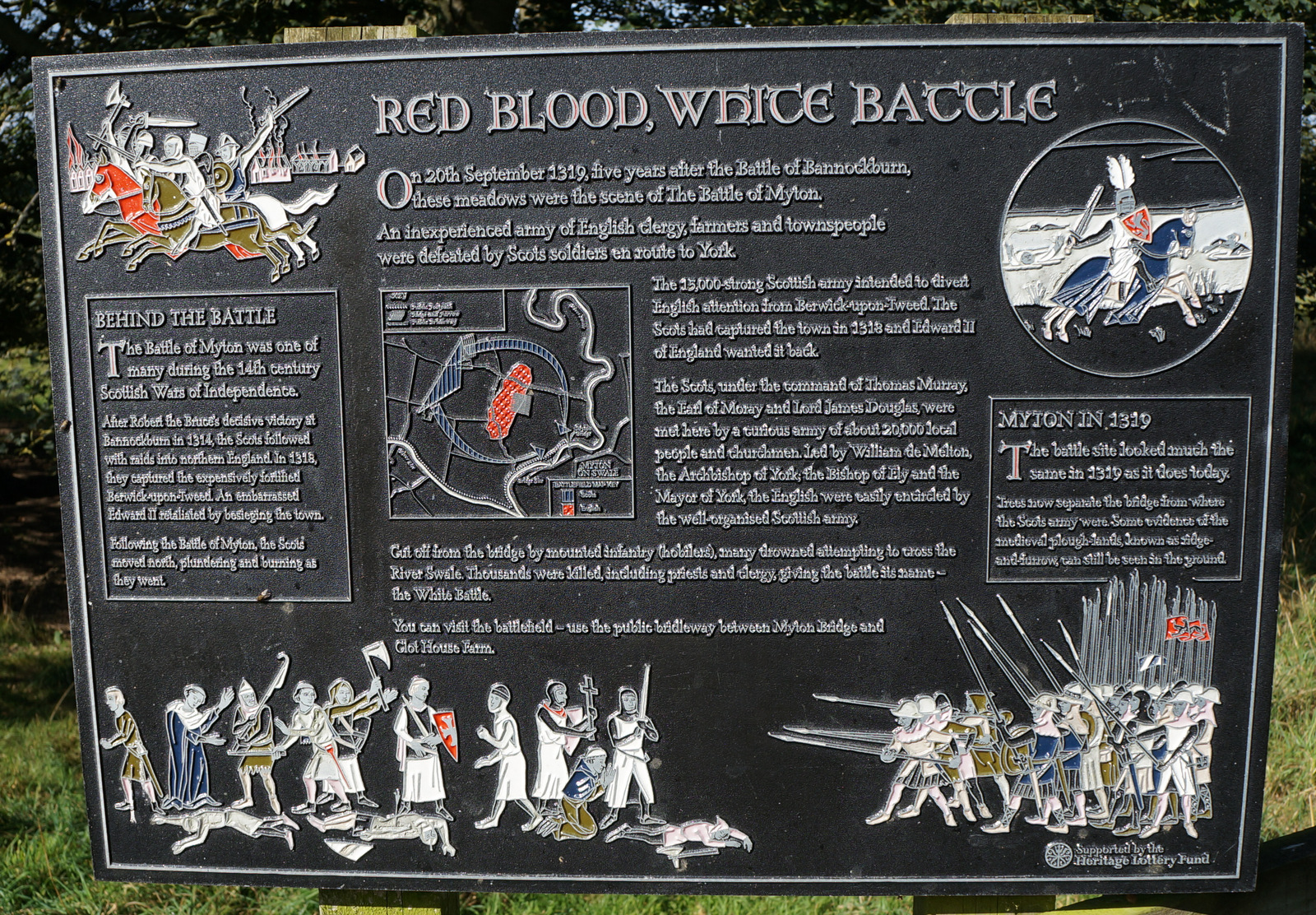
The "Red Blood, White Battle" heritage board on the Myton-on-Swale battlefield. Photo by Ian S, Wikimedia Commons, CC BY-SA 2.0, resized.
In response, the Scots led a diversionary raid into North Yorkshire, England, to relieve pressure on Berwick by drawing away English forces. The Scots raiding forces were led by James Douglas and Thomas Randolph, Earl of Moray, and between 10,000 and 15,000 men.
Queen Isabella of England was in York at the time and was quickly taken out of the city by boat and then further south to Nottingham for her own safety.
With most of the English army engaged at Berwick, defending Yorkshire fell to a locally raised force composed of militia, townsfolk, and many clergy, including monks, priests, and choristers. William Melton, Archbishop of York, assembled the forces numbering between 10,000 and 20,000 mostly untrained men.
Battle
The Archbishop and the English set off from York, planning to surprise the Scots. The battle occurred on September 20th, 1319, near Mylton-on-Swale, at the confluence of the Rivers Swale and Ure, around three miles east of Boroughbridge.
The Scots set fire to three haystacks, creating smoke that obscured the English militia and forced them into disorder. When the English tried to assemble, their line broke. They were cut down as they crossed the bridge over the River Swale, and many more drowned in the river while attempting to flee.
The battle was described in a contemporary source, the "Brut" or the "Chronicles of England" as such:
The Scots went over the water of Solway ... and come into England, and robbed and destroyed all they might and spared no manner of thing until they come to York. And when the Englishmen at last heard of this thing, all that might travel-as well as monks and priests and friars and canons and seculars-come and meet with the Scots at Myton-on-Swale. Alas! What sorrow for the English husbandmen that knew nothing of war, they were quelled and drenched in the River Swale. And their holinesses, Sir William Melton, Archbishop of York, and the Abbot of Selby and their steeds, fled, and come to York. And that was their own folly that they had mischance, for they passed the water of Swale; and the Scots set fire to three stacks of hay; and the smoke of the fire was so huge that the Englishmen might not see the Scots. And when the Englishmen were gone over the water, so come the Scots with their wings in manner of a shield, and come toward the Englishmen in a rush; and the Englishmen fled, for they lacked any men-at-arms ... and the Scots hobelars went between the bridge and the Englishmen. And when the great host had them met, the Englishmen almost all were slain. And he that might wend over the water was saved; but many were drenched. Alas, for sorrow! for there was slain many men of religion, and seculars, and also priests and clerks; and with much sorrow the Archbishop escaped;
Aftermath
The Archbishop of York, William Melton, managed to escape, but sources claim 1,000 to 4,000 English were killed, including several hundred of the clergy. The battle was sometimes called the “Chapter of Myton” or the “White Battle” because of the number of clergy that perished. Nicholas Fleming, the Mayor of York, was also among the casualties for the English.
It was such a crushing loss for the English that Edward II was forced to end the siege of Berwick, the main objective of the Scots raid. His forces split, as Earls and barons like Thomas, 2nd Earl of Lancaster, were anxious to return to their homes and property in the north, and the siege was abandoned. It was widely whispered that Lancaster was guilty of treason, as the Scottish raiders avoided plundering his lands as they returned north. In fact, Hugh Despenser, the king's favorite, even alleged that it was Lancaster who told the Scots of the queen's presence in York.
The Scottish forces returned to Scotland, plundering Cumberland and Westmoreland along the way, and carrying all their ill-gotten gains and prisoners back with them.
King Edward II had little choice but to ask King Robert for a truce, which was granted just before Christmas.
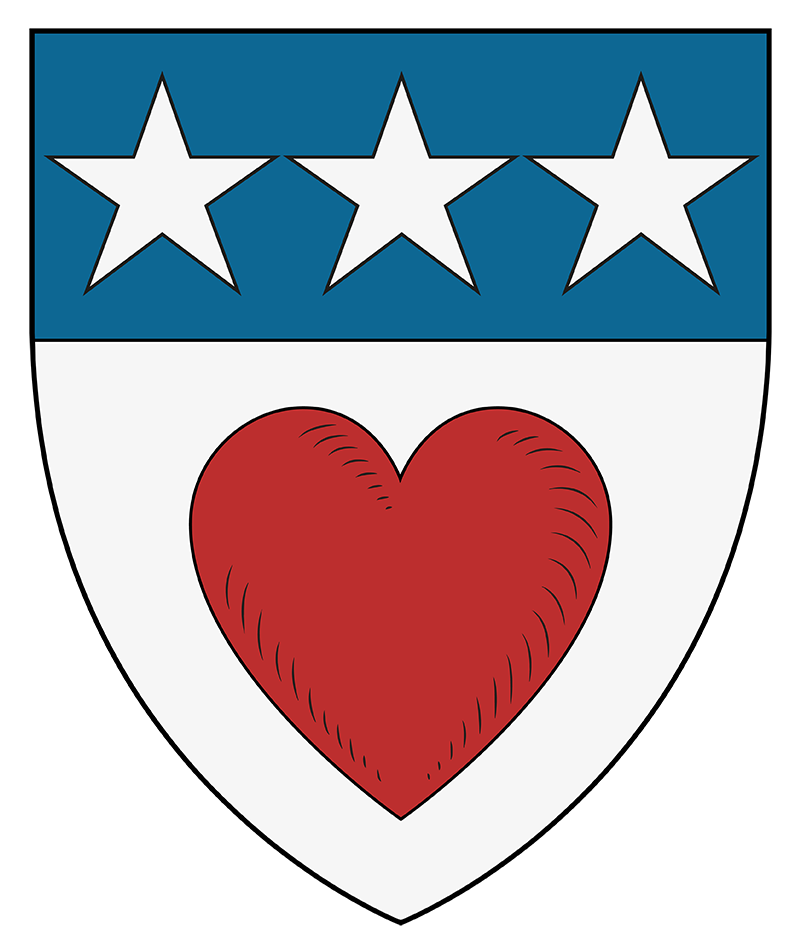

 William Melton