Battle of Culblean
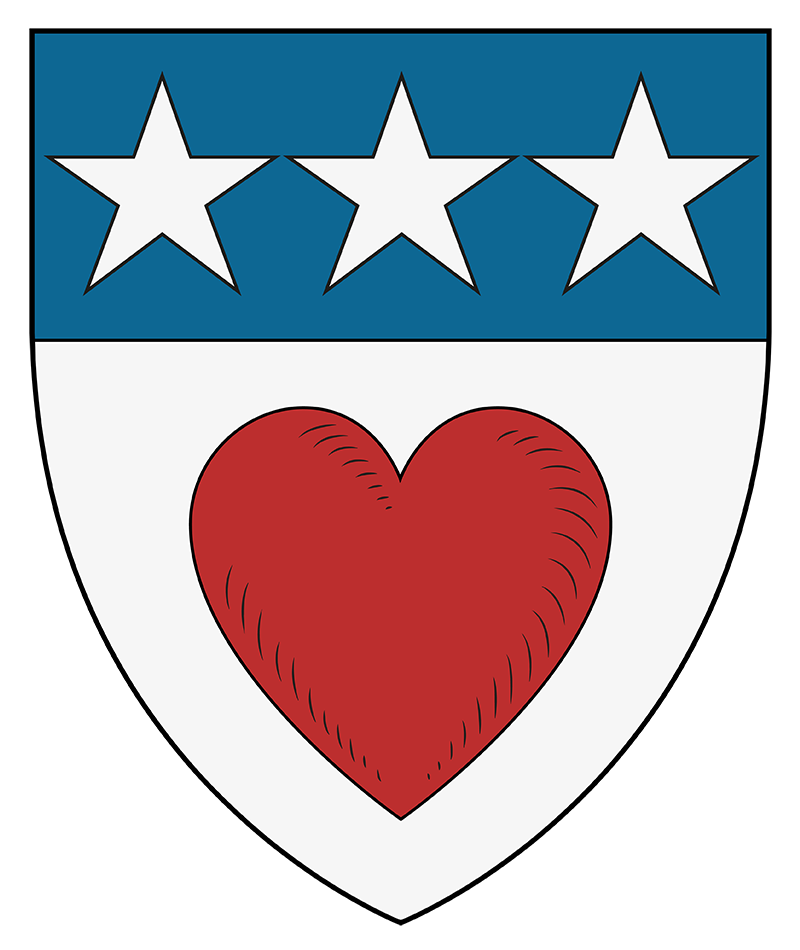
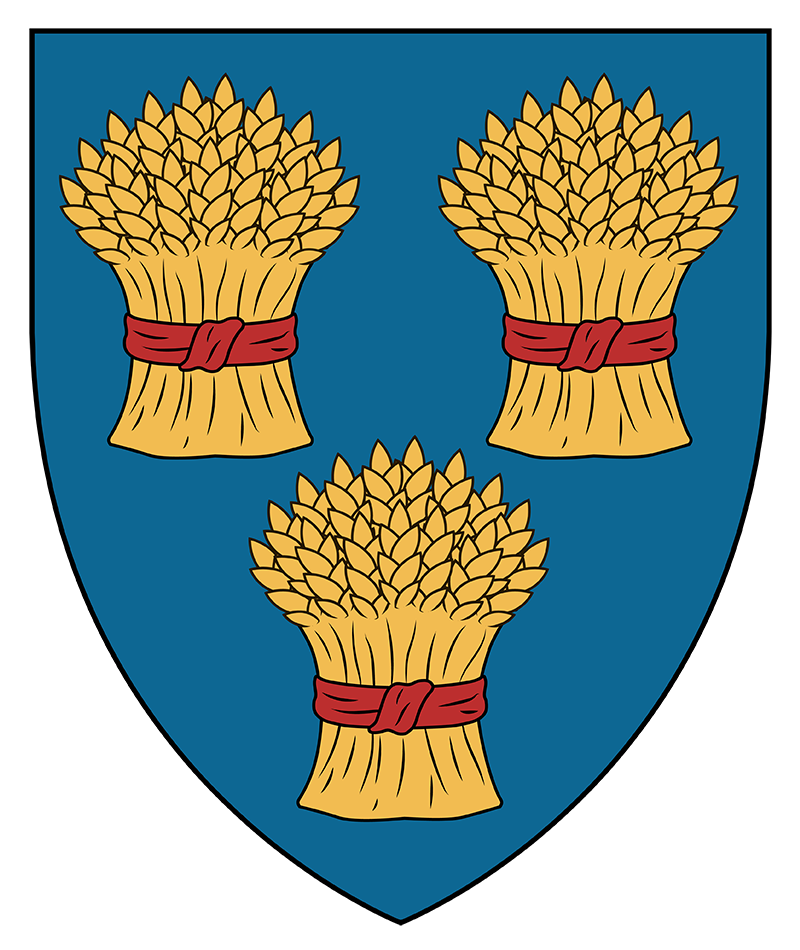
Sir Andrew Murray and David of Strathbogie
Background
The Battle of Culblean was fought on November 30th, 1335, which was St Andrew's Day, in the forest of Culblean in Aberdeenshire, near the village of Dinnet on Deeside. It was a small battle by the standards of the Wars of Independence, but it is often called the turning point of the Second War of Scottish Independence. A Scottish force under Sir Andrew Murray, the Guardian of Scotland, defeated and killed David of Strathbogie, the titular Earl of Atholl, who was Edward Balliol's chief lieutenant in the north.

After the victories of Edward Balliol and the disinherited at Dupplin Moor in 1332 and, with English help, at Halidon Hill in 1333, the supporters of the young David II were on the defensive. In the summer of 1335, Edward III invaded Scotland with a large army but could not force a battle, and he went home in the autumn, leaving Balliol and the disinherited to hold what they could. In September 1335, the Bruce loyalists, meeting at Dumbarton Castle, appointed Sir Andrew Murray of Bothwell as Guardian of Scotland. Murray was the son of the Andrew Murray who had fought alongside William Wallace at Stirling Bridge, and his supporters included the earls of March and Ross, William Douglas, and William Keith.

One of the round towers of Kildrummy Castle.
His main opponent was David of Strathbogie. Born in 1309, Strathbogie was heir to the earldom of Atholl, which had been forfeited in 1314 when his father sided with England, and he spent his life trying to win it back. He backed Balliol in 1332, fought at Dupplin Moor and Halidon Hill, and was made Earl of Atholl. After a quarrel with Balliol in 1334, he briefly changed sides and served David II as lieutenant in the north, but in 1335, he returned to Balliol. The chronicler John of Fordun wrote that "the great tyranny and cruelty this earl practiced among the people words cannot bring within the mind's grasp." In the autumn, Strathbogie was operating north of the Forth, and he laid siege to Kildrummy Castle in Strathdon, which was held for David II by Christina Bruce, a sister of Robert the Bruce and the wife of Sir Andrew Murray. His army is traditionally said to have been about 3,000 strong, although it was probably made up mostly of local men who had been pressed into service, and he seems to have had no archers.
Battle
Murray marched north with about 1,100 men, although one account gives only about 800, to relieve his wife. It was a risk, because Scottish leaders had avoided pitched battles since Halidon Hill. Strathbogie lifted the siege and moved south to intercept him in the forest of Culblean. Murray was joined by about 300 men from Kildrummy led by John of the Craig, whose knowledge of the country was crucial, and on the night of November 29th and 30th, he used it to make a wide flanking march.

The countryside around Kildrummy Castle.
At dawn on St Andrew's Day, Strathbogie's scouts spotted Murray's column and warned their commander, who had time to prepare. Murray's force was in two parts, and the vanguard was commanded by Sir William Douglas, the Knight of Liddesdale. Douglas halted as if he were hesitating, which tempted Strathbogie's men into a charge downhill. The charge broke up when it reached a burn, and Douglas ordered his men to counter-attack. At that moment, Murray's rearguard struck the exposed flank of the enemy, and Strathbogie's army broke.
Strathbogie refused to surrender, and he died fighting beside an oak tree with a small group of followers, including Walter and Thomas Comyn. According to the 16th-century historian Hector Boece, the man who killed him was Alexander Gordon. Some of the survivors fled to the island castle in nearby Loch Kinord, and they surrendered the next day. Local tradition also says that other fugitives were killed in the mill at Dinnet, and that a new mill was built about a hundred yards away afterward.
Aftermath
Culblean undid the work of Edward III's summer invasion. Balliol had no safe base left in Scotland, and he spent the winter of 1335 and 1336 in England. The historian W. Douglas Simpson called it "the turning point in the second war of Scottish Independence." Strathbogie's widow, Katherine Beaumont, held Lochindorb Castle until English forces relieved her in 1336, but their son never tried to reclaim the earldom. David II granted the earldom of Atholl to Douglas in 1341, and when Douglas died without a male heir in 1353, it returned to the crown and was later given to Robert Stewart, the future Duke of Albany.
Murray remained Guardian of Scotland for the rest of his life. In 1336 and 1337, he took Dunnottar and several other castles from the English and their allies, captured St Andrews Castle on February 28th, 1337, and recaptured Bothwell Castle that March, destroying its great tower so that the English could not use it again. He fell ill while besieging Edinburgh Castle and died at his castle of Avoch on the Black Isle in 1338. His successor, Robert Stewart, kept up the pressure and took Perth from Balliol after a ten-week siege in 1339 (Siege of Perth).

The Deeside Field Club put up a memorial to the battle in 1956. It is a granite monolith about 13 feet high with a bronze plaque, which was unveiled on September 16th, and it stands beside the road from Tarland to the Burn o' Vat, west of Loch Kinord and a few miles north of Dinnet. The exact site of the fighting is uncertain, and Simpson himself doubted the identification of the ground made by the Ordnance Survey in 1870.