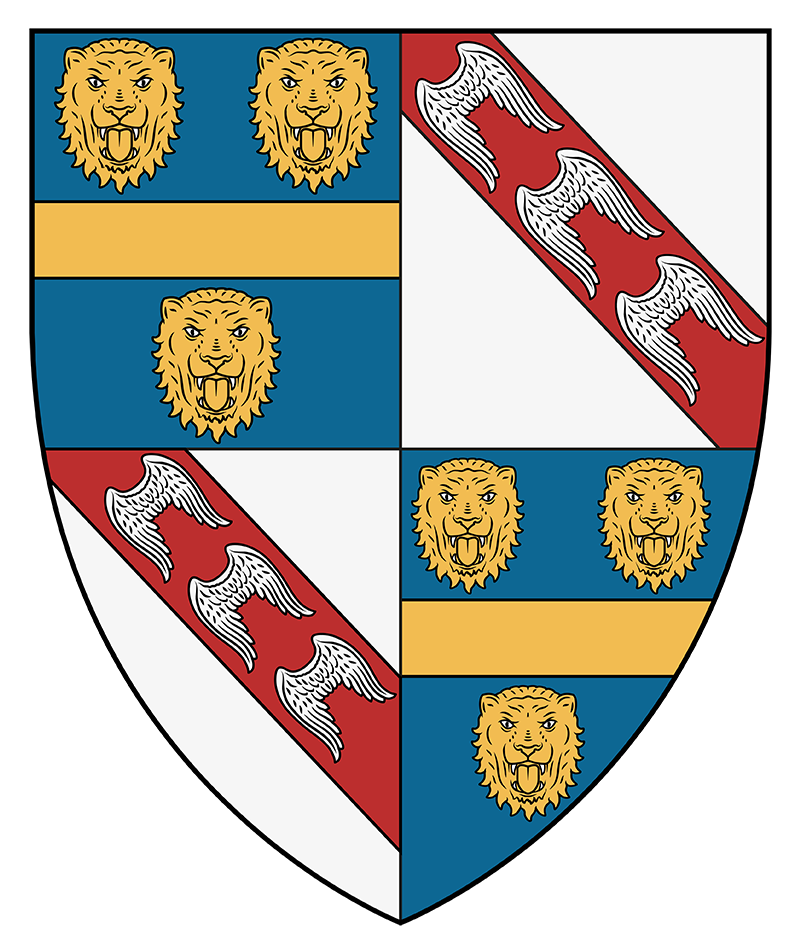
William de la Pole - 1st Duke of Suffolk
Jackanapes
William de la Pole was one of the most powerful men in England in the 1440s, and one of the most hated. He began as a soldier who spent seventeen years fighting in France, and he was captured by Joan of Arc's army at Jargeau. He then became the chief adviser of Henry VI, arranged the king's marriage to Margaret of Anjou, and rose from earl to duke. When the war in France collapsed, he took the blame, and in 1450, he was murdered at sea.

The gatehouse of Donnington Castle, held for almost sixty years by his wife, Alice Chaucer.
William was born on October 16th, 1396, at Cotton in Suffolk, the second son of Michael de la Pole, 2nd Earl of Suffolk, and Katherine Stafford. In 1415, he went to France with his father for Henry V's invasion, but he was wounded at the siege of Harfleur and sent home. His father died of dysentery at Harfleur, and his elder brother, Michael, who had become the 3rd Earl, was killed at Agincourt on October 25th. At nineteen, William became the 4th Earl of Suffolk.
He went back to France in 1417 and stayed for most of the next thirteen years. He was given the lordships of Hambye and Briquebec in Normandy in 1418, made admiral of Normandy in 1419, and became a Knight of the Garter in 1421. He served under the Earl of Salisbury and the Duke of Bedford, fought at Verneuil in 1424, and directed the siege of Mont St Michel in 1425. When Salisbury was killed at Orléans in 1428, Suffolk took over the command. His own account said he had served seventeen years in the war without coming home.

The siege of Orléans failed in May 1429, after Joan of Arc arrived to relieve the city. A month later, Joan's army attacked Jargeau, where Suffolk was in command. The English were driven back, and on June 12th, he tried to escape across the Loire bridge but was captured and surrendered. Suffolk was held by the Count of Dunois, and his ransom was about 20,000 pounds. He sold Briquebec to help pay it and left his brother Thomas as a hostage, and he was free by 1431. His brother John was captured with him, and another brother, Alexander, was killed.
On November 11th, 1430, a licence was issued for Suffolk to marry Alice Chaucer, the granddaughter of the poet Geoffrey Chaucer. Alice had been married twice already. Her first husband, Sir John Phelip, died soon after Harfleur, and her second, Thomas Montagu, Earl of Salisbury, was the commander killed at Orléans in 1428. She was the daughter of Thomas Chaucer, and she held Donnington Castle in Berkshire for almost sixty years, and the castle's history says that William enlarged it. Their son, John de la Pole, was born in 1442.

Dover Castle, of which Suffolk became constable in 1447.
Back in England, Suffolk joined the royal council in 1431 and became steward of the royal household in 1433. In the summer of 1432, Charles, Duke of Orléans, who had been a prisoner since Agincourt, was placed in his keeping. Charles spent twenty-five years as a valuable English prisoner and was moved among various keepers, and Suffolk's family seat at Wingfield Castle is one of the places where he was held, including around 1434. The two men became friendly, since Suffolk was interested in poetry and French culture, and Charles was released in 1440. One of the later charges against Suffolk was that he had favored that release. He became Constable of Wallingford Castle in 1434, and he allied with Cardinal Henry Beaufort, a rival of the king's uncle, Humphrey, Duke of Gloucester. With Alice, he founded God's House, an almshouse, at Ewelme in Oxfordshire in 1437, and in 1448, he refounded the hospital at Donnington.
The high point of his career came in 1444. Suffolk went to France to arrange a marriage for the young Henry VI, and on May 24th, he stood proxy for Henry at the betrothal of Margaret of Anjou, the niece of Charles VII's queen. A two-year truce was signed, and the deal also included a secret promise to give up Maine and Anjou, which later made him very unpopular. He was created Marquess of Suffolk on September 14th, 1444, and he escorted Margaret to England in 1445.
When Gloucester was arrested at Bury St Edmunds in February 1447 and died five days later, people blamed Suffolk, although no charge was made. That same month, he became Lord Chamberlain, Constable of Dover Castle and Lord Warden of the Cinque Ports, and he was made Admiral of England in August. On July 2nd, 1448, he became Duke of Suffolk. By then, the king depended on him completely, and the war was going badly. Fougères was seized in 1449 in violation of the truce, and Rouen fell in October, and by the summer of 1450, all of Normandy was lost.
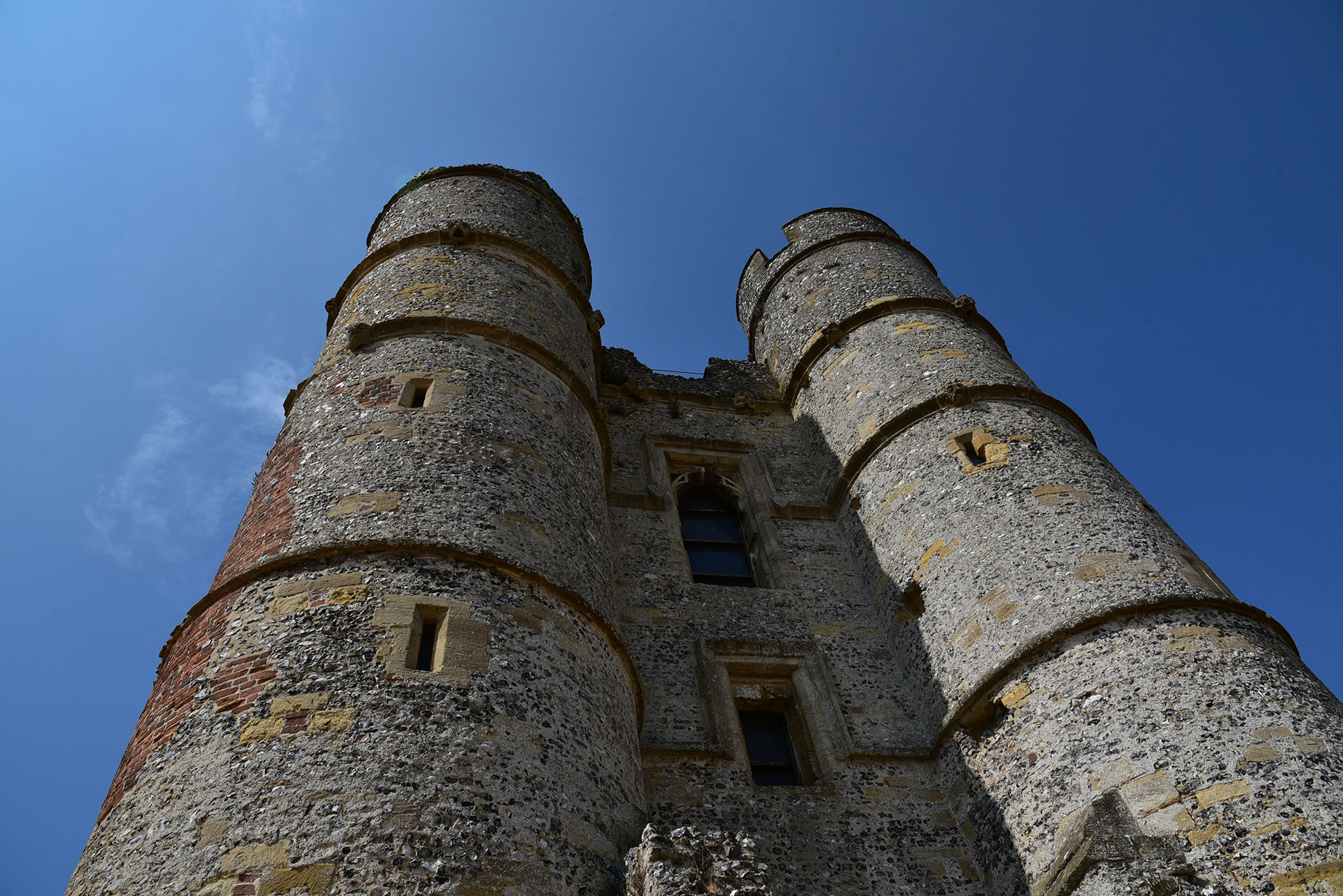
The gatehouse of Donnington Castle, seen from below.
Parliament turned on him. After Adam Moleyns, the Bishop of Chichester, who had worked with Suffolk on the French treaties, was murdered at Portsmouth on January 9th, 1450, Suffolk was arrested on January 28th, sent to the Tower of London, and impeached by the Commons. The charges included treason, giving away Maine and Anjou, and plotting to put his own son on the throne, and the Commons added eighteen more articles in March. The king did not wait for a verdict. He sent Suffolk into exile for five years, starting on May 1st.
Suffolk left London on March 19th, with Londoners trying to catch him on the road. At Ipswich on April 30th, he swore that he was innocent and wrote his son a farewell letter of advice. He sailed on May 1st, and his ship was intercepted in the Channel by the royal warship Nicholas of the Tower. The crew greeted him with the words "Welcome, traitor." On May 2nd, he was beheaded in a small boat, and his body was left on the beach near Dover.
He was buried in the Carthusian Charterhouse at Kingston upon Hull, as he had wished and as his widow, Alice, arranged. The priory had been founded by his grandfather, Michael de la Pole, 1st Earl of Suffolk, and it was dissolved in 1539 and later largely destroyed. Some older accounts say that he was buried at Wingfield, where other de la Poles, including his father, lie, but Hull is the better-supported tradition. The Commons asked for his attainder in 1451, but the king refused. Alice lived on until May 20th, 1475, and she is buried at Ewelme, and their son John became the 2nd Duke of Suffolk. John married Elizabeth of York, the sister of Edward IV and Richard III, and their son was John de la Pole, Earl of Lincoln.
William's nickname, "Jackanapes," comes from his badge, the clog and chain of an ape, and it was later used against him as an insult. He appears in Shakespeare's Henry VI, Parts 1 and 2, as a villain, and a later story that he was Margaret's lover has no basis in fact.