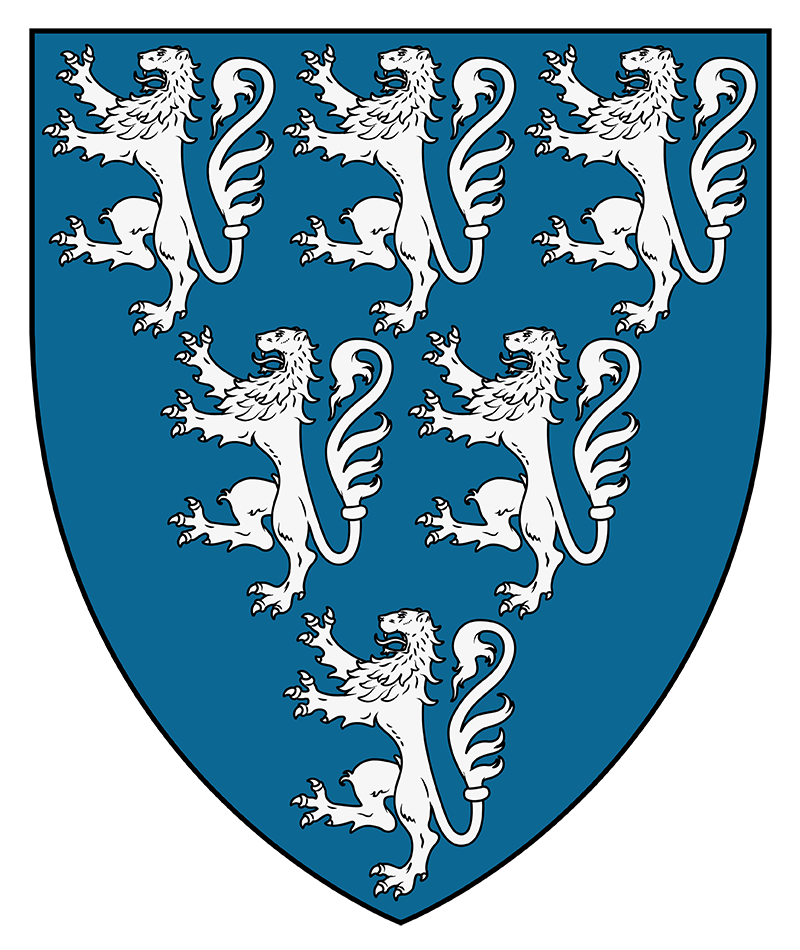
Sir Roger de Leybourne
Roger de Leybourne was an English Nobleman, soldier, and landowner during the Second Barons' War. He was known for his loyalty to King Edward I of England.
Roger was born around 1215 in Leybourne, Kent, England. His father was also named Roger de Leybourne, and his mother was Eleanor of Thorham, daughter of Stephen of Thorham.
Roger married Eleanor de Ferrers, daughter of William de Ferrers. Roger and Eleanor had three children: Roger, William, and Simon.
In 1252, Roger de Leybourne killed Arnulf de Munteny, one of the King's household knights, in a jousting tournament with a tipped lance, avenging an injury Roger received in a previous jousting tournament with de Munteny. To recompense for his crime, Roger took the cross, went on an armed pilgrimage, and was pardoned by King Henry III.
Roger de Leybourne was given the lands of Roger Connel in the county of Kent, England, in 1253, and began to acquire more land in Kent. In 1257, he served under Lord Edward, future King Edward I, during his campaign in Wales and became an influential and loyal supporter of the King. In November of 1259, he sided with Edward when Edward appointed Simon de Montfort custodian of Bristol Castle.
In 1260, Roger was part of Edward's retinue when he and Richard de Clare, 6th Earl of Gloucester, attempted to take London, and was pardoned when Edward and his father, King Henry III, reconciled. For his loyalty, Edward granted Roger the manor of Elham in Kent, but in 1262 the grant was revoked for violating the conditions under which Henry had given the manor to Edward in the first place. The High Sheriff was ordered to take 1820 pounds Sterling from Leybourne's lands, causing a rift between Leybourne and the King.
In 1263, Roger, along with other Marcher Lords, arrested Peter of Aigueblanche, Bishop of Hereford, and seized Hereford, Gloucester, and Bristol, before returning south to besiege Windsor Castle. They were joined by Simon de Montfort, effectively beginning the Second Barons' War. By August of 1263, Roger and the Marcher Lords were in negotiations with Edward, after being unnerved by Simon de Montfort's plan to ally with the Welsh. They swore an oath to King Henry III on August 18th, 1263. From this point onwards, Roger remained loyal to the King and Prince Edward and returned to royal favor.
In September of 1263, Roger de Leybourne was made Steward of the King's Household, Keeper of Kent, Surrey, and Sussex, and appointed Lord Warden of the Cinque Ports and High Sheriff of Kent in December.
Leybourne fought at the Battle of Northampton and defended Rochester Castle during the siege by Simon de Montfort and Gilbert de Clare, where Leybourne was wounded. He was captured at the Battle of Lewes, fighting for Henry III and Edward, but was allowed to go free on the condition that he returned to stand trial at the next Parliament. When he and others failed to attend, de Montfort sent a military expedition to detain them, which failed to do so.
Prince Edward was imprisoned at Kenilworth Castle by de Montfort. In December of 1264, Roger was given safe conduct to visit the King, and then in May 1265, he spoke with Edward, helping him plan his escape from Kenilworth Castle on May 28th, 1265.
Roger de Leybourne fought at the Battle of Evesham, reportedly saving King Henry III's life. For two years after Evesham, he served as Edward's principal lieutenant. In October of 1265, Roger was given custody of Carlisle Castle and made High Sheriff of Cumberland. Roger, along with Edward, besieged and captured Winchelsea, fighting off rebels across the River Thames in May of 1266. In September, he was knighted, with the King ordering he should be received "with due honor as the King's Knight". He was also appointed custodian of Nottingham Castle.
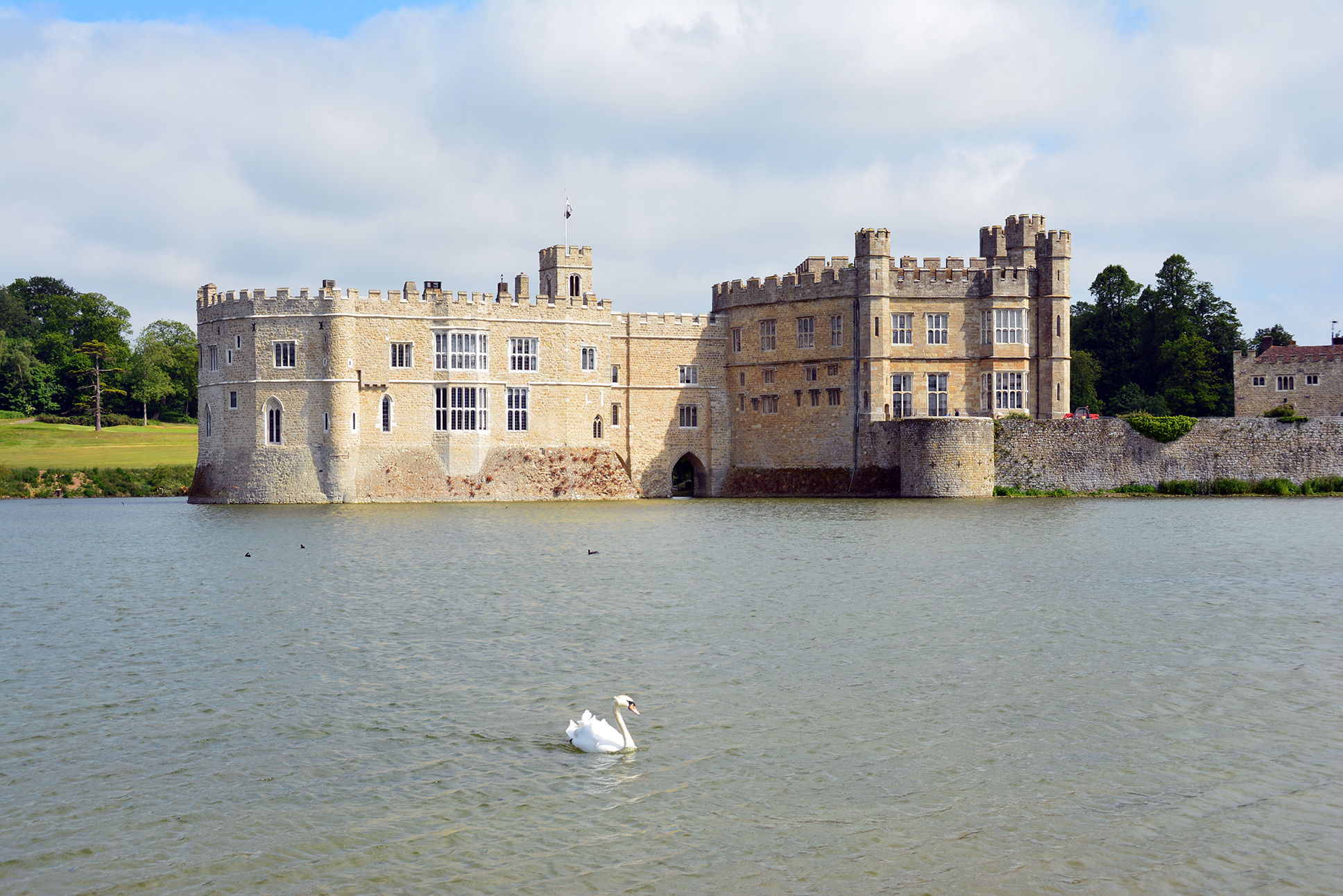
Around this time, Roger was also rewarded by the King with large amounts of land, including the village of Leeds in Kent, where he later built Leeds Castle. He was also granted other lands in Kent, as well as Cumberland and Westmorland.
In 1269, Roger took the cross again, but instead of returning to the Holy Land, he travelled to Gascony, where he was appointed Lieutenant and possibly began raising an army for the crusade. He stayed long enough to have the city of Libourne in southwestern France named after him.
Roger de Leybourne returned to England in December of 1270 and died on October 15th, 1271. He was buried in the churchyard of St Peter & St Paul Church in Leybourne, Kent, England.