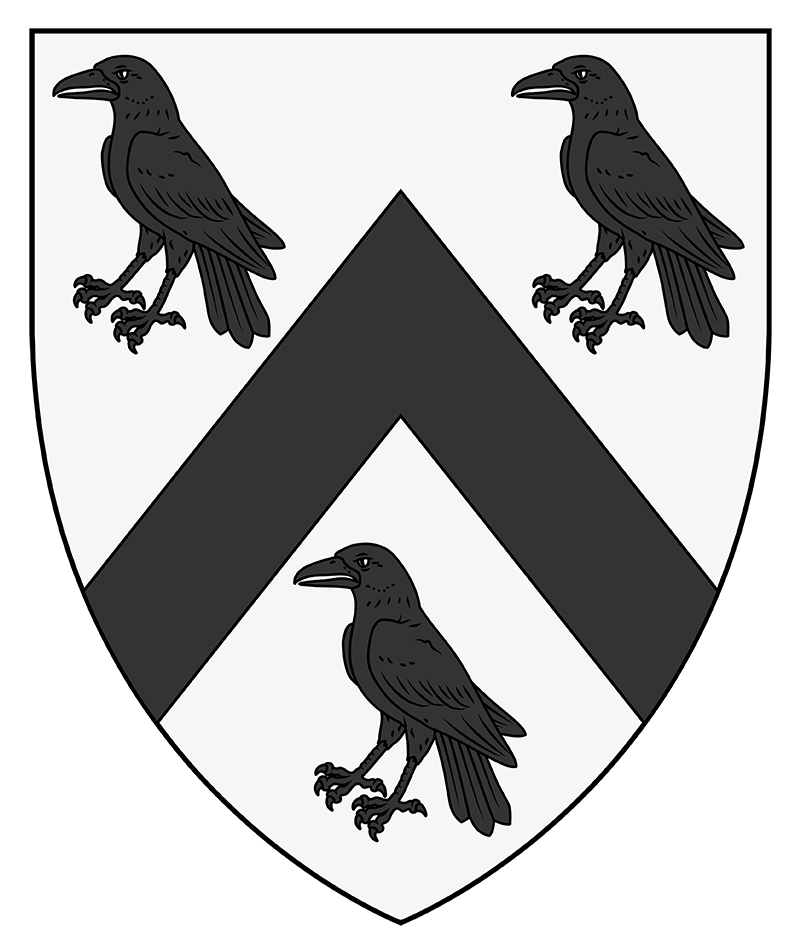
Rhys ap Thomas - Knight of the Garter
Rhys ap Thomas was a Welsh Nobleman and soldier who rose from a Lancastrian family in the Tywi valley to become the most powerful man in South Wales. His support helped Henry Tudor win the Battle of Bosworth, and Henry rewarded him with lands, offices, and the Order of the Garter. He ruled from Carew Castle, and tradition says it was Rhys who killed Richard III.
Rhys was born around 1449, the youngest of the three legitimate sons of Thomas ap Gruffydd of Newton, near Llandeilo in Carmarthenshire, and Elizabeth, the heiress of John Gruffydd of Abermarlais. His grandfather, Gruffydd ap Nicolas, had taken the lordship of Dinefwr on lease in 1440, which helped establish the family's fortunes, and the family were staunch Lancastrians. His grandfather was killed at the Battle of Mortimer's Cross in 1461, and his father held Carreg Cennen Castle for the Lancastrians until it surrendered in 1462. Thomas and Rhys then went into exile at the court of Burgundy, and they returned to Wales around 1467.
Thomas died in 1474, and Rhys, whose two elder brothers had died before their father, inherited the family estates around Dinefwr. Despite his Lancastrian roots, he accommodated the Yorkist kings, and he served Edward IV by raising a local force in south Wales, which kept his estates safe and kept him out of the rebellions of the period. When Richard III took the throne in 1483, he confirmed Rhys's lands, granted him an annuity of forty marks, and made him his principal lieutenant in south-west Wales. Rhys did not join the Duke of Buckingham's rebellion that autumn. Richard demanded that he send his son Gruffydd to Nottingham as a hostage for his loyalty, but Rhys refused, saying that his oath was bond enough. By then he had probably made contact with Henry Tudor, who was in exile in Brittany.
Rhys publicly affirmed his loyalty to Richard by swearing that Henry would enter Wales only "over my belly," meaning over his body. What he did when Henry landed at Mill Bay near Dale on August 7th, 1485, is the stuff of legend. In the story, Rhys kept his oath to the letter by lying beneath Mullock Bridge while Henry's men crossed above him. The Dictionary of Welsh Biography treats that tale as legend, and no one can say whether Rhys really did it. What is certain is that he had promised to help Henry, and that when the invasion came, he joined it.
Henry marched north through west Wales by way of Aberystwyth, while Rhys took a more southerly route through his own lands, recruiting men from the Tywi valley as he went. Estimates of his force range from 500 to 2,000 men. The two armies met in mid-August at Cefn Digoll, near Welshpool, and together they crossed into England. Also with Henry was his uncle, Jasper Tudor.
On August 22nd, 1485, Henry met Richard III at the Battle of Bosworth, and Rhys fought on his side. Richard was killed in the battle, and tradition credits Rhys, or men under him, with the fatal blow, which a later Welsh account says he struck with a poll-axe. The claim is unproven. The French chronicler Jean Molinet says only that a Welshman killed the king with a halberd, and the poem that the Welsh poet Guto'r Glyn wrote to Rhys may credit a group of soldiers led by Rhys, although a modern reading takes the poem to mean King Henry. Whoever struck the blow, Henry knighted Rhys on the field shortly after the rout.
Rhys's loyalty made his fortune. From November 1485, Henry VII gave him a string of offices in South Wales, and from 1496 he was Justiciar of South Wales, which made him ruler of the region in all but name. He put down a Yorkist rising at Brecon in 1486 and fought against the pretenders Lambert Simnel and Perkin Warbeck. He also accompanied Henry on his 1492 expedition to France. In 1497, he captured Lord Audley at Blackheath during the Cornish rebellion and was made a knight banneret.

The gatehouse at Carew Castle.
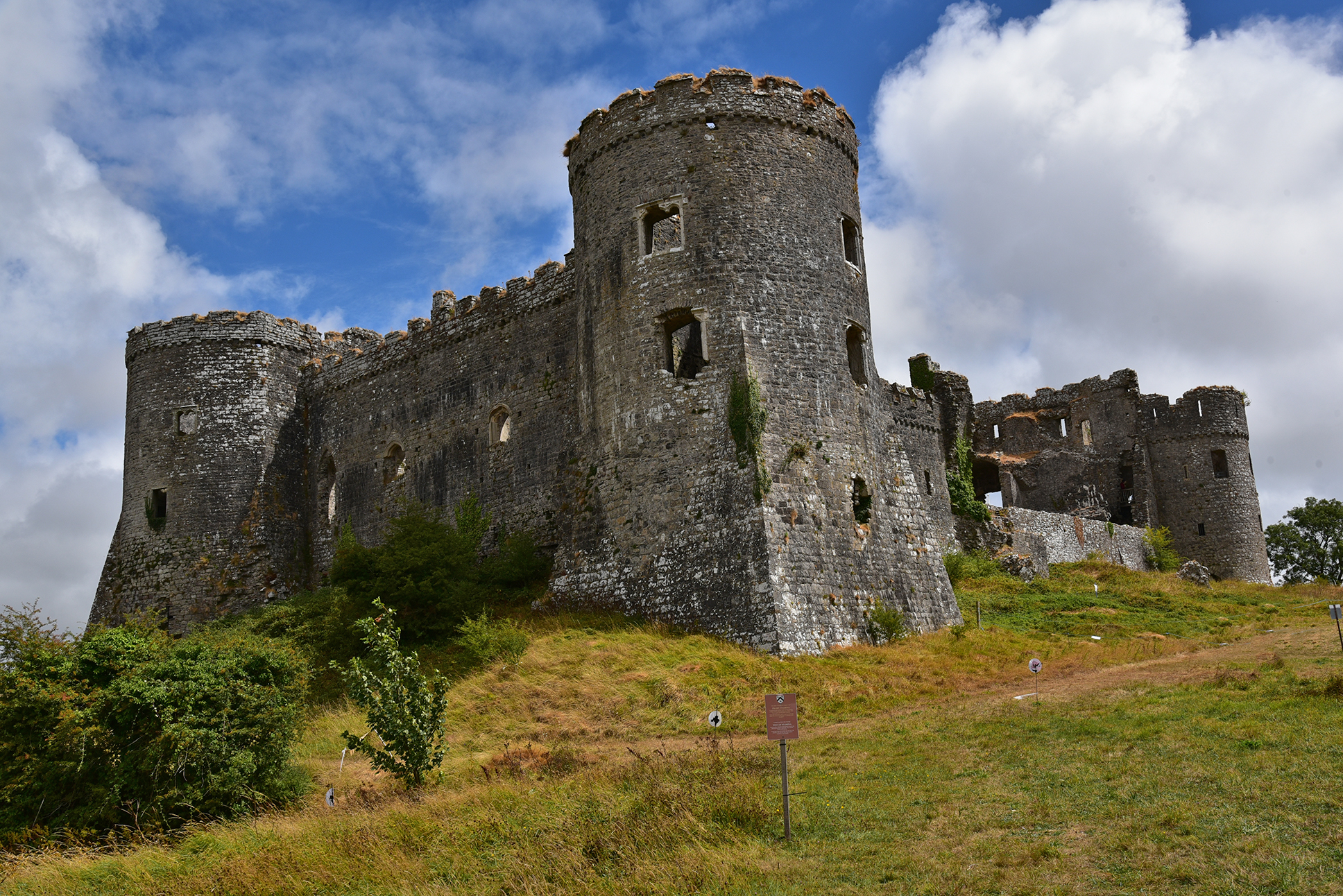
Rhys's chief seat was Carew Castle in Pembrokeshire, which he had acquired around 1480 from the de Carew family, by purchase or mortgage. He turned the medieval fortress into a Tudor residence, adding luxurious apartments, a large window in the great hall, the Lesser Hall, and a two-story gatehouse that links the Middle and Outer Wards. The arms of Henry VII, Prince Arthur, and Catherine of Aragon can still be seen above the porch. From his mother's family he inherited Abermarlais, which he renovated, and he also held Weobley Castle on the Gower, where he added a stately two-story entrance block to the hall and private quarters.
In 1505, Henry VII made Rhys a Knight of the Garter. To celebrate, he held a Great Tournament at Carew in April 1507, in honor of the Order and its patron saint, St George. More than 600 Noblemen came for five days of jousting, sword displays, and feasting in the great hall. It was the last medieval-style tournament ever held in Wales.

Shields and weapons on display inside Carew Castle.
Rhys continued to serve under Henry VIII, and he fought in the king's invasion of France in 1513, where the English won the Battle of the Spurs. In 1520, he attended Henry at the Field of the Cloth of Gold. By now, he governed much of South Wales almost like a king.
Rhys married twice. His first wife was Eva, daughter of Henry ap Gwilym of Cwrt Henri, and she gave him his only legitimate son, Gruffydd, who died in 1521. His second wife was Janet, or Joan, Mathew, the widow of Thomas Stradling. He also had several illegitimate children. In his last years, Rhys left Carew for the Greyfriars at Carmarthen, where he died in early 1525, at about 76 years of age. He was buried in the friary church, also known as Carmarthen Priory, and when the monasteries were dissolved, his tomb was moved to St Peter's Church in Carmarthen.
Gruffydd had died before his father, so the main heir to Rhys's extensive estates and offices in Wales was his grandson, Rhys ap Gruffydd, who was born around 1508. The grandson fell out of royal favor, however. Henry VIII had him executed for treason in 1531, and the lands, including Carew and Weobley, reverted to the Crown.