Revolt of the Earls
Background
Following the Harrying of the North, King William had subdued most of the English opposition through the construction of castles, administrative changes, and the redistribution of land to Norman barons.

However, tension soon arose when William reduced the size and influence of large earldoms to centralize power and prevent any single lord from becoming too powerful. Around 1073, these circumstances developed further when William returned to Normandy, leaving Lanfranc, Archbishop of Canterbury, as a key regent in England.
While William remained in Normandy in 1075, he refused to sanction the marriage between Ralph de Gael, Earl of East Anglia, and Emma, daughter of William FitzOsbern, 1st Earl of Hereford, one of William's closest companions.
William may have seen the union as a threat to his reign, given their large estates and noble lines. This fear of a consolidated rival power motivated his denial. The couple married anyway, without his permission, defying feudal custom that required the King's approval.
It was during the wedding feast, known as "Bride Ale" that Ralph de Gael, his new brother-in-law Roger de Breteuil, 2nd Earl of Hereford, and Earl Waltheof, Earl of Northumbria, conspired to plan a revolt against King William, motivated by their discontent with Norman rule and the loss of their lands and privileges.
Battle
The plan involved each Earl raising forces in their regions of East Anglia, the Welsh Borders, and the north of England, while seeking external help from Denmark. Their intention was to coordinate their efforts to challenge William's authority and restore their former power.
As plans for the revolt progressed, Waltheof lost his nerve and confessed the conspiracy to Lanfranc, Archbishop of Canterbury. Lanfranc excommunicated the Earls, urged them to remain loyal to William, and mobilized forces loyal to the reign, including Norman barons and the English fyrd. Waltheof subsequently confessed to William as well.
Roger de Breteuil and his forces in the west were blocked at the River Severn by the Worcestershire fyrd led by Bishop Wulfstan of Worcester.
Ralph de Gael and his forces clashed with royal troops in East Anglia, near Cambridge. The royal forces were led by Odo of Bayeux and Geoffrey de Montbray, who ordered that all rebels should have their right foot cut off. Ralph retreated to Norwich Castle and then fled to Brittany, leaving his wife, Emma, there.
Countess Emma held Norwich Castle against the royals until she received terms for herself and the safe exit of her followers, who were given forty days to leave England. She left for Brittany to join her husband, Ralph.
Aftermath
Ralph de Gael was deprived of his earldom and all his lands and was expelled from England by William. Ralph's lands in East Anglia were given to Alan Rufus, Alan of Brittany.
Roger de Breteuil also lost his earldom and lands and was sentenced to perpetual imprisonment. His ultimate fate following his imprisonment remains unknown.
Despite his confession to the plot, Waltheof was beheaded on May 31st, 1076, on St. Giles' Hill near Winchester. He was the only Englishman to be given such punishment during William's reign.
The Revolt of the Earls marked the end of serious large-scale resistance to Norman rule in England.
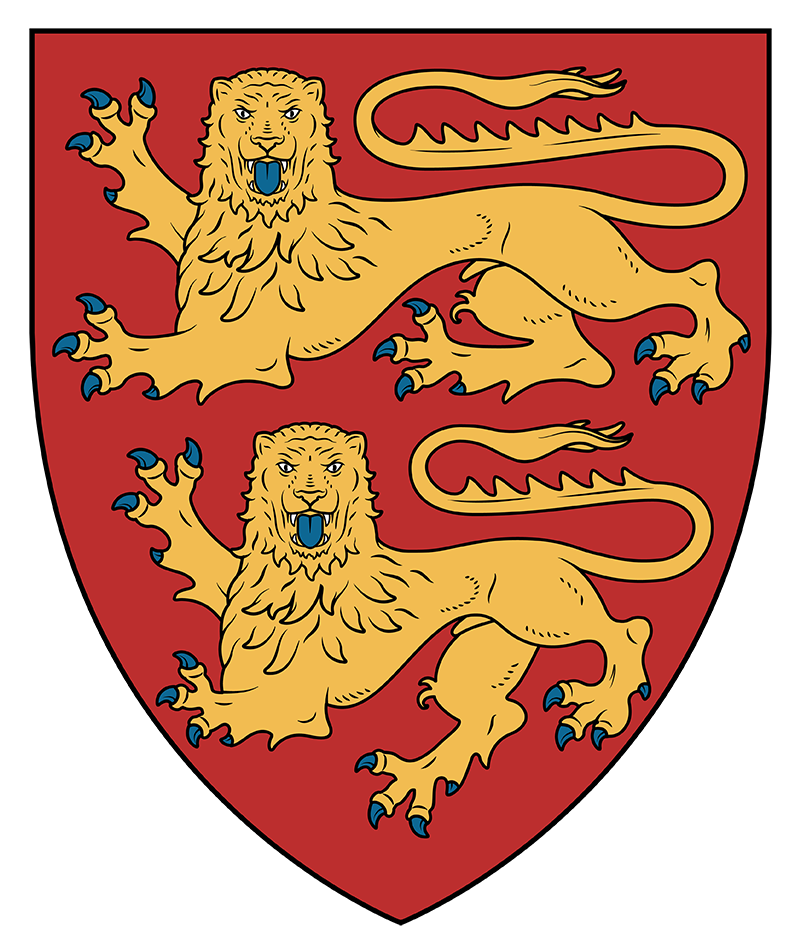
 Lanfranc