The Robber's Grave of Montgomery
Montgomery (Trefaldwyn) is a small market town in Powys, Wales, right on the border with England, and the ruins of Montgomery Castle stand on a crag above it. The castle was begun in the 13th century and was demolished after the Civil War, and it is not especially known for hauntings. The best-known supernatural story in the town is not about the castle at all, but about a grave in the churchyard of St Nicholas' Church, at the foot of the hill.
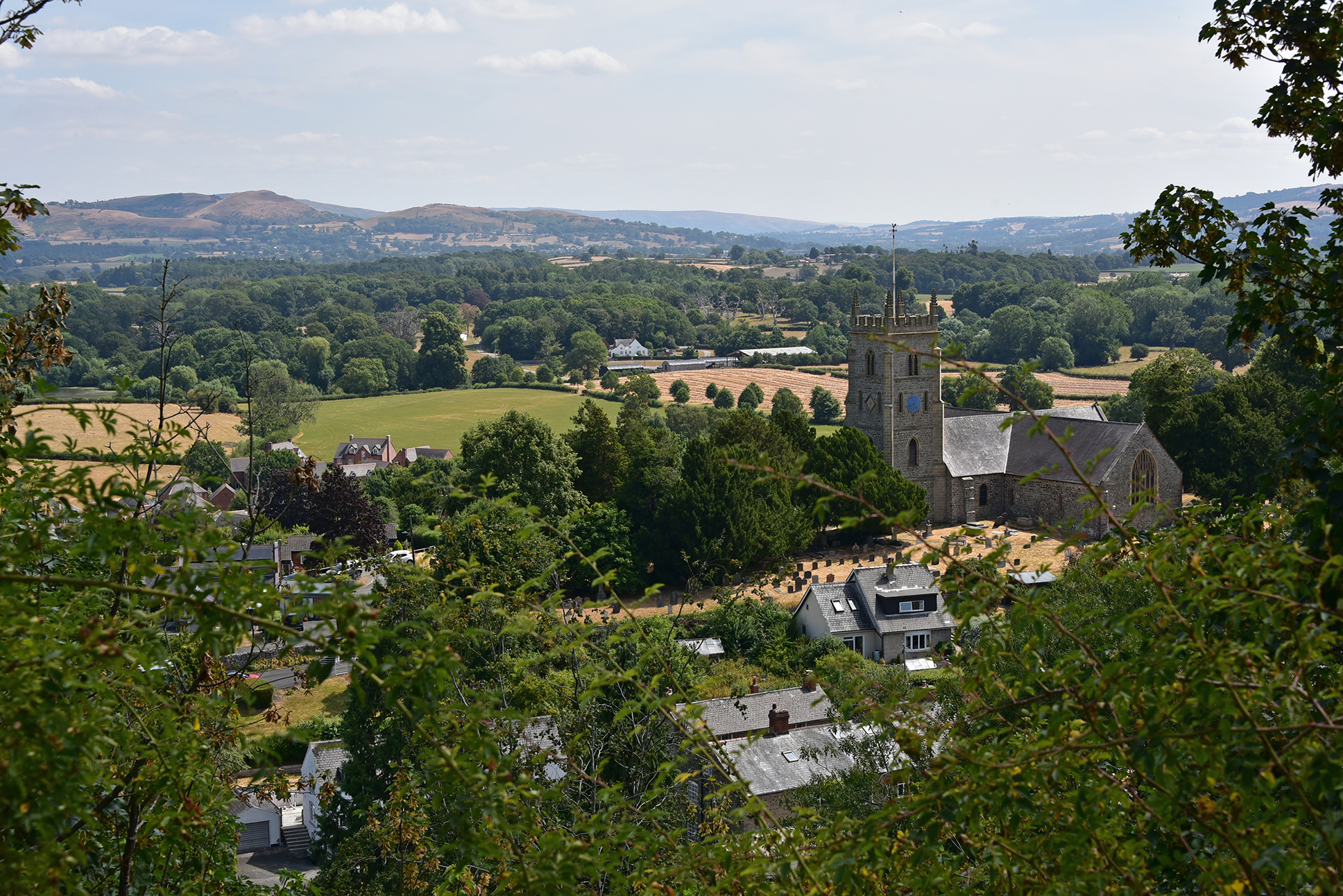
The town of Montgomery, with the tower of St Nicholas' Church, seen from the castle.
St Nicholas' Church dates back to the 13th century, and it holds the tomb of Richard Herbert, who died in 1593 and was lord of Montgomery Castle and the father of the poet George Herbert. In a corner of the churchyard lies a much humbler grave, which is known as the Robber's Grave.
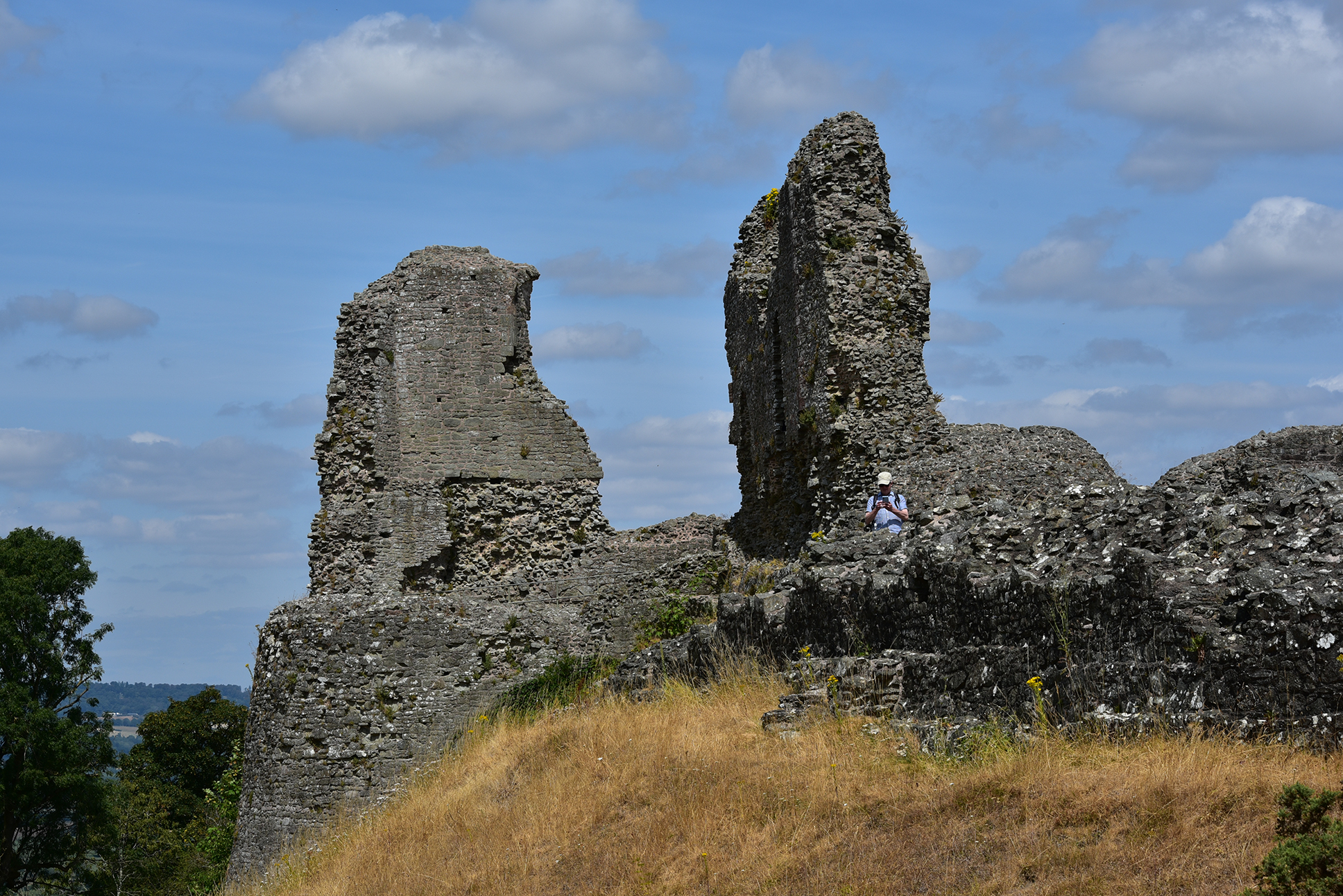
The surviving tower of Montgomery Castle.
In 1821, a man named John Davies was tried at Montgomery for highway robbery. By the long-standing local account, he was a plasterer from Wrexham who was working as the steward of a local farm, which belonged to a widow, Mrs Morris of Chirbury, and her daughter Jane. He improved the farm's fortunes, and he and Jane grew close. (Some older folklore books give his name as John Newton, and call him a Staffordshire man who came to the farm as the widow's bailiff.)
His success made him enemies. Thomas Pearce had hoped to get the widow's farm for himself, and Robert Parker, a young farmer, was in love with Jane. The story says that the two men arranged a robbery and planted evidence to frame him, and they accused him of highway robbery with violence. Davies was a stranger and unpopular in the district, and he had no one to speak for him. The jury found him guilty, even though he protested his innocence at every stage.
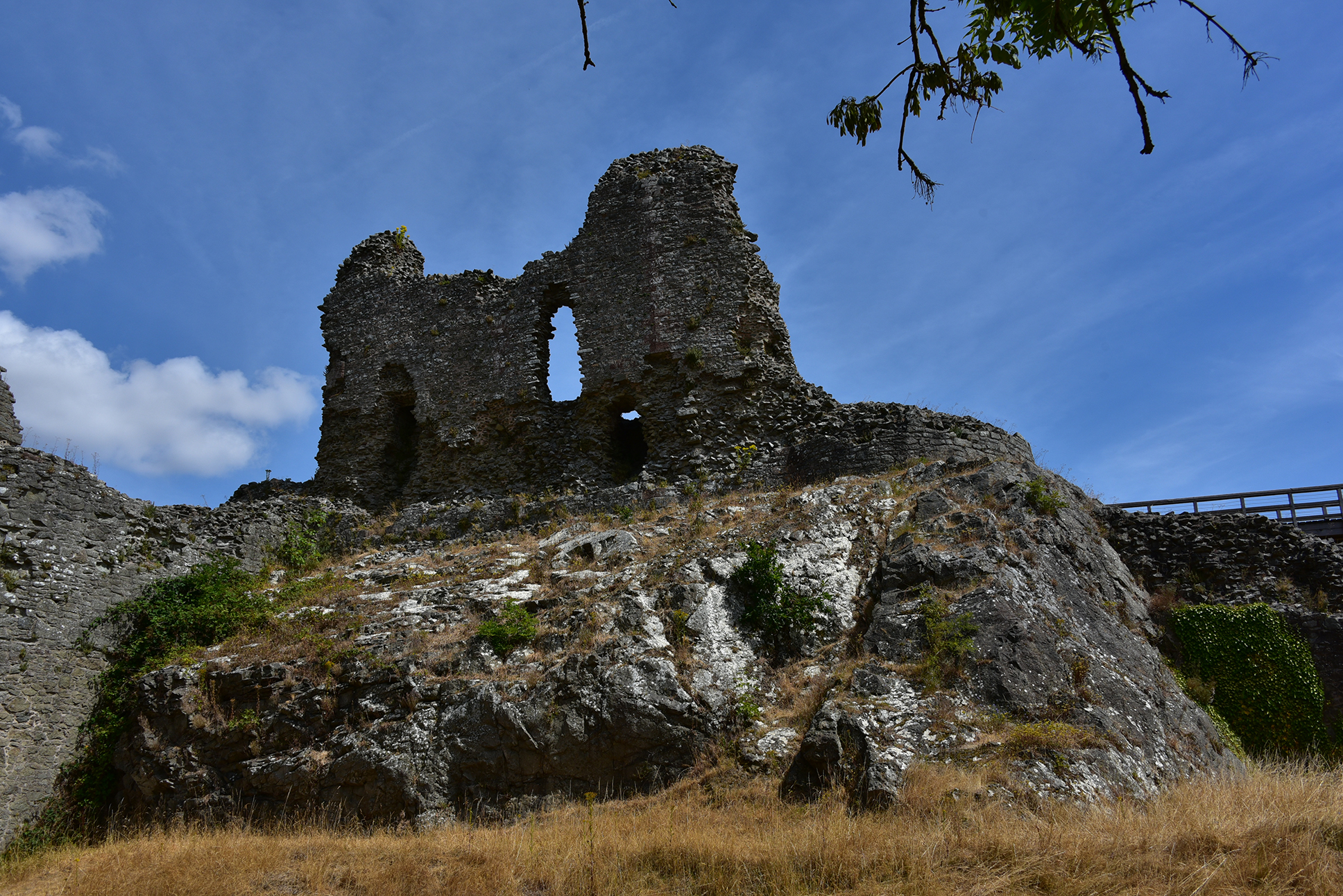
The ruined walls of Montgomery Castle.
When Davies was asked if he had anything to say, he declared that he was entirely innocent, and he said, "If I am innocent, the grass, for one generation at least, will not cover my grave." Some retellings make it a hundred years. On the morning of the hanging, a thunderstorm broke over the town, with darkness, lightning, and thunder, although it had been calm and quiet before.
Folklore says that his accusers did not prosper. One of them is said to have taken to drink and died young in a blasting accident at a rock, and the other wasted away.
The grave seems to have kept its curse for a long time. In 1852, the Reverend R. Mostyn Price wrote that thirty years had passed and the grass had not covered it. Visitors reported the bare patch in 1886 and 1911, and attempts to restore it with new seed and turf failed. In 1924, a visitor found it still uncovered, although grass was slowly creeping over it 103 years after the burial, and by 1940, the bare patch had shrunk to the shape of a cross. Today, grass and a rose bush grow on the grave, and a simple cross reads "Robber's Grave." The rose tree has its own story, because a man who planted one there is said to have soon fallen sick and died.
The old county courthouse and jail where Davies was tried and held have been turned into cottages, and stories persist that his restless spirit still haunts the area.