Ghosts of Hampton Court Palace
Hampton Court Palace stands on the north bank of the River Thames in southwest London. Cardinal Thomas Wolsey began transforming a medieval manor there in 1514, and Henry VIII took over the palace in 1529 and enlarged it with a Great Hall, a royal tennis court, enormous kitchens, and an astronomical clock.

Later monarchs rebuilt parts of the palace in the Baroque style, with William III and Mary II employing Sir Christopher Wren from 1689, and George II was the last reigning monarch to live there. Queen Victoria opened Hampton Court to the public in 1838, and today it is run by Historic Royal Palaces, which marked the palace's 500th anniversary in 2015.
The palace is also considered one of the most haunted buildings in Britain, with more than 30 ghosts said to walk its corridors, and the best known are three of Henry VIII's wives.
As Richard tells the story ...
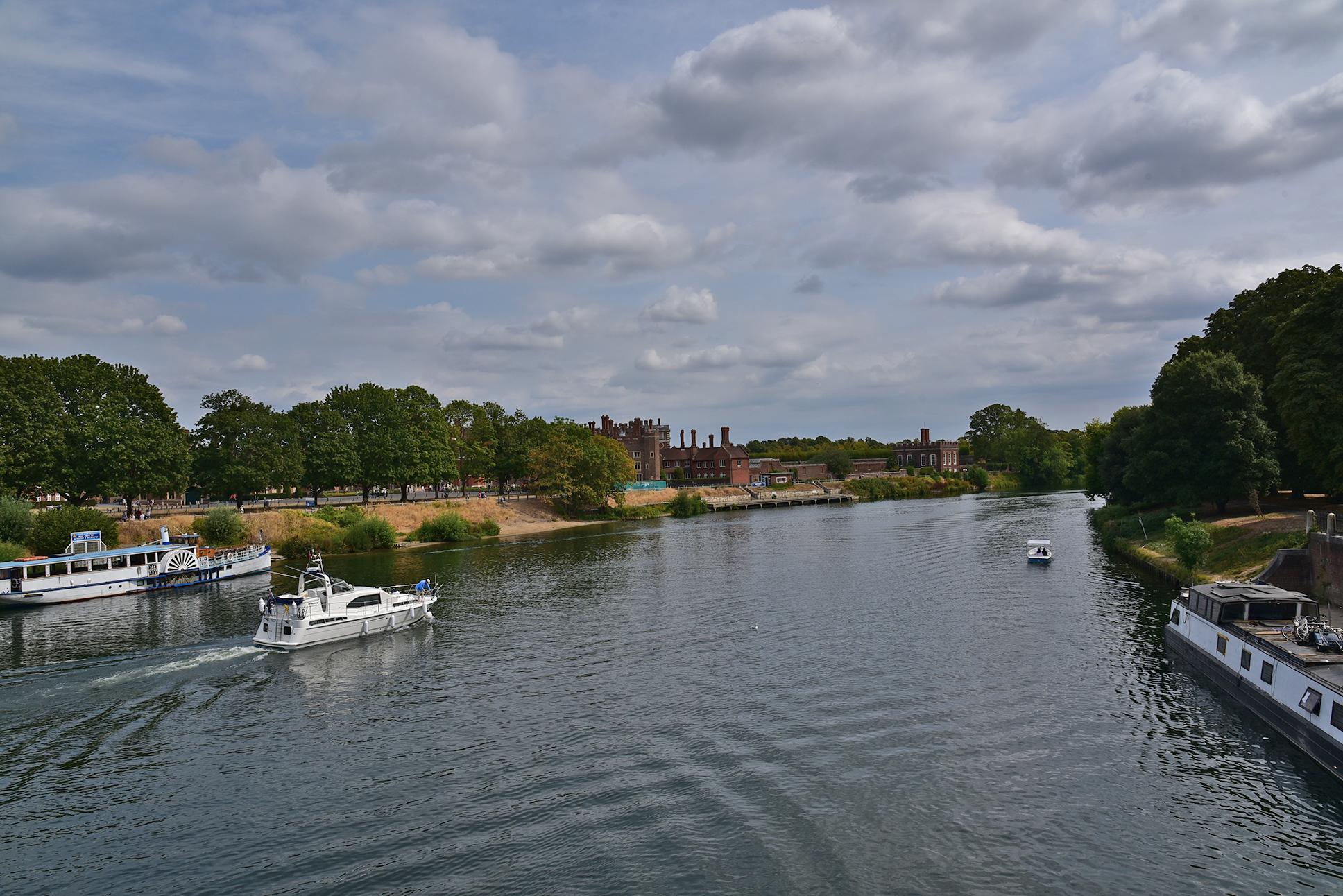
The River Thames beside Hampton Court Palace.In 1525, Cardinal Wolsey constructed a magnificent palace on the banks of the Thames. He lived in the completed building in regal splendor and entertained on such a lavish scale that his hospitality became the talk of Europe. But when he failed in his attempts to persuade the Pope to annul the marriage of Henry VIII and Catherine of Aragon, his fate and downfall were sealed. In a last desperate attempt to buy his way back into Royal favor, the crestfallen Cardinal presented his "Jewel on the Thames" to Henry, who gratefully accepted the gift and then promptly summoned Wolsey to answer charges of treason. Frail in both mind and body, the dejected cleric headed south from his see at York, but died en route at Leicester, wishing that he "served God as diligently as I have served my King".
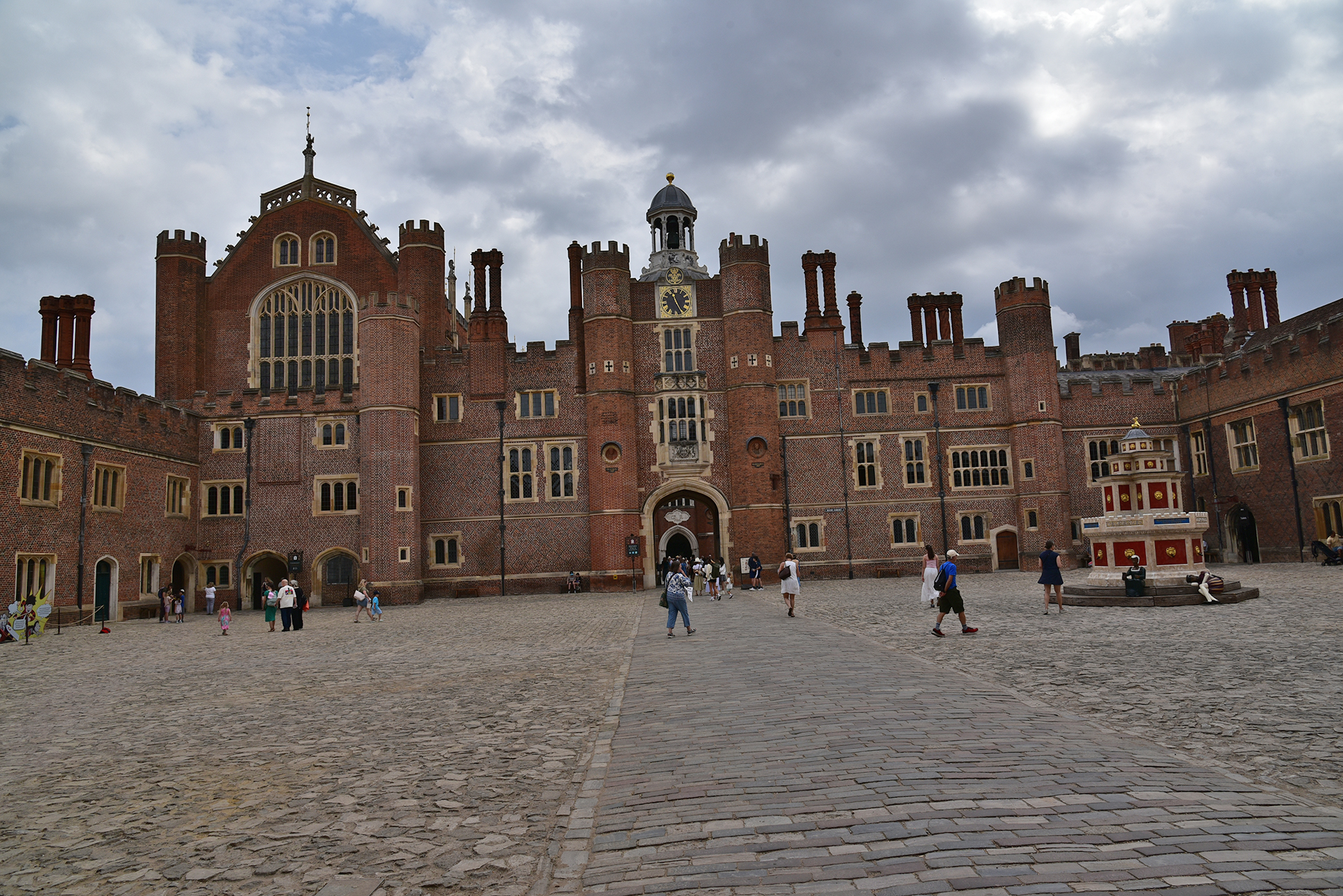
Clock Court, with the astronomical clock above Anne Boleyn's Gateway.Henry wasted no time in introducing his second wife, Anne Boleyn, for whom he had divorced Catherine of Aragon, to the splendors of Wolsey's palace. Following her beheading due to alleged infidelities in 1536 - although it is more likely that she was disposed of for failing to produce a male heir - her ghost has remained behind to drift forlornly through its passages and chambers wearing a blue dress. Henry was already courting Jane Seymour while Anne was still alive. When Jane became his third wife, however, she appears to have brought the despotic tyrant genuine contentment and provided him with his longed-for son and heir, Edward, born October 12, 1537. Sadly, shortly afterward, Jane Seymour died from natural causes - and ever since, her phantom has made an annual pilgrimage to the palace on the anniversary of her son's birth. Holding an unflickering candle and with her head bent in sorrow, she glides eerily along corridors, passes through closed doors, and has, on occasion, shocked palace staff members so much that they have subsequently handed in their resignation.
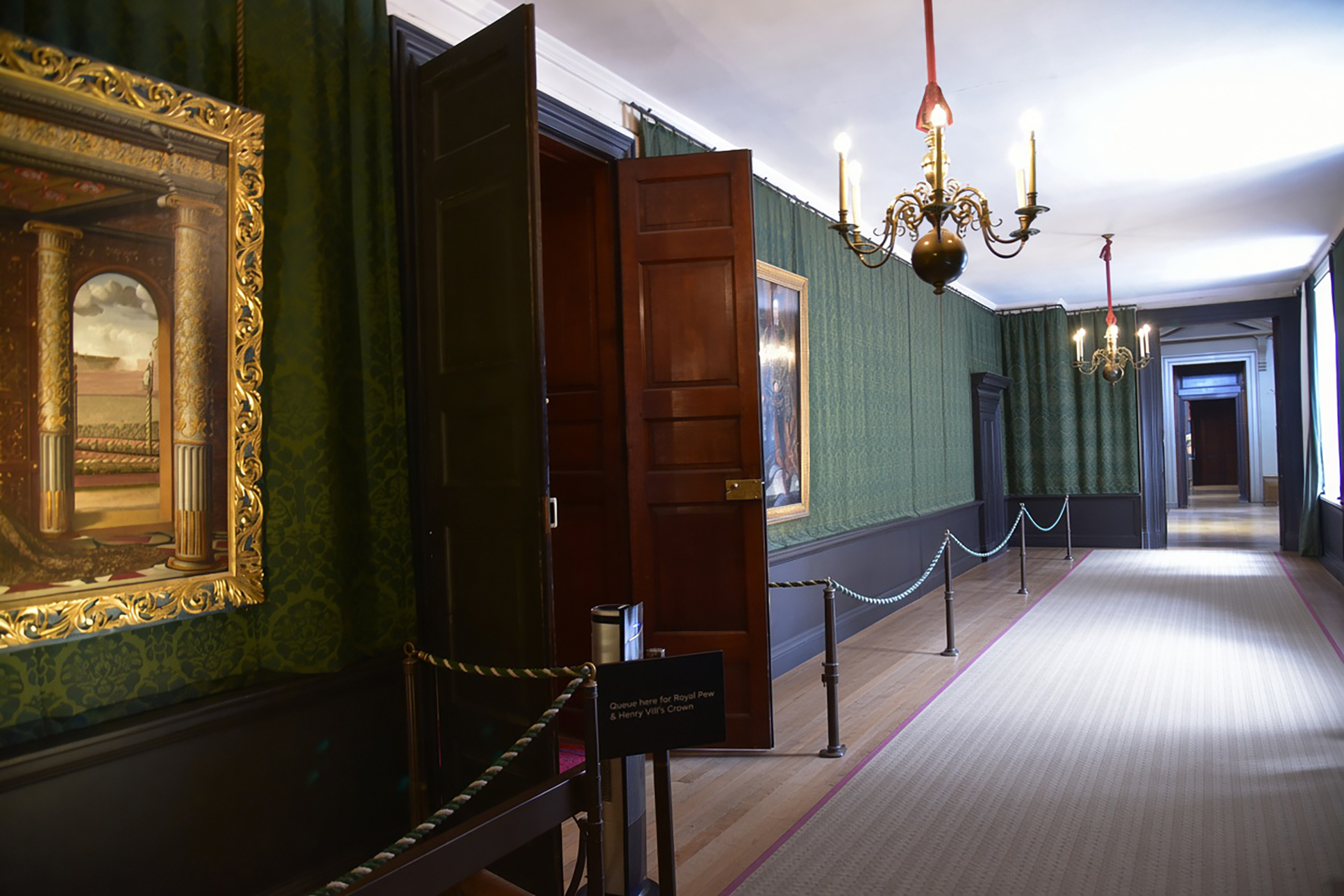
The Haunted Gallery.But it is Henry's fifth wife, Catherine Howard, who makes the most dramatic return to Hampton Court Palace. Although she was still a mere teenager when she married the king in 1540, Catherine was certainly sexually experienced. Her past liaisons had included her music master, Henry Mannock, and a youthful nobleman named Dereham. She found the king physically repulsive and sought solace in the arms of a young man at court, Thomas Culpeper. Servants' tittle-tattle brought her previous indiscretions to light, and not long afterward her adultery was exposed. Henry was furious at the betrayal. The unfortunate Culpeper soon languished at the Tower of London and was subsequently executed, as were Mannock and Dereham. The unfaithful queen found herself imprisoned in her chambers at Hampton Court. Brooding on her inevitable fate, Catherine decided that her only hope lay in meeting with her husband and pleading with him to spare her life. On November 4, 1541, knowing that Henry would be at prayer in the chapel, she broke free from her guards and ran through what is now known as the "Haunted Gallery," where she threw herself at the chapel's locked door, screaming at her husband to grant her an audience. The King listened in stony silence, and moments later the guards recaptured the hysterical girl and dragged her back to her chambers. On February 13, 1542, at just twenty years of age, Catherine Howard went bravely to the block. "I die a Queen, but I had rather died the simple wife of Tom Culpeper. May God have mercy on my soul. Pray for me." She was smiling when the axe fell. Ever since, servants, noblemen, and more recently, wardens have reported seeing her ghost, dressed in a white gown and racing toward the chapel, her face contorted into a terrifying unearthly scream.
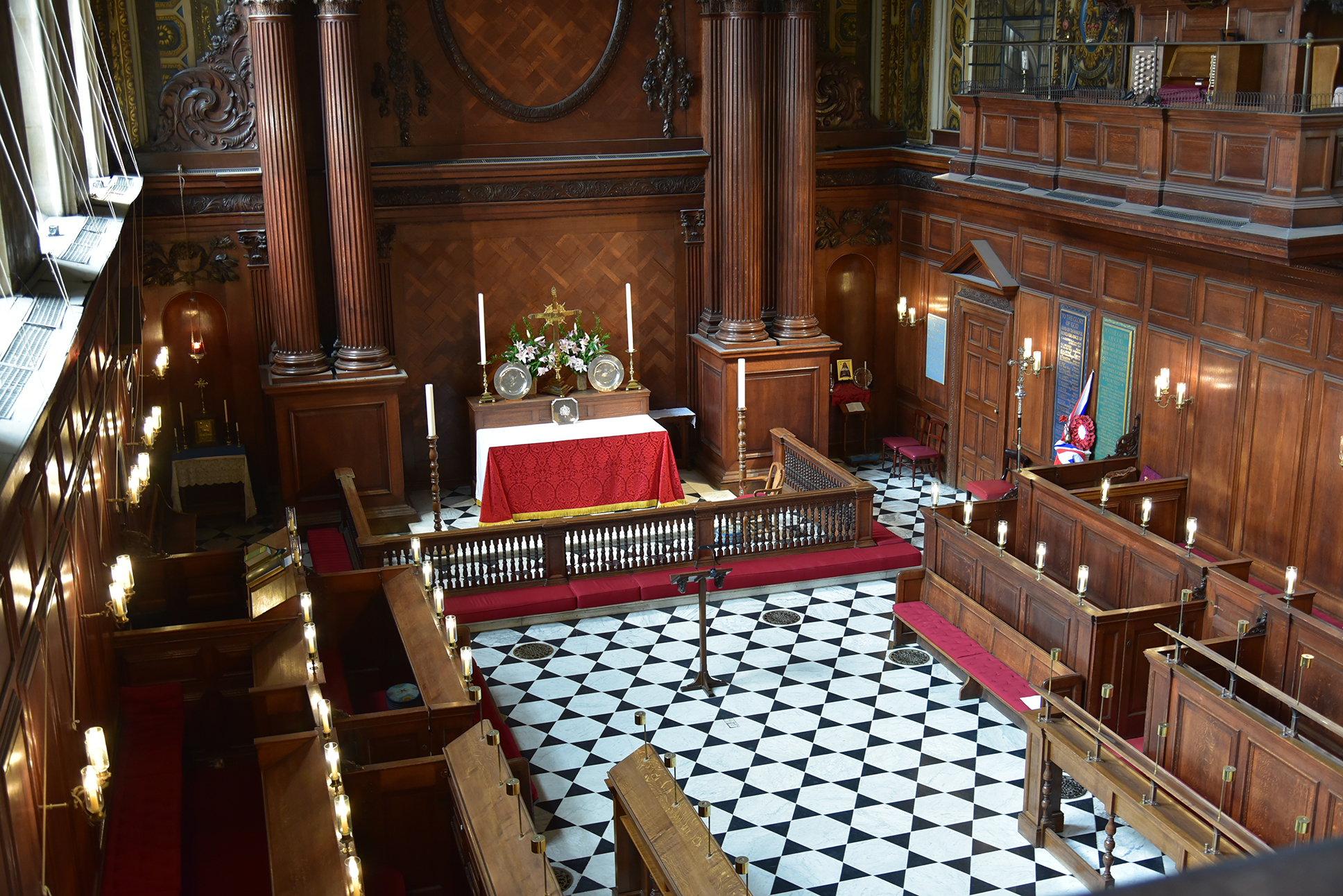
The Chapel Royal.Many visitors have reported a peculiar, icy coldness and an intense feeling of desperate sadness around the doors of the chapel itself, and some people have even witnessed a disembodied, ringed hand knocking upon the door. As recently as 1999, two women on separate guided tours fainted at exactly the same spot in the Haunted Gallery. Both women reported a sudden chill and said they felt as if they had been punched shortly before losing consciousness.
Hampton Court has more than 30 ghosts residing within its ancient fabric. History certainly does come alive here, and to explore its fascinating rooms and passages is to walk with kings and queens, lords and ladies, the famous and forgotten.
- Richard Jones