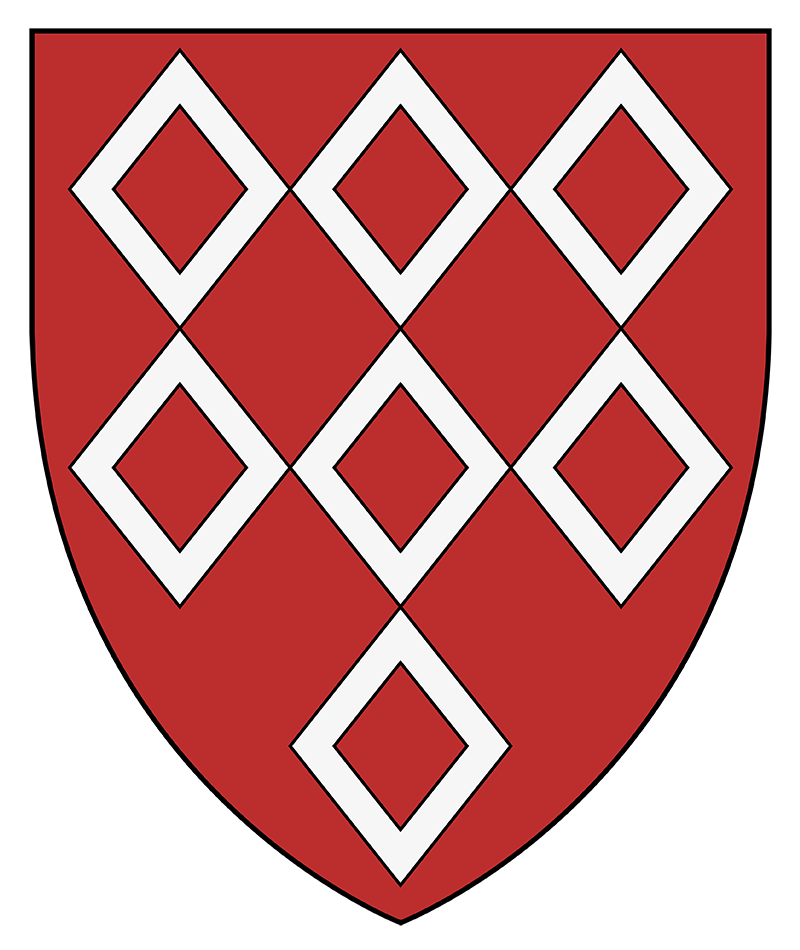
Godwin - Earl of Wessex
Godwin of Wessex was an Anglo-Saxon Earl who dominated English politics under King Cnut and Edward the Confessor. He established a family that reached the English throne through his son Harold Godwinson, King Harold II of England.
Godwin was born around 1000, likely in Sussex, England. His father was Wulfnoth Cild, a noble or Thegn of Sussex. His mother's name is lost to history.
Godwin's early years were marked by turmoil. In 1009, his father Wulfnoth was accused of unknown crimes at a muster of Æthelred the Unready's fleet. Wulfnoth fled with twenty ships. The ships sent to pursue him were caught in a storm and destroyed. During this period, Godwin was likely a supporter of Æthelred's eldest son, Æthelstan. When Æthelstan died in 1014, he left Godwin an estate in Compton, which had once belonged to Godwin's father.
The Danish King, Cnut the Great, became the King of England in 1016, and Godwin started to rise in power. In around 1020, King Cnut appointed him Earl of Wessex.
Godwin's role continued to expand between 1019 and 1023, when he traveled with Cnut to Denmark. There, he proved himself, and afterward married Gytha, the sister of the Danish Earl, Ulf, who was married to Cnut's sister, Estrid.
Together, Godwin and Gytha had eleven children: Sweyn, Harold, Tostig, Edith, Gyrth, Leofwine, Wulfnot, Alfgar, Edgiva, Elgiva, and Gunhilda, further solidifying Godwin's legacy.
In 1035, after King Cnut's death, Godwin became deeply involved in the ensuing succession disputes. He initially supported Harthacnut and then later Harold Harefoot, navigating the fierce political rivalries between Cnut's sons and Æthelred's heirs. The following year, in 1036, Godwin captured Alfred Ætheling, Edward the Confessor's elder brother, who was later blinded and killed. Godwin's precise role in Alfred's fate remains disputed; some sources implicate him, while others suggest his involvement was limited or politically motivated.
Despite these controversies, Earl Godwin stayed relevant under successive Kings. He leveraged his daughter Edith's marriage to Edward the Confessor in 1045 to put the Wessex bloodline on the throne.
Nevertheless, Godwin often went against Edward's orders. For example, he clashed with the King after a dispute in Dover involving Eustace II, Count of Boulogne. When Godwin refused to punish the people of Dover, defending them instead, he and his family were exiled to Flanders in September of 1051. Godwin and his sons returned to England in 1052, even stronger, forcing Edward to restore their earldom and power.
Godwin, Earl of Wessex, died on April 15th, 1053, in Winchester. The cause of death was likely a stroke or illness that began at a royal banquet. According to the Abingdon version of the Anglo-Saxon Chronicle:
“On Easter Monday, as he was sitting with the King at a meal, he suddenly sank towards the footstool bereft of speech, and deprived of all his strength. Then he was carried to the King's private room, and they thought he was about to pass. But it was not so. He continued like this without speech or strength right on till Thursday, and then departed this life.”
Another account, by the 12th century writer Aelred of Rievaulx, presents Godwin attempting to disclaim responsibility for Alfred Ætheling's murder with the words:
“May this crust which I hold in my hand pass through my throat and leave me unharmed to show that I was guiltless of treason towards you, and that I was innocent in your brother's death!”
He then tried to swallow the piece of crust, but it stuck in his throat and killed him.
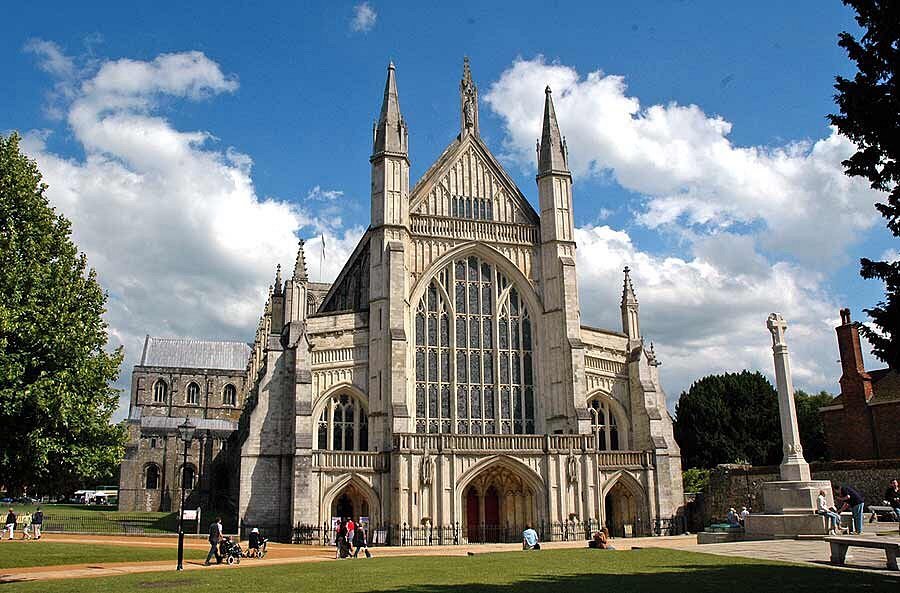
Godwin was buried at Winchester Cathedral. His son, Harold, succeeded him as Earl of Wessex before himself becoming King of England.