Desmond Castle
History
Desmond Castle resides on the banks of the River Maigue near the town of Adare in County Limerick, Ireland. The site likely began as an early medieval Irish ringfort associated with the O'Donovans, who controlled the region until the late 12th century.
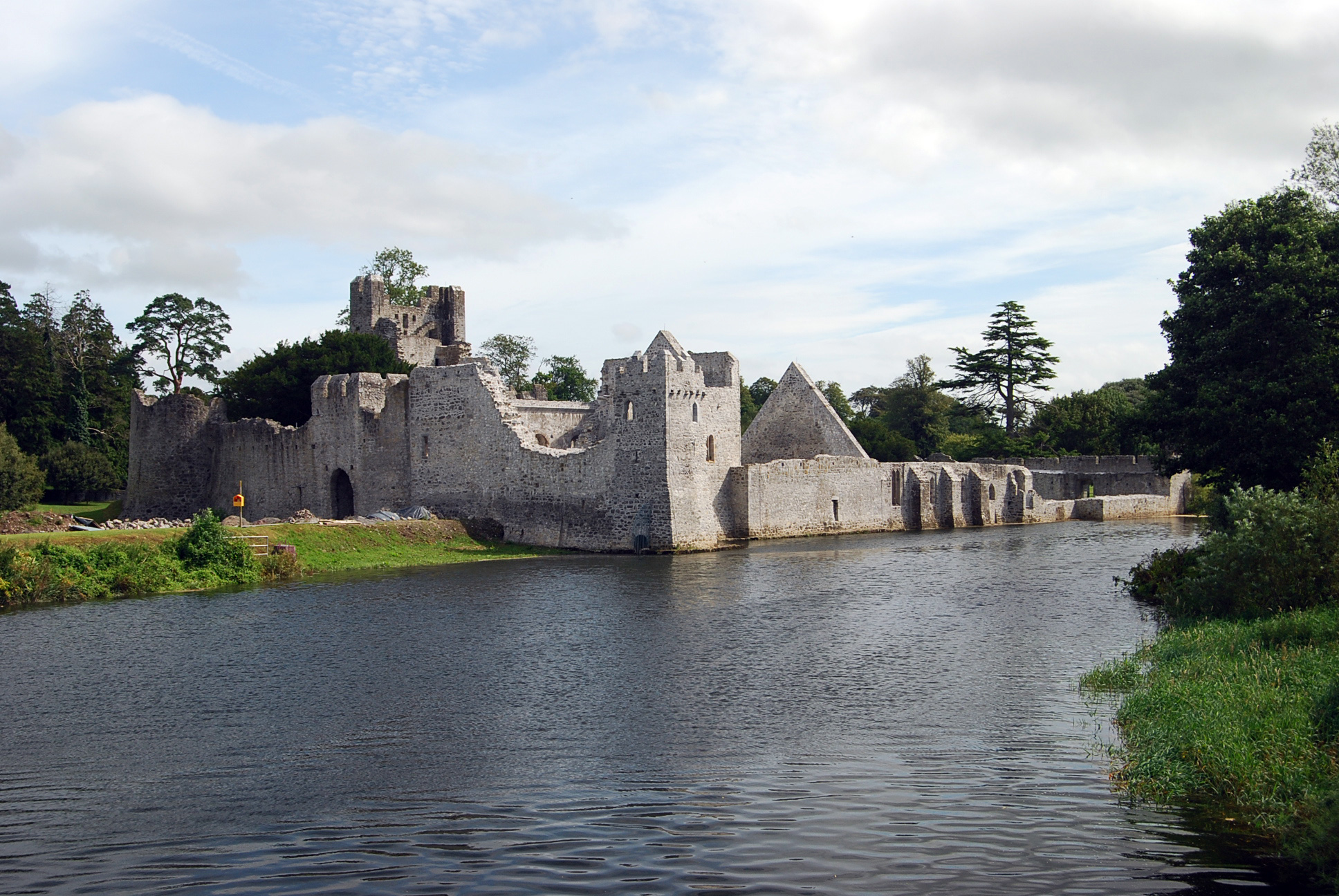
No records document exactly when the stone castle was built, but it dates to the early 13th century and is generally attributed to Geoffrey de Marisco, a powerful Anglo-Norman justiciar of Ireland, who held the manor of Adare and received a royal grant in 1226 to hold an annual fair there. After he fell from favor with the Crown, the property passed to the FitzGeralds.
The earliest description of the castle is found in an Inquisition of Adare taken in 1329 – 1331, which describes the castle as having a hall, a chapel with stone walls covered with slates, and a chamber with parts covered in thatch, all of which were laid to waste on account of war. There was no mention of the war responsible for the castle's demise.
In 1334, the castle was granted to Sir John Darcy, guardian to the young Earl of Kildare, by Edward III, suggesting the castle must have been rebuilt after the time of the Inquisition.

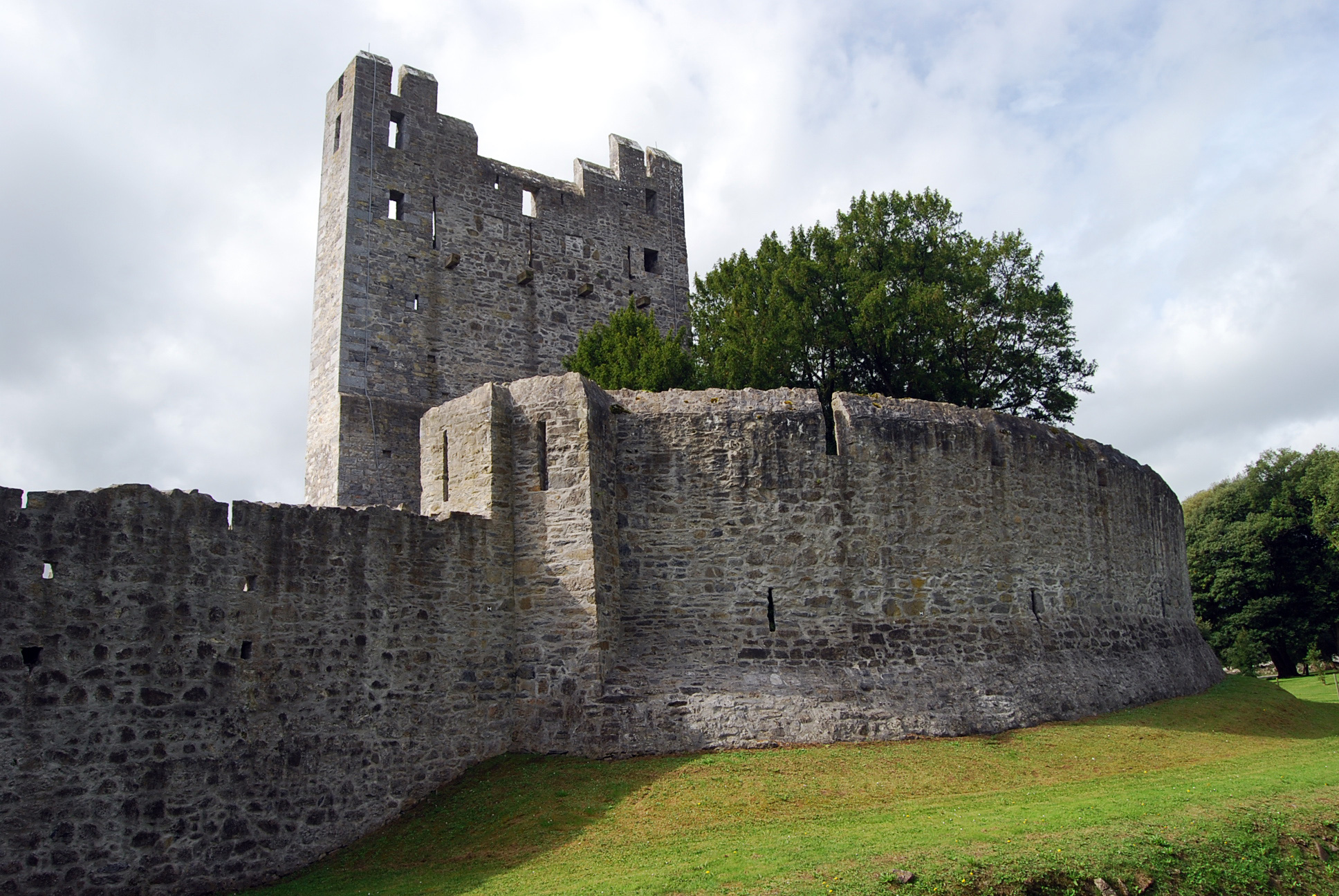
The keep and curtain wall of Desmond Castle.
Desmond Castle was the property of Earls of Kildare for centuries, but they appear to have resided elsewhere for much of the 14th and 15th centuries. One historical document does mention that the 9th Earl of Kildare set out from the castle to meet the charges brought against him by the influence of Cardinal Wolsey in 1519. After the rebellion of Silken Thomas, the 10th Earl of Kildare, the Kildare lands were forfeited in 1536, and the castle was granted to the Fitzgerald dynasty, Earls of Desmond, another branch of the family, who gave the castle its present name.
In 1578, during the Desmond Rebellions against Elizabeth I, the English took the castle after an eleven-day siege. There was further fighting in 1579-81, and during the Nine Years' War, Irish forces took the castle in 1598 and the English retook it in 1600. During the Irish Confederate Wars of the 1640s, it was held by insurgents after the 1641 Rising and then by royalist forces under Lord Castlehaven. In 1657, it was dismantled by orders of Oliver Cromwell, the Lord Protector of England, to prevent further military use.

Ruined buildings in the outer ward.
In 1683, Desmond Castle came into the possession of Thady Quinn, who, with his descendants, the Earls of Dunraven, helped preserve what was left of the ruins. At that time, the ruins consisted of an inner and outer ward and a massive square keep.
In 1825, the castle was extensively repaired by the Second Earl of Dunraven, leading to portions of the walls being restored due to the overgrowth of ivy. It is now in the care of the State as a national monument. Extensive conservation work began in 1996 and has been completed in recent years.
Castle Highlights

The castle across the River Maigue.
Desmond Castle is beautiful, with the best views from the bridge crossing the River Maigue as you enter Adare. It is bordered on the other side by a golf course. It is a fine example of a Norman ring castle with a large central keep inside two concentric baileys or wards, surrounded by a moat. The massive three-storey square stone keep is the most impressive feature of the castle, located inside the inner ward. As a ruin, there is little in the way of rooms to visit apart from a dark cellar at ground level. There is a giant yew tree in the inner ward. Yew trees were popular in castles as their wood was used to make crossbows.

The Gate Tower.
The outer ward is entered through a gate tower with a drawbridge, which was being worked on during my visit in 2007 to make the portcullis fully functional again. At that time, the only castle with a functioning portcullis in Ireland was at Cahir Castle. The outer ward also contains the ruins and foundations of the stables, the Great Hall on the river side, the kitchen and bakery, ovens, and the Water Tower. A battlemented rampart with semicircular bastions runs around the castle.
Tours of Desmond Castle are available daily from June through the end of September by shuttle bus from the Heritage Centre in Adare, at 10:00, 12:00, 14:00, and 15:30. I highly recommend you book in advance as they are popular. When the castle is closed, you can still see it from the outside. I chose to walk back to town at the end of the tour to see the castle from the bridge. If you want to visit another nearby castle, Bunratty Castle and King John's Castle are less than an hour's drive north.