Battle of Fornham
Background
King Henry II tried to secure land for his youngest son, Prince John. This angered his other sons—Henry the Young King, Richard, and Geoffrey—who fled to the court of King Louis VII of France and rebelled against Henry II.
In late September or early October 1173, Robert de Beaumont, 3rd Earl of Leicester, seized the unrest and invaded England at Walton, Suffolk, with 3,000 to 4,000 Flemish mercenaries and about 80 knights. He first tried to join Hugh Bigod, Earl of Norfolk, at Framlingham Castle, but tensions drove him toward his lands in Leicester.
King Henry II was in Normandy at the time, and the forces in England supporting the crown were led by Richard de Lucy, Chief Justiciar of England, with Humphrey de Bohun, Lord High Constable, Reginald de Dunstanville, Earl of Cornwall, William FitzRobert, Earl of Gloucester, William d'Aubigny, Earl of Arundel, and others. Their forces were smaller than Beaumont's but included over 300 knights plus local levies, giving them a qualitative advantage.
Battle
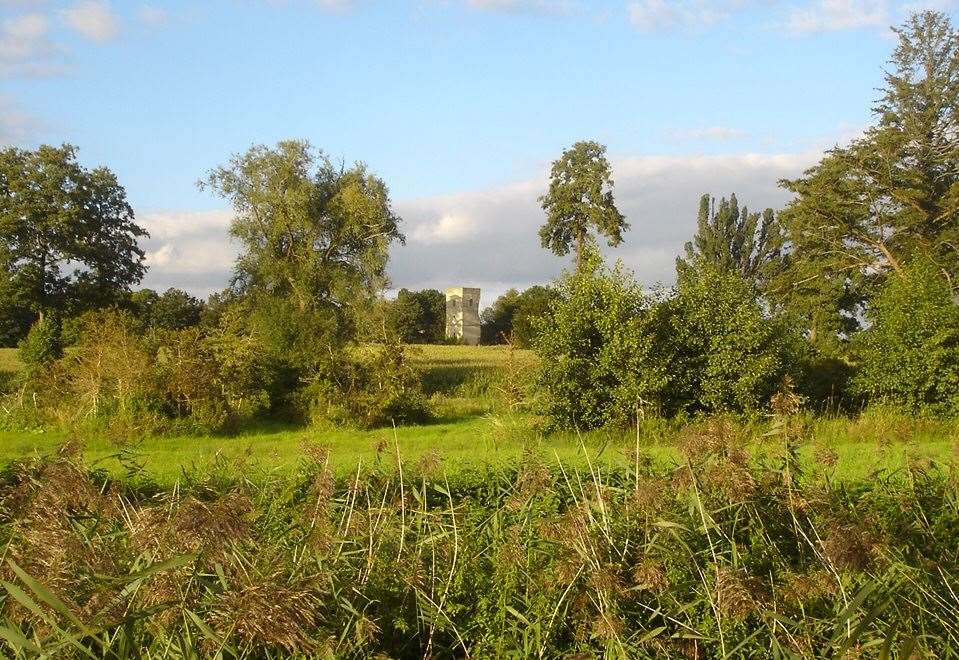
On October 17, 1173, the rebel forces were intercepted as they tried to ford the River Lark near the villages of Fornham St Genevieve, Fornham All Saints, and Fornham St Martin.
Caught in a vulnerable position, the rebel forces were split across the river. Beaumont's cavalry was captured, and the Flemish mercenaries were driven into nearby swamps, where most were killed by local peasants armed with farm tools.
Robert de Beaumont was also captured, along with his wife, Petronilla de Grandmesnil, who famously donned armor and rode into battle.
Aftermath
Most of the rebel army was killed, and the Earl of Leicester remained in captivity until 1177, when some of his lands were restored to him.
The Battle of Fornham was a turning point in the Great Revolt of 1173-1174, as the defeat of the rebel army weakened the uprising and showed the effectiveness of royalist coordination against mercenary-led forces.