Siege of Roxburgh Castle
All that beautiful castle the Scots pulled down to the ground...
Background
After the victory at the Pass of Brander, the Scottish army turned its focus on ridding Scotland of the English, and James Douglas captured many Scottish castles that the English had taken earlier.
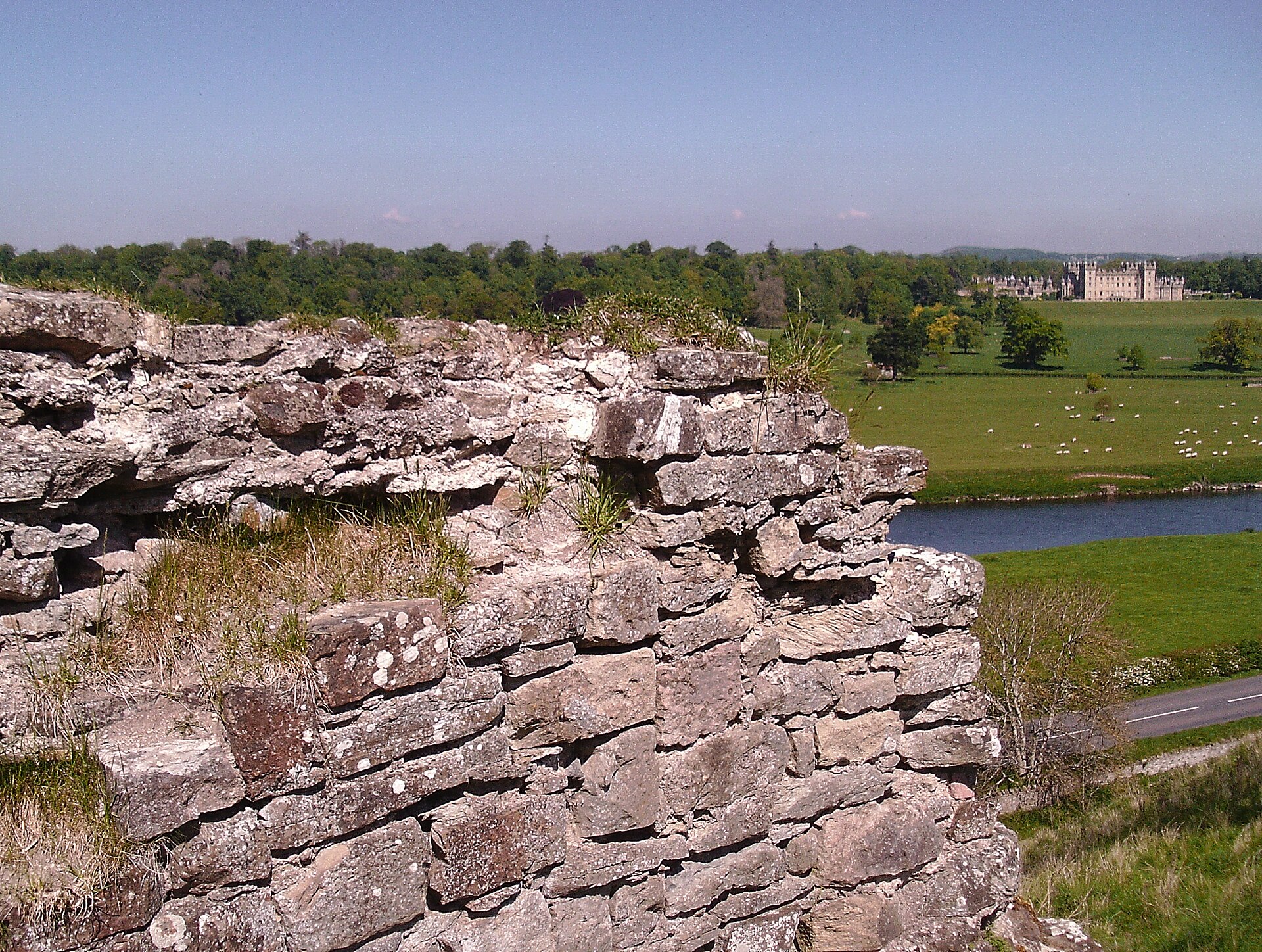
The ruins of Roxburgh Castle, with the River Tweed and Floors Castle beyond. Photo by Northerner, Wikimedia Commons, CC BY-SA 4.0, resized.
Next came the more formidable castle of Roxburgh, which stood on high ground near the confluence of the River Tweed and the River Teviot and was well guarded. Roxburgh Castle was previously used by the English to hold Robert the Bruce's sister, Mary, prisoner.
Battle
To get close to Roxburgh Castle, James Douglas and Walter Stewart, 6th High Stewart of Scotland, disguised their men as cows grazing in the fields and slowly made their way to the castle, undiscovered by the English garrison inside, on the night of February 19th, 1314.
They then scaled the castle walls using ladders and caught the garrison by surprise, inflicting heavy casualties on the English, including their commander, William Fiennes, who was wounded in the face with an arrow. The The Scots quickly seized control of the castle.
Aftermath
James Douglas then had Roxburgh Castle's walls torn down so it could not be recaptured by the English in the future and used against them again. This was a common practice during the War of Independence. The Lanercost Chronicle speaks about this:
"All that beautiful castle the Scots pulled down to the ground, lest the English should never again rule the land by holding the castles."
Capturing Roxburgh Castle gave the Scots more control in the border regions with England.


 William Fiennes