Siege of Sandal Castle
Background
Sandal Castle, a medieval fortress, became renowned during the Battle of Wakefield in 1460, part of the Wars of the Roses, where Richard, Duke of York, fell outside its walls. The castle remained under crown-aligned ownership in the centuries that followed, and by the mid-17th century it served as a Royalist stronghold during the English Civil War.
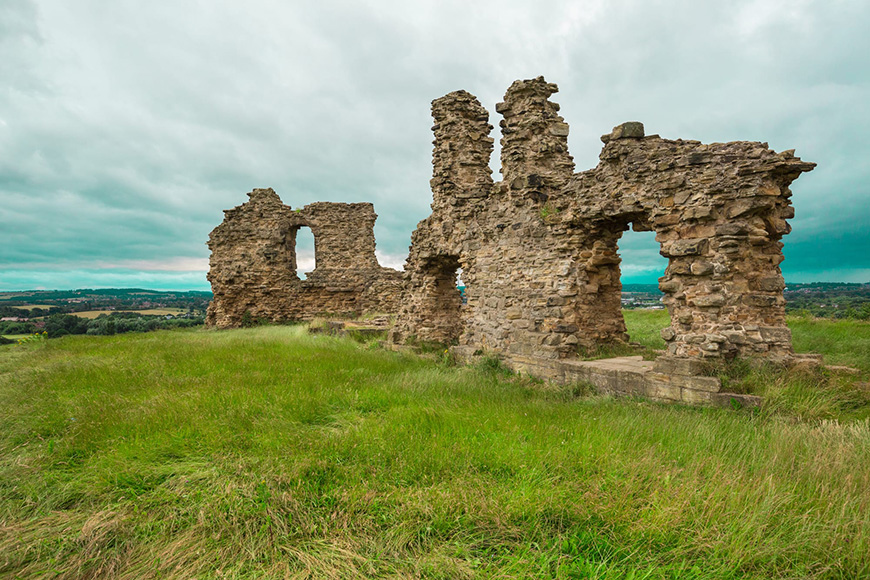
Although the castle fell into neglect, it remained under Royalist control into the mid-17th century and served as a base for loyalist forces in West Yorkshire. Under the command of George Bonivant, the Royalists, loyal to King Charles I, re-fortified and garrisoned the castle. The garrison was commanded by Major Ward, who had been sent to command the garrison by Thomas Beaumont. However, Ward did not last long as garrison commander. While descending a staircase within the Keep, he slipped and broke his neck. The castle's poor condition made it less important than other nearby strongholds in the north.However, its poor condition made it less important than other nearby strongholds in the north.
Following the Siege of Scarborough in 1645 and the Parliamentarian victory at the Battle of Naseby on June 14th, their focus also shifted to Sandal Castle, while they were already besieging Pontefract Castle nearby.
Battle
Sandal Castle was besieged at least three times by Parliamentarian forces in 1645, though detailed accounts survive for only two of those engagements.
During April of 1645, John Saville, entrusted by Lord Fairfax, laid siege to the castle. In the course of the conflict, the Royalist garrison conducted a sally from the castle, killing around 42 Parliamentarians, capturing others, and taking weapons, which forced the Parliamentarians to lift the siege.
The final siege at Sandal began in the summer or autumn of 1645, this time led by Sydenham Poyntz. He conducted a sustained siege, including artillery fire from four large cannon from Hull, under the direction of Colonel Robert Overton. Poyntz played a key role as a Parliamentarian leader at this stage of the war, and the bombardment left the castle in ruins.
Robert Overton saw that the bombardment of the castle had created several breaches and prepared his men for an assault. As the men began to form for the attack, Bonivant sent a messenger from the castle garrison to seek a parley. Overton returned the messenger with a letter for the Bonivant:
"In behalfe of our Countrey (which we serve), I summon you to render this Castle into our hands for the use of the Publique. And though our neglect of this place hitherto hath occasioned your Honour and some effusion of blood, be advised to close with the Almighties Overtures of mercy ere it is too late, otherwise the Justice of God and the civility of men will I doubt not most evidently appeare in the obstinate and wilfull destruction of yourselves, Sir, I wish this advice may prove effectual to you as it will be satisfactory to. Your humble servant, R. Overton."
Bonivant answered with:
"To render ourselves prisoners, we will not, but if you please that we may treat upon our march away, we shall have done in two words, and this be the resolution of Your servant, Geo. Bonivant."
As a result of the prolonged assault, Colonel George Bonivant ultimately surrendered the castle.
Aftermath
The surrender occurred at 10 o'clock on October 1st, 1645. Butler recounts:
"Having been assured that they would receive a safe passage to Welbeck House in north Nottinghamshire, they surrendered the castle. The garrison was then 10 officers and 90 men, with two of the men called seniors, implying that they were professional soldiers rather than just non-commissioned officers. They also surrendered 100 muskets, 50 pikes, 20 halberds, 150 swords, and two barrels of gunpowder."
Following the surrender, Parliament ordered the castle to be slighted in 1646 to prevent future Royalists from using it again, thus ending its military role.
This left only Bolton Castle and Skipton Castle remaining in Royalist hands in Yorkshire, and their time was coming.
The siege of Sandal Castle demonstrated that, even in the age of gunpowder, older castles could retain strategic value in the Civil War, despite lacking modern defensive features.
 John Saville