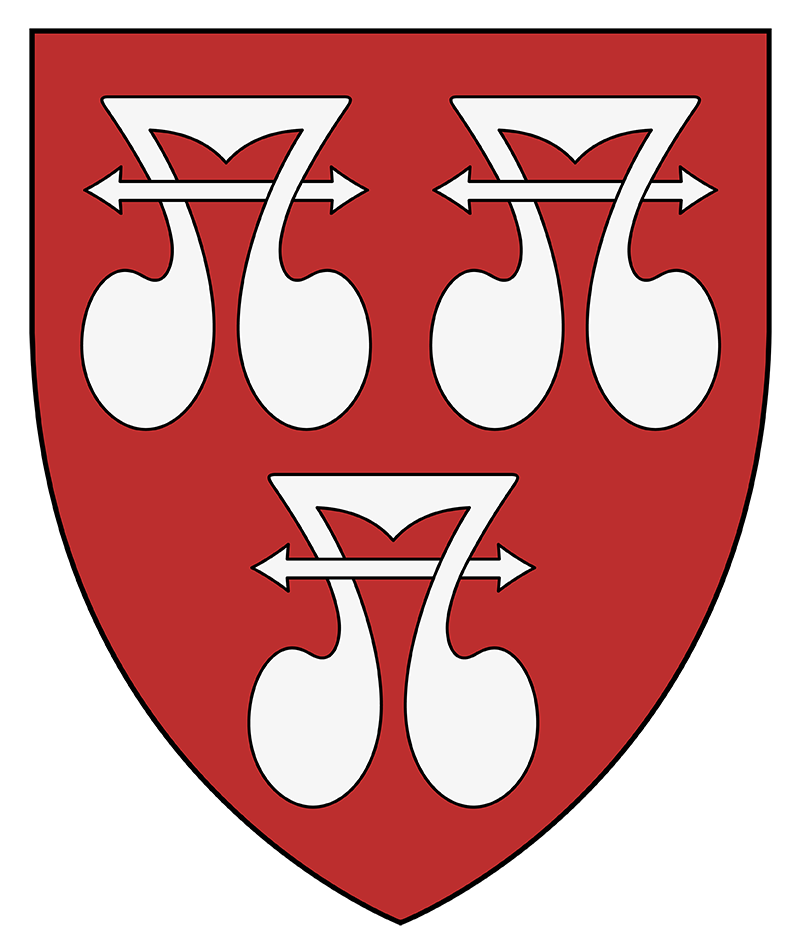
Robert de Ros - 1st Lord Ros of Helmsley
Robert de Ros was an influential Anglo-Norman feudal baron, administrator, and one of the Twenty-Five Surety Barons appointed to enforce Magna Carta in 1215. Robert was born around 1170 in Wark, Northumberland, England, to Everard de Ross II and Roese Trussebut. His father died in 1183 while Robert was still a minor.
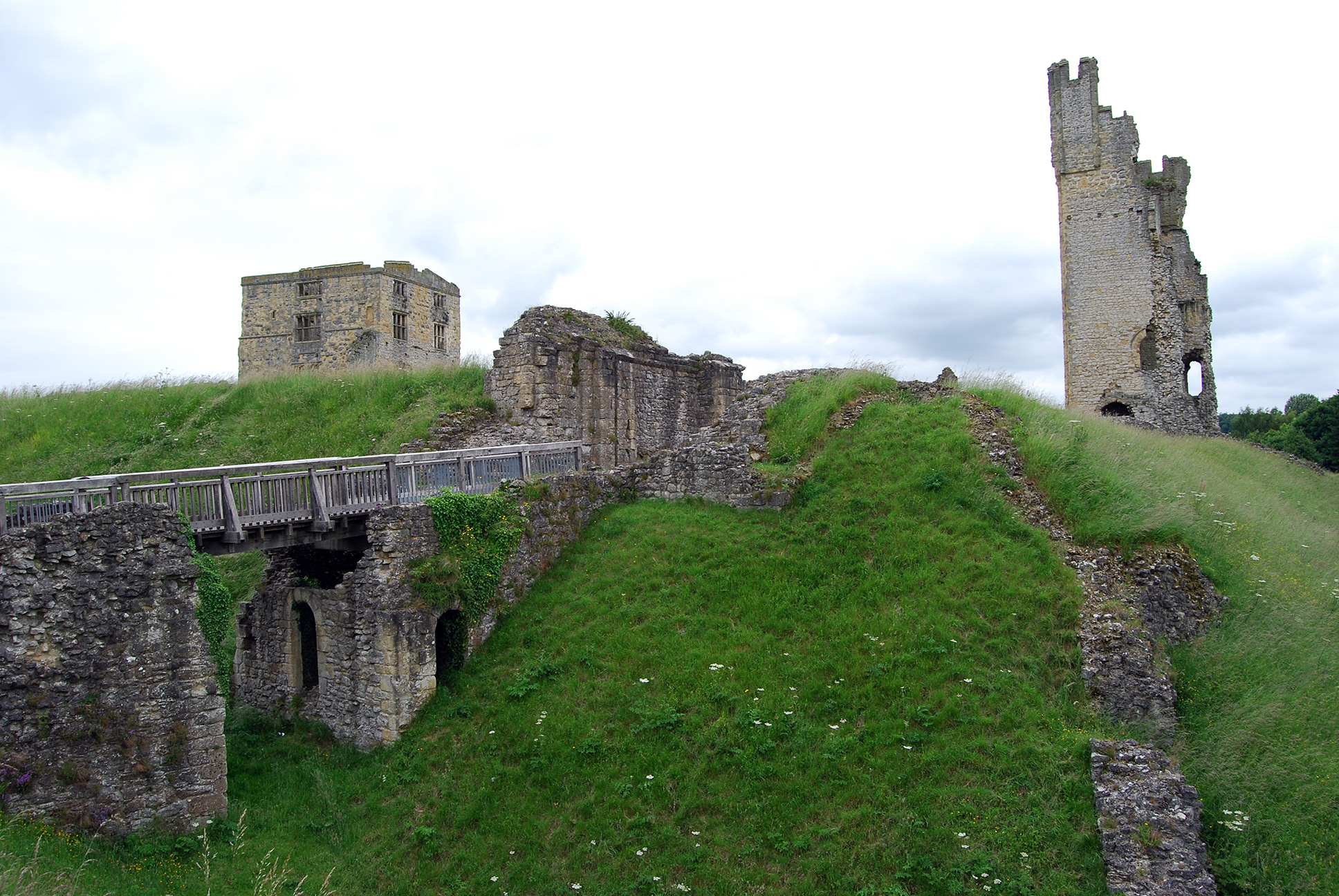
In 1191, he paid a thousand-mark fee to inherit his father's lands. That same year, he married Isabella of Scotland at Haddington, near Edinburgh. She was the illegitimate daughter of King William of Scotland. Robert and Isabella had two children, William de Ros and Robert de Ros. Robert gained extensive lands in Northern England through inheritance and marriage. He rebuilt Helmsley Castle in stone and also fortified Wark Castle.
When his mother died, Robert inherited a third of the Trussebut Estates. This included land near Bonneville-sur-Touques in Normandy, where he became hereditary bailiff and castellan.
In 1196, during hostilities between King Richard I of England and King Philip II of France, Robert captured a prominent French knight. He held the knight captive in Bonneville Castle for ransom. However, the keeper of the castle, William d'Epinay, let the knight escape. King Richard had d'Epinay hanged and imprisoned Robert, fining him 1,200 marks.
When John became king of England, he had an uneasy relationship with Robert. Robert de Ros went on diplomatic missions for John, including one to see King William, his father-in-law, in Scotland. Tensions flared in 1205, when King John ordered that Robert's lands be seized, but later changed his mind. At some point, Robert's younger son was taken hostage by John.
By 1209, Robert was back in the king's favor. He was sent to Scotland again and to Ireland in 1210. In 1212, Robert entered a monastic order. John gave custody of his lands to Philip de Ulecot. However, the next year, Robert was made Sheriff of Cumberland. The king appointed him to a commission to investigate grievances in Lincolnshire and Yorkshire. While in Yorkshire, Robert worked for a reconciliation between King John and William de Forz.
Robert de Ros was a supporter of the Knights Templar and granted them lands in Yorkshire, including Ribston. There, they established a commandery. He also founded a leper hospital at Bolton, dedicated to St. Thomas Becket. He was also a benefactor of Rievaulx Abbey, Newminster Abbey, and Kirkham Priory.
In 1213, Robert was a witness when John surrendered England to the authority of the pope. He was one of twelve guarantors appointed to ensure John kept his promises. Robert stayed loyal to John during the 1214 disturbances and was rewarded with royal manors in Cumberland.
However, Robert joined the rebel barons against John and was one of the twenty-five Surety Barons chosen to enforce Magna Carta. For this, Robert was excommunicated by the pope, and Robert's lands were given to William de Forz.

John also ordered Robert to give up Carlisle Castle, which he did. Robert remained on the side of the rebel barons after John died in October 1216. He supported Prince Louis even after his son was captured by loyalists in May 1217. He submitted later that year and regained most of his land. In 1221, Robert was summoned to help with the siege to destroy Skipsea Castle during the rebellion of William de Forz.
In 1225, Robert was one of the witnesses to the reissue of Magna Carta. By the end of 1226, he formally joined the Knights Templar. Helmsley Castle then went to his eldest son, while Wark Castle went to the younger.
Robert de Ros died in either 1226 or 1227. He was buried at Temple Church in London, where William Marshal and other Knights Templars are also interred.