Duffus Castle
History
Duffus Castle was built by a Flemish man named Freskin. After an uprising by the "men of Moray" against King David I of Scotland in 1130, the king sent Freskin north as a representative of royal authority. He was given the estate of Duffus and built an earthwork and timber castle, which was certainly standing by 1151, when the king came to visit. Freskin's son William adopted the title of "de Moravia" (of Moray). By 1200, the Moray family had become the most powerful family in northern Scotland, giving rise to the Earls of Sutherland and Clan Murray.
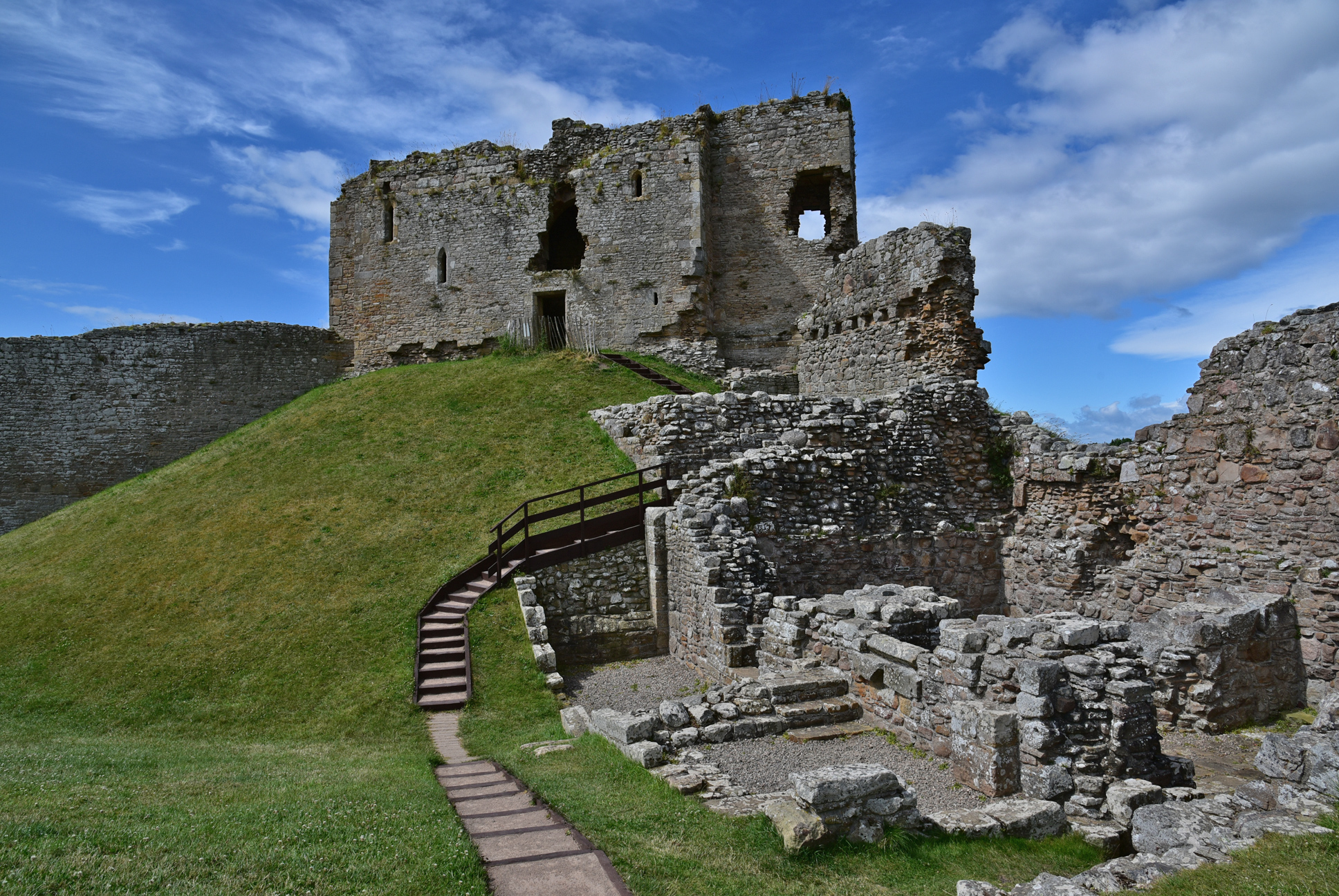
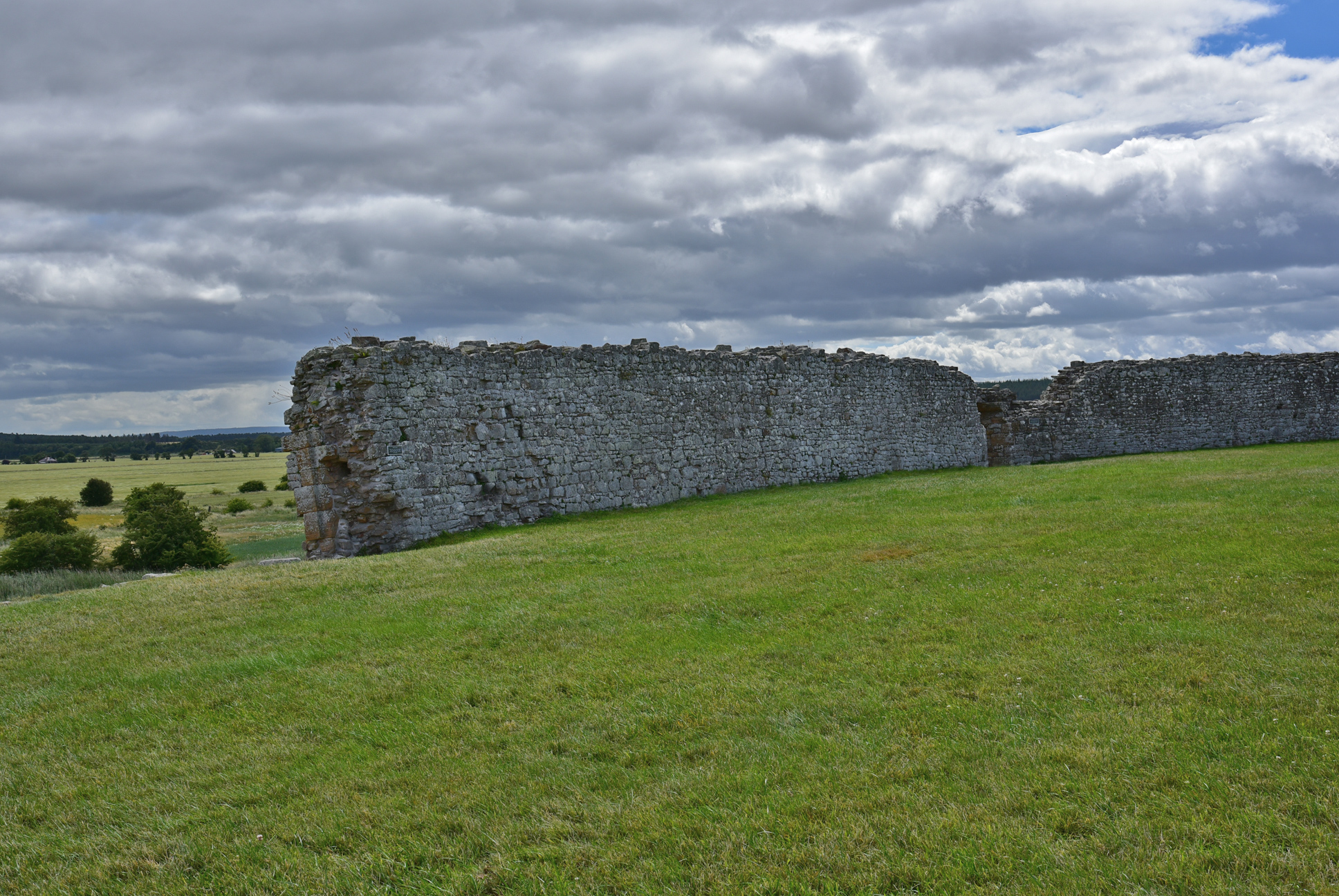
Around 1270, the castle passed to Sir Reginald Cheyne, the Elder, Lord of Inverugie, through his marriage to Mary de Moravia. He most likely replaced the wooden keep with the current square stone keep and curtain wall surrounding the bailey in 1305. The invading King Edward I of England gave him a grant of 200 oaks from the royal forests of Darnaway and Longmorn, which were likely used for the castle's floors and roofs. The keep was a two-storey tower, with a hall, latrines, and chambers on the first floor, while the ground floor was used for storage and entered through a doorway protected by a portcullis. Water-filled ditches surrounded the motte and bailey.

The keep, seen from the bailey.
When Reginald Cheyne of Duffus died in 1345, his daughter Mariot inherited the castle and married Nicholas Sutherland, the second son of the 4th Earl of Sutherland. The Sutherlands owned Duffus Castle until it was abandoned. By about 1350, the keep had been abandoned, possibly because it was beginning to slide down the motte, and a new residence containing a kitchen, great hall, and reception room was built at the north end of the bailey, possibly by the Sutherlands.
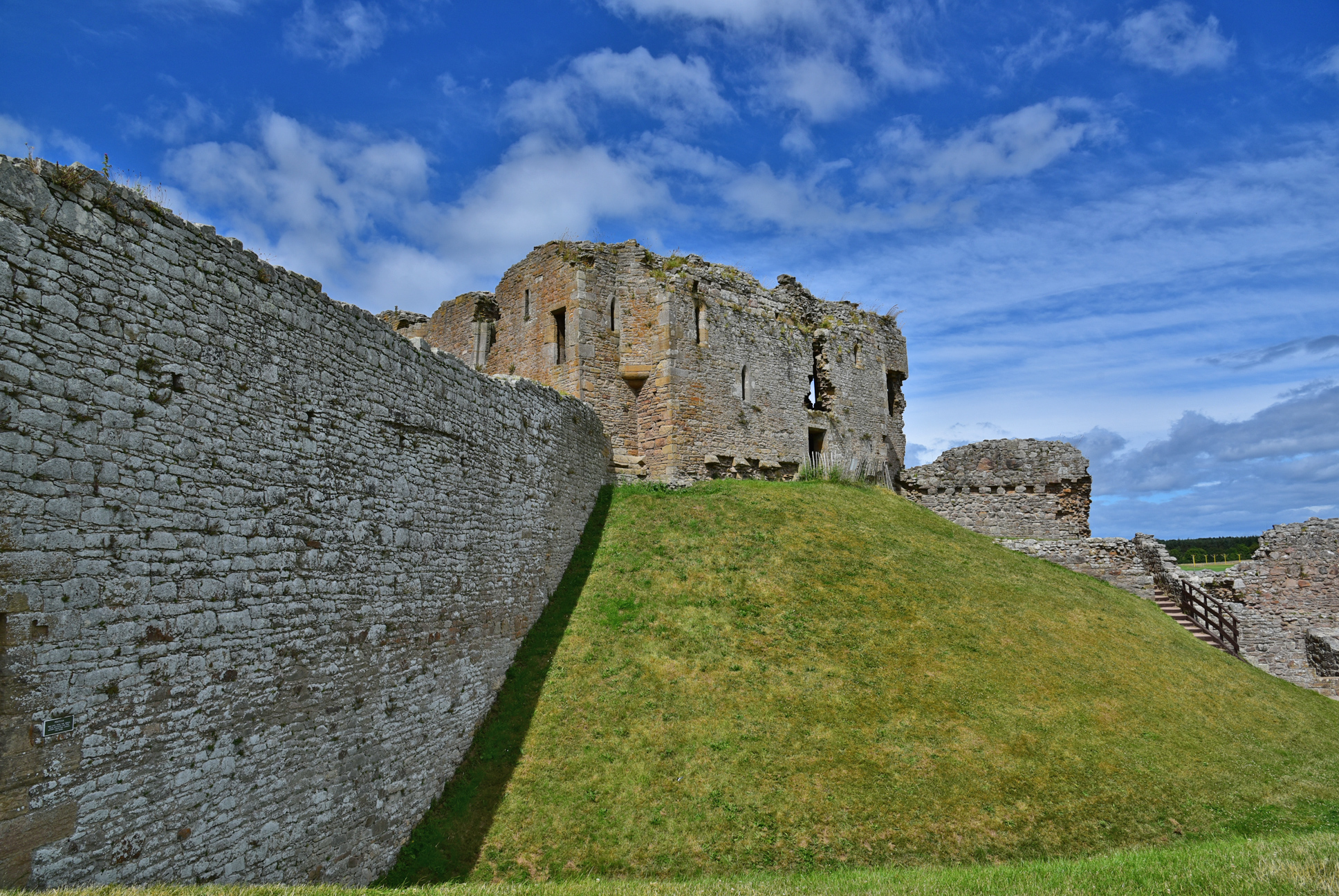
The curtain wall below the keep.
In 1689, John Graham, Viscount Dundee, leader of the first Jacobite Rising, dined at Duffus Castle as a guest of James, Lord Duffus, before his victory against King William II's forces at the Battle of Killiecrankie. Soon after, Lord Duffus moved to the nearby Duffus House, and the castle fell into disrepair. When the 2nd Lord Duffus died in 1705, the castle had become unsuitable as a dwelling and was abandoned.
Castle Highlights

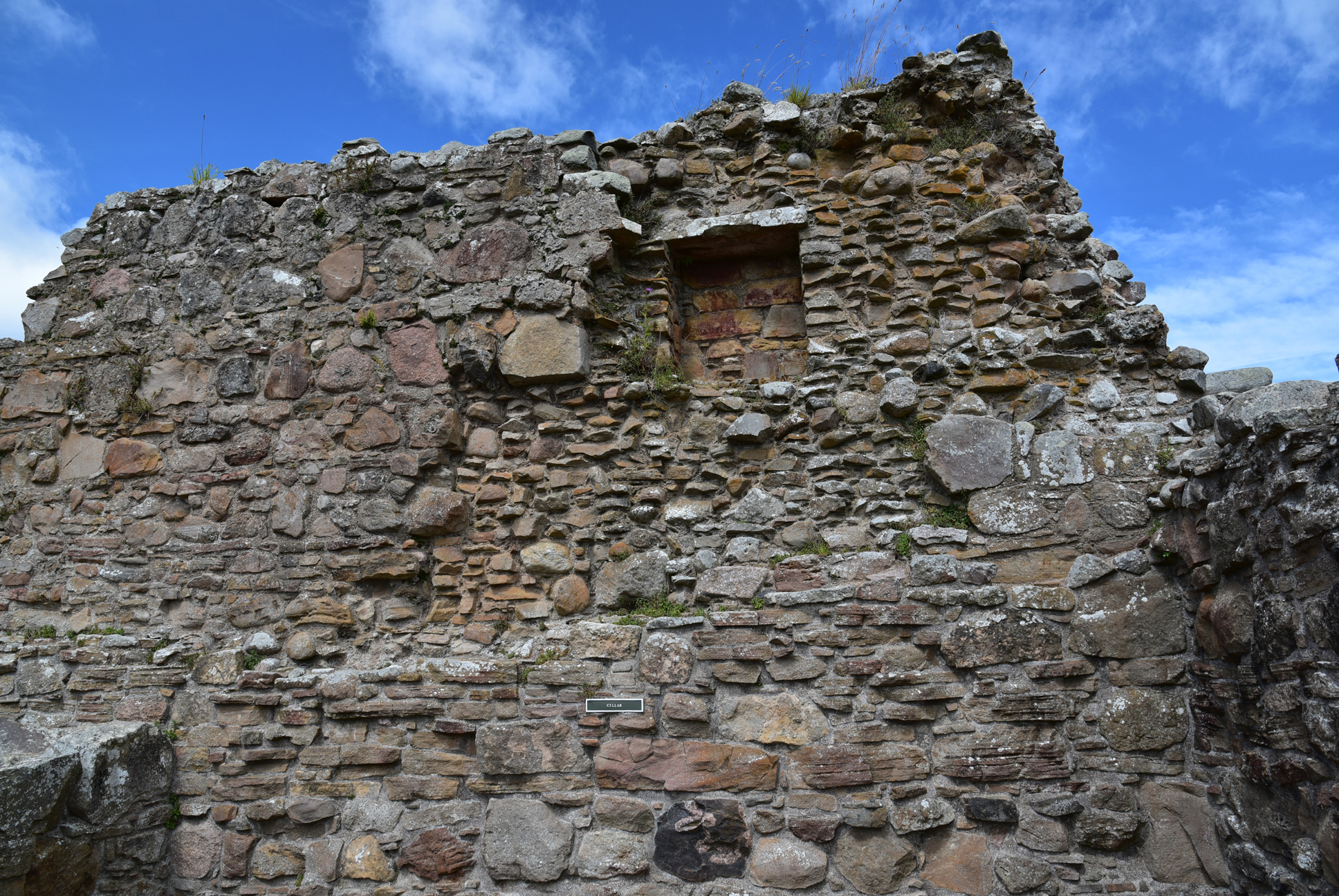
The kitchen and cellar ruins below the keep.
Duffus Castle can be seen for miles among the fertile farmland in the Laich of Moray, north of Elgin. Though an unassuming ruin of a castle with no visitor center or facilities apart from a small car park, the remains are still substantial, making it one of Scotland's finest motte and bailey style castles.
The most impressive part of Duffus Castle today is the central keep on top of the grassy motte, which has been slowly sliding down the side of the motte. Some rampart walls and foundations and a wall outlining the kitchen and cellar areas below the keep also remain.
Duffus Castle can easily be fully explored in an hour or two. To make a full day of visiting castles, Huntly Castle is about 30 miles south, and Spynie Palace is just a few miles away from Duffus Castle.
Duffus Castle has a Legend.