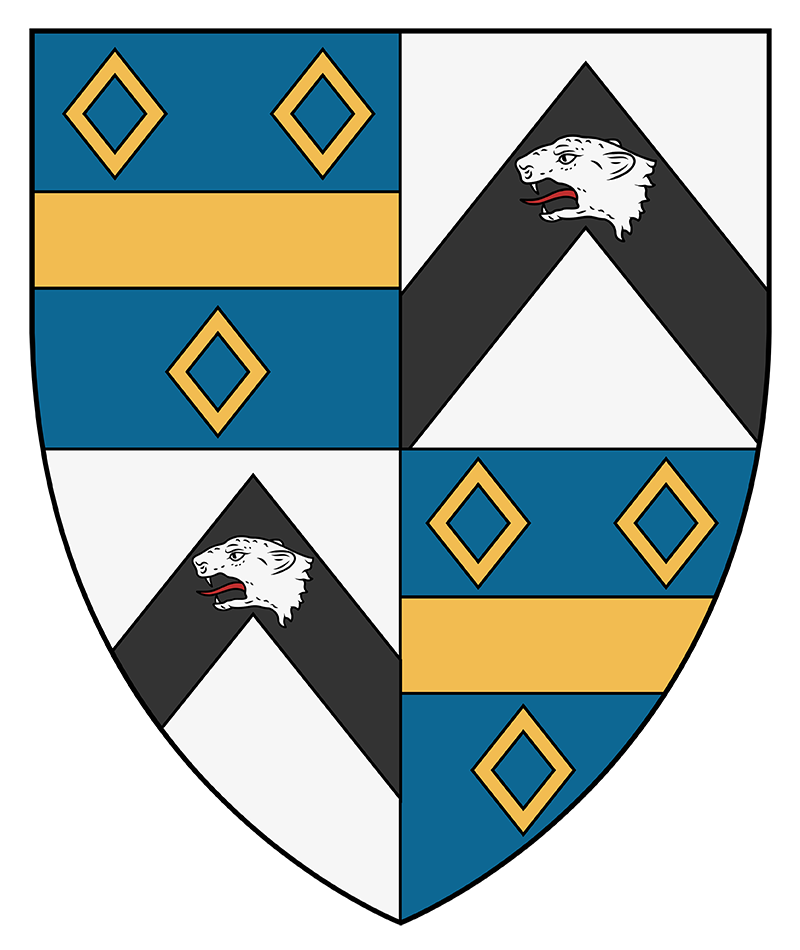
David Beaton - Archbishop of St Andrews
David Beaton was the Archbishop of St Andrews, the last Scottish Cardinal prior to the Scottish Reformation, and a powerful political figure who opposed Protestant reforms in Scotland.
David was born around 1494 in Balfour, Fife, Scotland, and was the 5th of 14 children of John Beaton and Isobel Monypenny. The Beatons were part of the Bethune family, a French noble family. David was educated at the Universities of Glasgow and St Andrews and went to Paris at the age of sixteen to study canon and civil law.
Around 1520, David Beaton met Marion Ogilvy, the youngest daughter of James Ogilvy, 1st Lord Ogilvy of Airlie. David and Marion lived together in Ethie Castle and produced eight children. Their relationship deeply offended fellow Catholics and contrasted with Beaton himself, who prosecuted Protestants for heresy who advocated for the marriage of the Clergy.
In 1520, David was appointed Rector and Prebendary of Cambuslang by his uncle, James Beaton, the Archbishop of Glasgow. When James became Archbishop of St Andrews in 1522, he resigned his position as the Commendatore of Arbroath to David, and David returned from France and took a seat as Lord Abbot of Arbroath Abbey in the Scottish Parliament in 1525.
In 1528, King James V named David the Lord Privy Seal, the 5th of the Great Offices of State. He acted on King James's behalf several times between 1533 and 1542, as Scotland's ambassador to France. While in France, he obtained hawks and wild boar for the king. He helped lead the negotiations with France regarding James V's marriages to Madeleine of France and later to Mary of Guise. In 1537, he was made coadjutor to his uncle at St Andrews, which included the right of succession.
Also in 1537, King Francis I of France made Beaton the Bishop of Mirepoix in Languedoc. In 1538, Beaton was appointed a Cardinal by Pope Paul III, under the title of St Stephen on the Coelian Hill. In February 1539, Cardinal Beaton succeeded his uncle as Archbishop of St Andrews and Papal Legate in Scotland in 1544.
Relations between King Henry VIII of England and King James V were strained when Henry pushed for Scotland to withdraw from its allegiance to the Holy See and bring it under his own subjection. James declined to be drawn into Henry's plans and refused to leave Scotland for a meeting with Henry. Henry launched a major raid into Scotland, and many Scots were lost. This led to the Battle of Solway Moss on the English side of the Anglo-Scottish border, where the Scots lost many Nobles to death or capture by the English. Cardinal Beaton was blamed by many for the war with England that culminated in the defeat at Solway Moss and eventually led to the Rough Wooing.
On December 14th, 1542, King James V died, and Cardinal Beaton attempted to become one of the regents for the infant sovereign, Mary, Queen of Scots, but was refused in favor of James Hamilton, 2nd Earl of Arran, and heir presumptive to the throne. By order of the Regent, Cardinal Beaton was taken into custody and imprisoned at Dalkeith Palace before being moved to Blackness Castle.
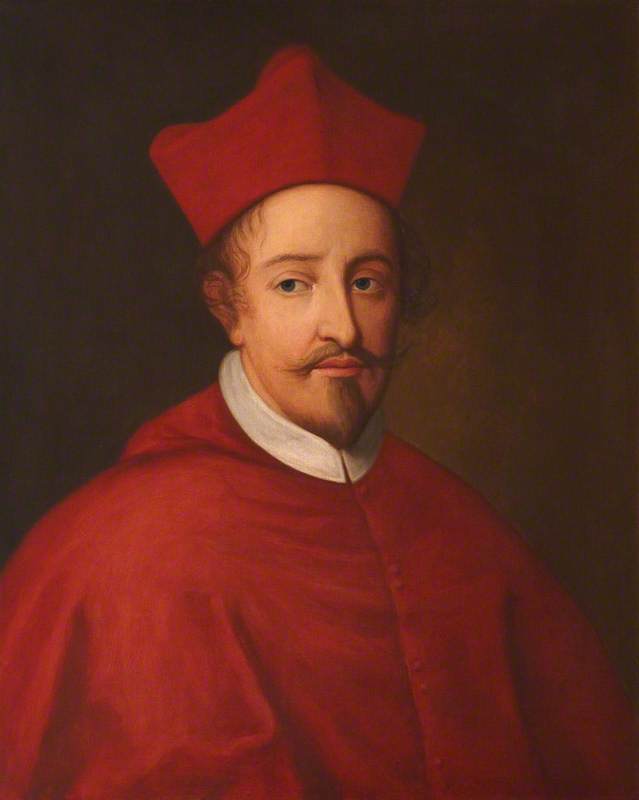
Cardinal David Beaton, by Edward Travanyon Haynes after a 16th-century portrait. University of St Andrews, Wikimedia Commons, public domain.
The Regent was then persuaded to enter a marriage treaty with Henry VIII on behalf of the infant Queen Mary and Henry's son, Edward, to unify the two thrones through marriage. This treaty was controversial from the start and resisted by many who preferred to continue Scotland's Auld Alliance with France. This led to Beaton's release from Blackness Castle prison. In 1543, Beaton regained his power and influence, having previously drawn up the "Secret Bond" against the marriage.
Beaton was also a very strong and outspoken opponent of the Protestant movement in Scotland, opposed the early Scottish Protestant Reformation, and was famously harsh in meting out punishments whenever he saw fit.
John Rogers, a Friar, was the first to be accused of heresy for preaching a doctrine in Angus that Beaton considered heretical. Rogers was imprisoned in St Andrews Castle, and it was claimed he died while trying to escape from the castle.
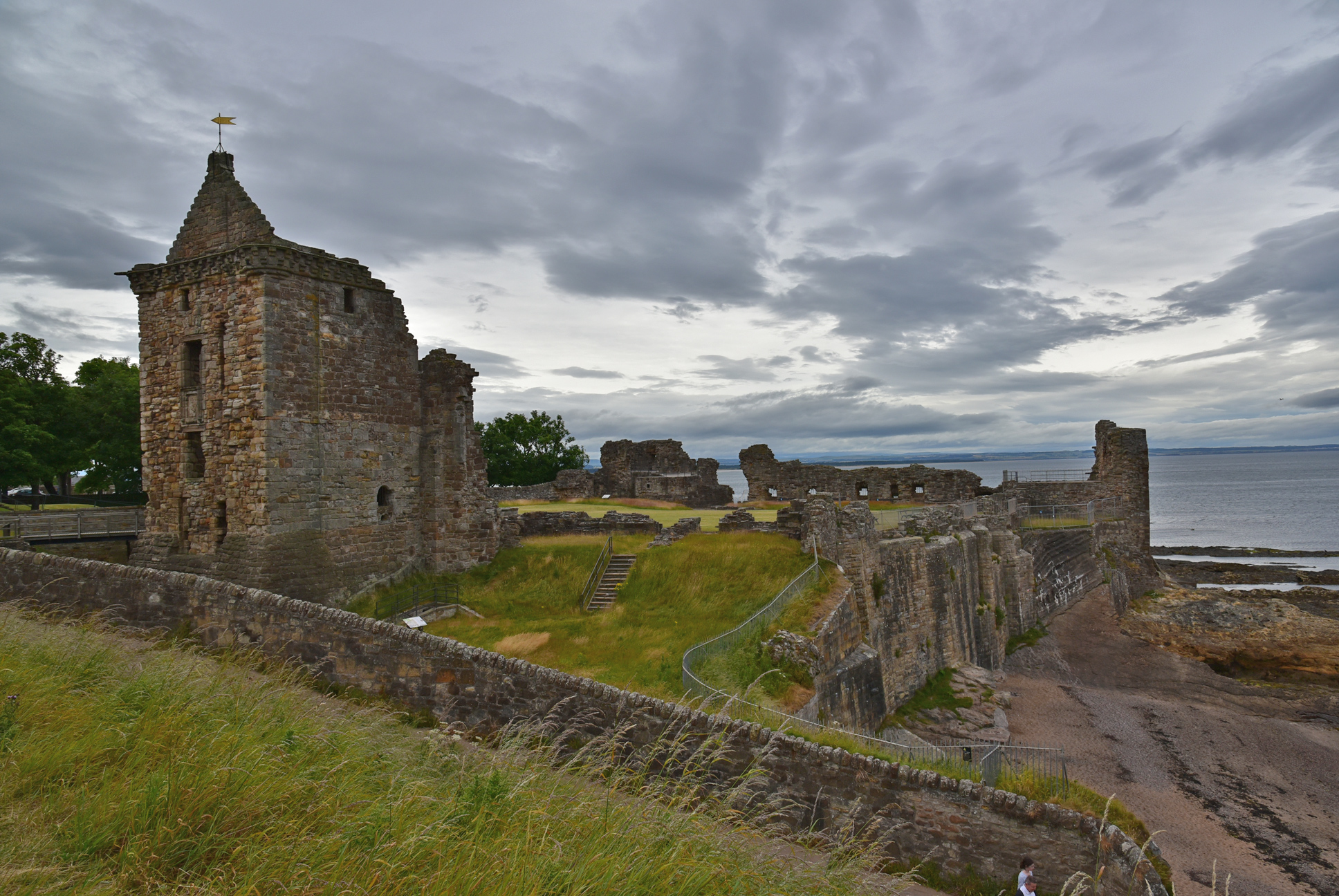
In December 1545, Cardinal Beaton arranged for the arrest, trial, and execution of George Wishart, a prominent Protestant Reformer and preacher. Wishart was apprehended by Bothwell and taken to St Andrews Castle. He was found guilty and condemned as an obtrusive heretic. On March 1st, 1546, Wishart was burned at the stake, with Cardinal Beaton looking on from a window of the castle. Protestant sympathizers had had enough of Beaton and were now angered by the murder of George Wishart.
On May 29th, 1546, Protestant Lairds, John Leslie and George Kirkcaldy, entered St Andrews Castle at daybreak, killing the porter in the process. The two men and Peter Carmichael used daggers to stab Cardinal Beaton to death, and then hung his body from a castle window.
David Beaton's body was eventually moved to the Sea Tower in St Andrews Castle, where it stayed for several months. Beaton's body was said to have been pickled in a barrel of brine. It was believed that his body may have been moved to Blackfriars Chapel in St Andrews for burial several months later, but in the “Book of Martyrs” by John Foxe in 1803. It states this about Cardinal Beaton:
"And so like a butcher he lived, and by a butcher he died, and lay seven months or more unburied, and at last like a carrion, was buried in a dunghill, Anno 1546."
David Beaton, Archbishop of St Andrews, was the last Catholic Cardinal in Scotland prior to the Scottish Reformation.