Château de Brissac
History
Nestled in the heart of the Loire Valley of France stands the Château de Brissac, the tallest castle in France. A castle has existed at this location since the 11th century, when Fulk III, Fulk the Black, Count of Anjou, built a wood and stone medieval fortress. Fulk is said to have built approximately 100 castles and abbeys throughout the Loire Valley, starting with the Château de Langeais. In 1068, two feudal lords, Geoffrey the Bearded and Fulk the Rechin, fought at the castle, where Fulk defeated Geoffrey.

Brissac would change owners several times until 1434, when Jean de la Haye, Lord of Brissac, ceded the fief to Pierre de Brézé, Lord of Maulévrier, and Chief Minister to King Charles II of France.
During the reign of Francis I, the castle was bought by René de Cossé in 1502, who was named governor of Anjou and Maine by the king. It was either de Brézé or de Cossé who rebuilt the castle.
During the French Wars of Religion, the castle was in the possession of King Henry of Navarre. The castle was severely damaged and scheduled for demolition. However, when Charles II de Cossé sided with Henry, who would soon be crowned king of France, Henry granted him the castle and the title of Duke of Brissac, as well as the title of Marshal of France. He was also given the funds to rebuild the castle. In 1506, Charles II de Cossé hired a legion of artists and craftsmen and began rebuilding the castle.
Charles died in 1521, with a new castle half-built and the old medieval castle half-destroyed. The old castle was torn down, except for two twin towers, and a new castle in a 17th century Baroque style was built against the two medieval towers, making it the tallest castle in France.
A large five-story donjon marked the center of the new Baroque castle, flanked by two lower buildings, of which only the left building exists today. A seven-story pavilion was raised above the River Aubance, completing the new castle.
In August 1620, King Louis XIII and his mother, Marie de Medici, met at Brissac to discuss their differences and come to a truce. The truce did not last long, as Marie de Medici was soon banished.
In 1792, the castle was sacked during the French Revolution and left in ruins. The restoration of the castle began in 1844, carried out by the subsequent Duke of Brissac.
Today, the Château de Brissac is still owned by the Cossé-Brissac family under Charles-André de Cossé, 14th Duke of Brissac.
Castle Highlights
The Château de Brissac is the tallest castle in France, standing at seven stories. It is a unique blend of mostly Baroque-inspired architecture, while retaining a bit of its medieval charm. If you look closely at the castle's East elevation featuring the main entrance, you will see the medieval Gothic towers on both corners. Well, the front halves of each tower anyway, with the more modern 17th-century structure resting against the towers, not quite connected to each other.
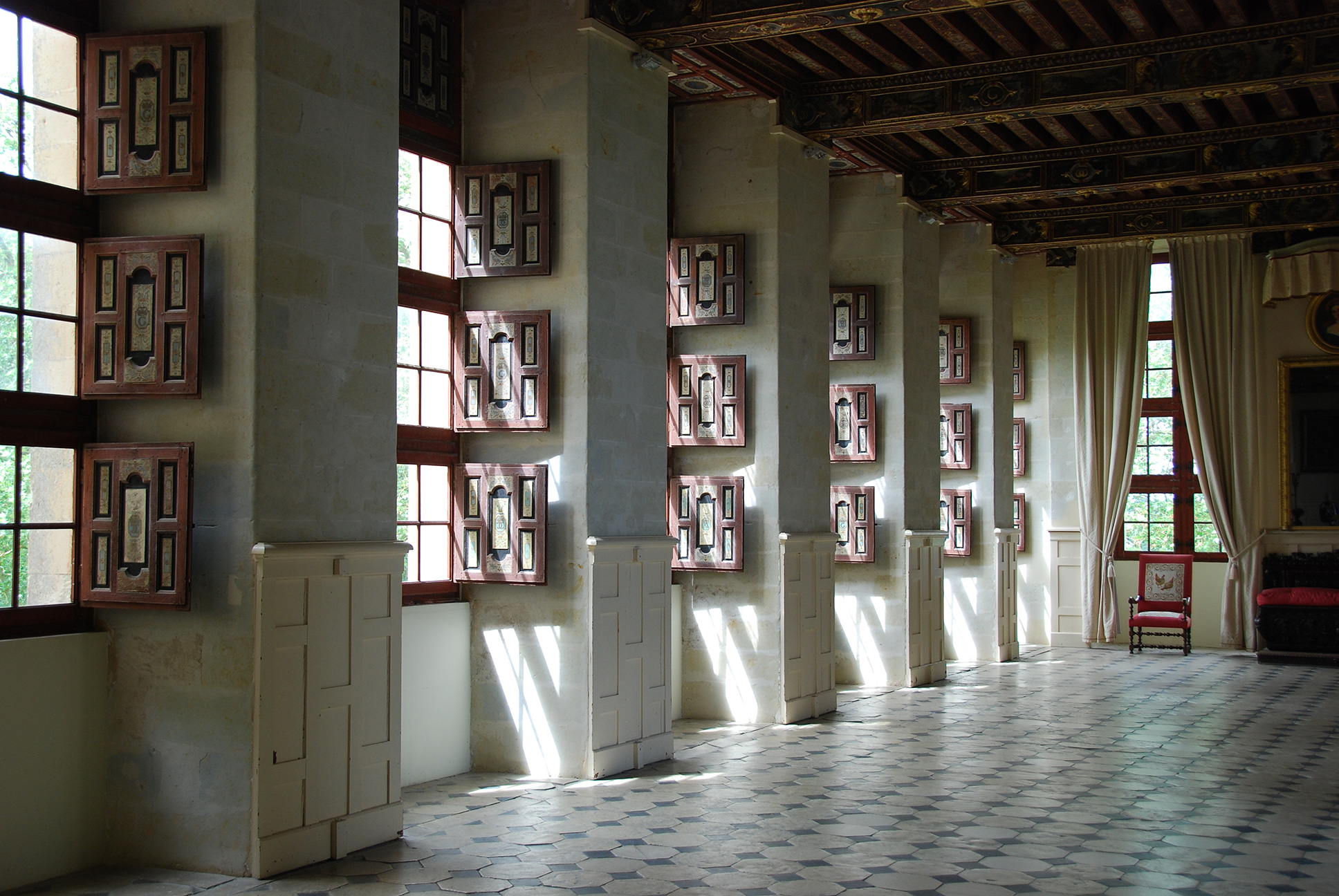
The castle is fully furnished and open to visitors through a guided tour lasting about 90 minutes. The Grande Galerie, or Great Gallery, is a long, well-lit hall with windows that let in abundant sunlight and a detailed painted ceiling dating from 1625.
The castle also has its own theatre, constructed in 1883, which held operas each autumn from 1890 through 1914. Several period bedrooms give a sense of life at the castle, including the Louis XIII room and the Hunting Room, which contains several tapestries woven in Flanders.
It will take at least half a day to visit Brissac, especially if you do the guided tour of the inside and walk around the castle grounds. It is a nice walk around the grounds and worth the walk to take in the castle from different sides. The castles of either Angers or Plessis-Bourré are close enough to visit the same day, but all three in one day will be too rushed.
Château de Brissac is also haunted.