Battle of Skerries
Battle of Ardscull
Background
Following the Battle of Kells, Edward Brus and the Scottish army left a wake of destruction across the midlands of Ireland, unopposed for two months.
Battle
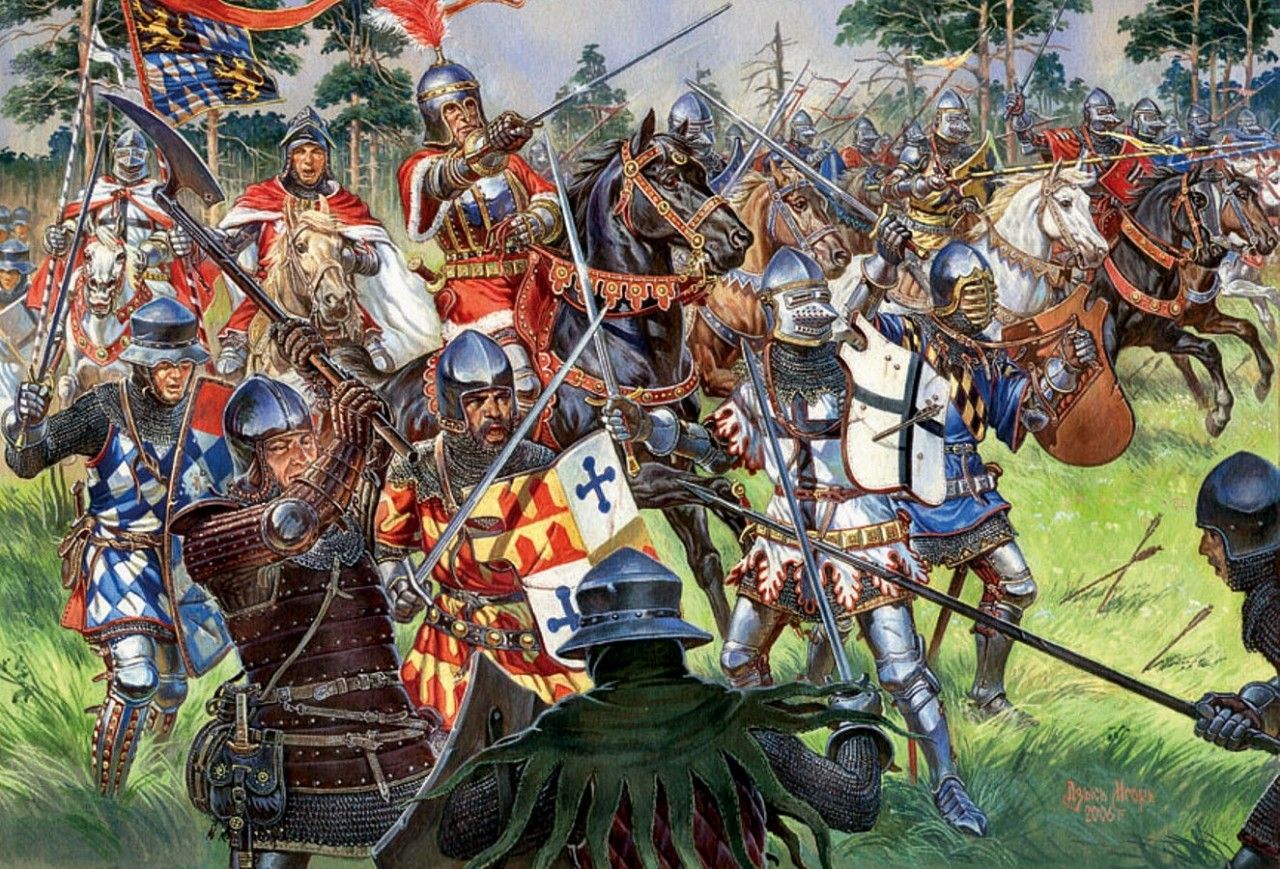
On January 26th, 1316, the Scots were advancing further south into Ireland from Castledermot when they encountered an Anglo-Irish army larger than their own.
The Anglo-Irish forces included Edmund Butler, Earl of Carrick, John FitzThomas, 1st Earl of Kildare, Maurice FitzGerald, First Earl of Desmond, Thomas FitzJohn, son of John FitzThomas and future 2nd Earl of Kildare, as well as John Poer, Maurice de Rochford, and Miles de la Roche.
The Anglo-Irish forces outnumbered those of Edward Brus, but internal strife broke out in their ranks, enabling the Scots to hold the field and win the battle despite heavy losses.
Notable losses in the battle were Haymond le Grace and William Prendergast on the Anglo-Irish side and Fergus Andressan and Walter Murray for the Scots, all of whom were buried in the Dominican Abbey of Athy.
Aftermath
After the Battle of Skerries, the Scots went to nearby Athy and plundered the town before withdrawing to Leix, while the Anglo-Irish watched their movements from Castledermot.
Morale was boosted in the Scottish army after beating a larger force and solidifying Edward Brus's position in Ireland.
The Anglo-Irish leader returned to Dublin, where John Hotham, the King's envoy to Ireland, tried to ensure the loyalty of the Irish nobles.
By May, Edward Brus returned to his safe base at Ulster and Carrickfergus, but Carrickfergus Castle was still held by the Anglo-Irish.
Brus continued besieging the castle by surrounding it and starving out the garrison inside. At one point, he sent in emissaries to negotiate a surrender, but they were taken prisoner by the garrison, and rumors started to spread that the garrison had eaten them due to hunger.
In late July or early August of 1316, Carrickfergus Castle finally opened its gates and surrendered to the Scots.