Battle of Dupplin Moor
Background
After King Robert the Bruce's death in 1329, his five-year-old son became King David II of Scotland. Edward Balliol, son of deposed King John Balliol, was in England and decided to return to Scotland and take back the crown with support from "the Disinherited" Scottish nobles who lost their lands under the Bruce.
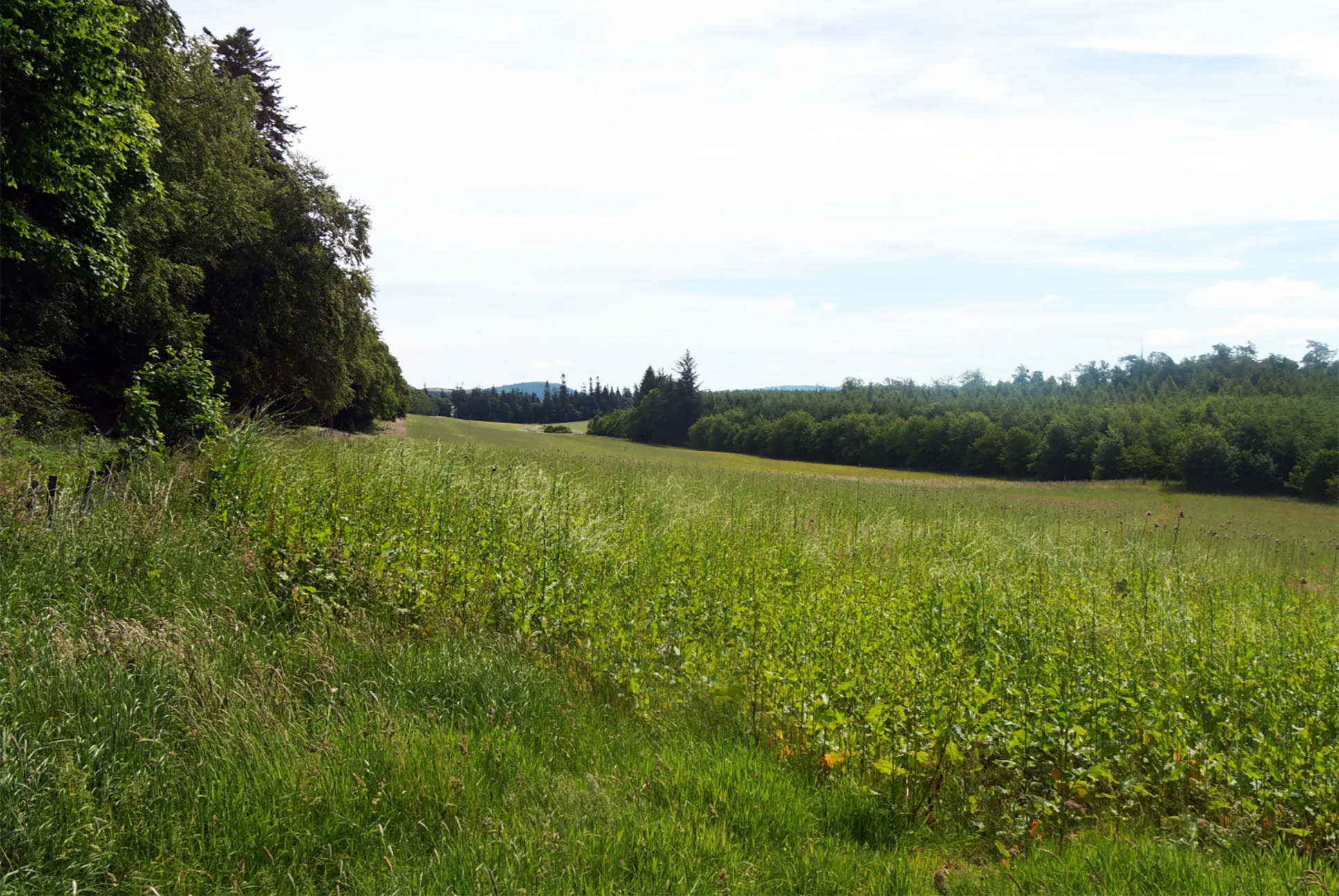
On August 6th, 1332, Edward Balliol, Henry Beaumont, and a small invasion force landed at Wester Kinghorn, in Fife, where they were met by Scottish forces. Balliol's forces repelled the Scots and advanced towards Perth.
The Scottish army, under Domhnall II, Earl of Mar, now positioned itself on the north bank of the River Earn, two miles south of Perth, and destroyed the bridge that spanned the river. The Scots numbered at least 15,000 men.
On August 10th, Balliol's forces arrived on the south bank of the River Earn. They were in a difficult spot as their army was ten times smaller than the Scots across the river, and they knew a second Scottish force was en route under the Earl of March.
The two sides faced each other across the river for the rest of the day.
Battle
In the middle of the night, Balliol's forces forded the river at an unguarded spot. At about midnight, they reached a Scottish camp and attacked it. The Scots who were not killed, fled, or were captured. The English had won the day! Or so they thought. As the sun began to rise, they saw the Scots advancing against them in two large groups, and they realized that the force they had beaten in the camp was not the main army.
Balliol positioned his men where a valley narrowed as it entered hilly terrain, its flanks guarded by two small hills — ground that would later funnel the advancing Scots into a deadly crush, not unlike the terrain the English would exploit again at Agincourt nearly a century later.
Balliol's men aligned themselves for battle on foot in three tightly packed ranks of men-at-arms and one fourth rank of pikemen. They also had fifty German knights who fought mounted on horse at the rear. The longbowmen were split into two groups and flanked the men-at-arms.
The Scots under Mar were formed in two schiltrons of tightly packed pikemen. Mar suggested that Balliol's forces be given a chance to surrender, so they could be taken prisoner and ransomed.
Robert Bruce, Lord of Liddesdale, commanded the other schiltron. He knew of Mar's correspondence with Balliol, and publicly claimed that Balliol's unopposed river crossing was due to treachery by Mar. Mar denounced this as a lie and declared he would prove his loyalty by striking the first blow against Balliol's forces, and the two schiltrons raced each other towards Balliol's men.
Robert Bruce's schiltron arrived first, but his charge disorganized the schiltrons and left slower men behind. By the time it clashed with Balliol's men, there were only 800 pikemen in Robert's schiltrons, but they still managed to drive back Balliol's forces almost ten yards. This exposed the Scottish flanks to Balliol's longbowmen, who "blinded and wounded" the faces of the Scots who either did not have on helmets or the helmets did not have visors.
The Earl of Mar's schiltrons then arrived and charged into the rear of Robert's schiltron, causing chaos. The center of the Scottish forces was pressed too tightly together, and any who lost their footing were trampled to death. Contemporary accounts say that more than 1,000 Scots were smothered or trampled without ever contacting Balliol's men.
Balliol's men were not as tightly compacted and could better maneuver their weapons after repelling the initial surge. Robert Bruce's men attempted to retreat, making for easy targets, all the while the longbowmen continued to rain arrows on the Scots.
Eventually, the whole Scottish army collapsed and was routed.
Aftermath
Several surviving Scottish nobles escaped on horseback, while others fled on foot. Balliol's men then occupied Perth and began improving its fortifications in anticipation of the arrival of the Earl of March and his Scottish army from the south.
Balliol's forces only lost thirty-five men. There was no number for the Scottish losses, but they were heavy, and the dead lay in great heaps. The Earl of Mar and Robert Bruce were killed during the battle. Duncan IV, Earl of Fife, survived the battle and was captured before changing sides and supporting Balliol.
A week later, the Earl of March arrived outside Perth, but he did not mount an attack against Balliol in the fortified town of Perth as he considered them too strongly defended.
Edward Balliol was crowned King of Scots at Scone on September 24th, 1332, but his struggle to keep the crown was only beginning, as the next battle would take place in December of that same year.